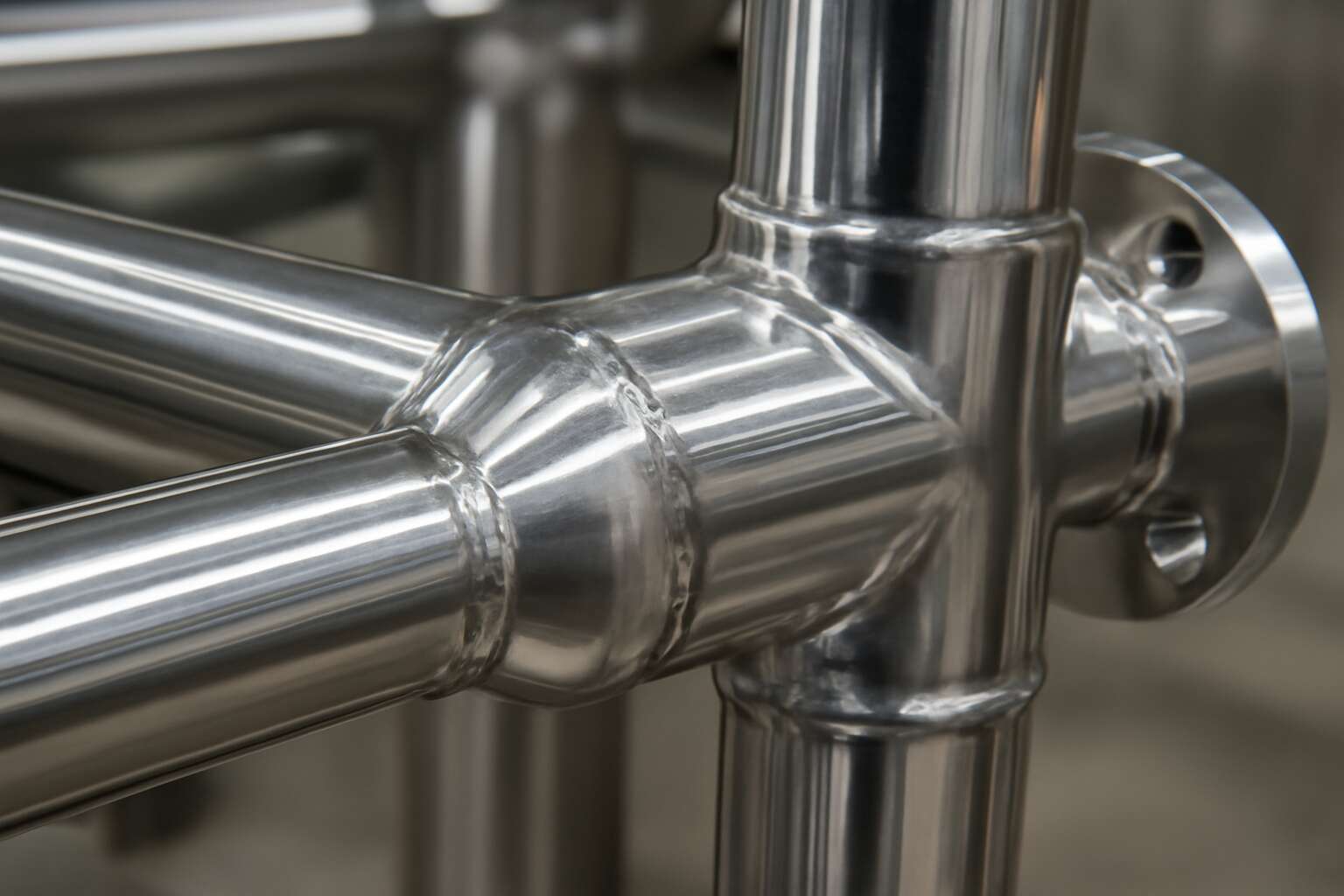
Understanding Super Duplex Pipe Fittings
Defining super duplex steel and its key properties
In a landscape of harsh service conditions, South Africa’s energy and process plants lean on a metal that endures salt-laden air, heat, and pressure. Field data show up to 40% longer service life when using super duplex pipe fittings in critical piping.
Super duplex steel is a balanced blend of austenite and ferrite, delivering strength and corrosion resistance. Its key properties include high chloride resistance and a yield around 550 MPa, making it a reliable choice where ordinary stainless grades tire.
Traits that resonate in SA projects:
- Superior corrosion resistance in seawater and aggressive media
- High strength-to-weight ratio for compact piping
- Welding that remains dependable with proper procedures
Elegant, enduring, and practical, we craft these fittings to wear time gracefully, mirroring the aspirational blend of glamour and grit that defines our engineering story.
Standards and grade designations commonly referenced
South Africa’s sprawling energy landscape demands more than heat and salt; it requires standards that endure under pressure, especially for super duplex pipe fittings. Understanding how these standards apply to long-lived joints in offshore platforms and refineries guides procurement, fabrication, and maintenance decisions.
Key references span UNS grade designations and international standards, with several most frequently cited in SA projects.
- Grade designations common to super duplex stainless steels: UNS S32750 (2507) and UNS S32760 (2552).
- ISO 15156 (NACE MR0103) for sour-service environments and compatibility with SA oil and gas assets.
- ASTM A923 for corrosion testing, plus related ASTM standards for wrought fittings (A276/A182 family).
- EN 10253 for butt-weld fittings and EN 1092-1 for flanges and assemblies.
How composition affects strength and corrosion resistance
SA offshore projects are booming, and corrosion can drive maintenance budgets up by roughly 30% in some SA refineries. A sturdy choice earns you uptime, not excuses. In my experience, understanding how composition steers performance helps you pick the right super duplex pipe fittings for the long run on rigs and refineries here in SA.
In these alloys, the ferrite-austenite balance, bolstered by chromium, molybdenum, and nitrogen, governs both strength and resistance; the right composition in super duplex pipe fittings tamp down chloride attack and stabilize the microstructure. More Cr and Mo strengthen passive films, while nitrogen lifts yield strength and improves pitting resistance — and yes, we keep the phases in check to avoid brittleness.
- Chromium boosts passivity and overall corrosion resistance
- Molybdenum fights pitting in salt-laden environments
- Nitrogen adds strength and improves pitting resistance
- Balanced ferrite-austenite texture preserves toughness
Differences between super duplex and duplex or austenitic variants
South Africa’s offshore rigs live on the edge of salt and heat, and corrosion budgets in refineries can jump by as much as 30%. Understanding how super duplex pipe fittings differ from other stainless grades helps you choose for the long run on rigs and in SA refineries.
Super duplex pipe fittings pack higher Cr, Mo and N, boosting passivity and pitting resistance while the ferrite–austenite balance keeps toughness intact in harsh seawater. That combination makes them a standout option for corrosive SA environments.
- Higher Cr/Mo content boosts passivity and chloride resistance.
- Ferrite–austenite balance preserves toughness under pressure.
- In pitting-prone salt, they outclass many duplex or austenitic variants.
Compared with duplex, super duplex adds strength and superior corrosion resistance; compared with austenitic grades, it pairs form with fatigue resistance. The result is dependable performance across offshore SA cycles and refinery duty.
Applications across industries and typical use cases
South Africa’s offshore rigs mingle salt and heat, and corrosion budgets can jump by 30%. In this tough climate, super duplex pipe fittings offer a rare blend of passivity and toughness, keeping critical lines sound in seawater and high-temperature service. Their chemistry curbs pitting and preserves structural integrity under pressure.
Understanding where these fittings shine helps project teams pick the right solution. Typical use cases span offshore platforms, desalination and water treatment, petrochemical plants and refinery piping exposed to chlorides and sulfates. In high-pressure lines and long runs, fatigue resistance and corrosion resilience stand out.
- Offshore platforms and subsea pipelines
- Desalination and water treatment facilities
- Petrochemical processing and chemical plants
- Refinery piping and high-temperature service
Across SA’s industrial landscape, this material speaks durability. In projects from offshore rigs to refinery lines, super duplex pipe fittings prove their value amid constant risk.
Material Properties and Performance
Mechanical properties and impact resistance
In challenging piping networks, strength and durability are non-negotiable. The enduring answer is super duplex pipe fittings; they combine toughness with corrosion resistance even in harsh media. A compelling hook for engineers: these materials offer a robust balance that keeps lines running when others falter.
Material properties translate directly into performance. Mechanically, super duplex alloys deliver high yield and tensile strength, paired with exceptional impact resistance across a wide temperature range. That mix reduces the risk of brittle failure in sudden-load events and helps extend service life in demanding environments.
- High yield and tensile strength
- Outstanding impact toughness
- Excellent resistance to pitting and crevice corrosion
- Good weldability for field assembly
For corrosion resistance under pressure, super duplex pipe fittings continue to prove their value in South Africa’s challenging service conditions.
Corrosion resistance and pitting potential
Global corrosion costs exceed $2 trillion annually, and South Africa’s demanding media push pipelines to the limit. Material properties translate into performance for super duplex pipe fittings: they fuse high strength with formidable resistance to attack in challenging environments. That means fewer surprises, longer service life, and less downtime on critical lines.
- Pitting resistance under chloride exposure
- Crevice corrosion resistance in tight joints
- Weldability for efficient field assembly
Under pressure, the pitting potential of these alloys is what keeps SA networks operational during surge loads and thermal shocks. They stand up to saline and sour-media systems, and their weldability makes on-site maintenance less of a drama. Choosing super duplex pipe fittings signals a durable, corrosion-resilient solution tailored to Africa’s toughest piping challenges.
Heat treatment and workability considerations
Across South Africa’s critical pipelines, resilience isn’t a luxury—it’s a mandate. Global corrosion costs exceed $2 trillion annually, and our networks face saline media and surge loads. Material properties translate into performance: high strength paired with formidable resistance, embodied in super duplex pipe fittings.
Heat treatment and workability determine how that performance travels from mill to field. I’ve found that solution annealing and controlled cooling nurture a stable core for tough environments. For the best outcomes with super duplex pipe fittings, focus on these considerations:
- Homogeneous microstructure through appropriate heat treatment
- Weldability with predictable bead integrity and minimized residual stress
- Fabrication ease and reliable on-site assembly under varied conditions
Fatigue strength under high pressure environments
Fatigue under high pressure is the quiet killer in long pipelines across South Africa. Global corrosion costs soar past $2 trillion yearly, yet the right material choice can turn fatigue risk into reliability.
Material properties translate into real-world performance for super duplex pipe fittings. A refined, homogeneous microstructure supports sustained crack resistance, even as electric-arc welds and thermal cycles throw their shadows. The calm core of these alloys under cyclic loading keeps beads intact.
- High cycle fatigue resistance
- Residual stress management
- Weld integrity under cyclic loads
Under high pressure environments—gas and oil transmission, coastal saline media—the fatigue strength of these fittings matters most for long service life and lower maintenance.
Balance of strength and toughness is more than numbers; it’s peace of mind.
Welding and fabrication compatibility
Global corrosion costs soar past $2 trillion yearly, and in South Africa’s long pipelines, the right materials turn risk into reliability. With super duplex pipe fittings, the alloy’s refined microstructure supports stable performance even as welding and thermal cycles test joints. This balance translates into predictable fabrication—welds stay strong under pressure.
Material and process compatibility hinge on practical choices. Choice of welding method, preheat, interpass, and filler metal must align with the alloy’s duplex balance to keep seams strong. When heat input is controlled, the ferrite-austenite mix stays intact, reducing residual stresses and guarding against cracks.
- Welding processes harmonized with duplex balance as a design consideration
- Heat input management preserves ferrite-austenite balance in the alloy
- Filler metal compatibility and inspection protocols align with fabrication requirements
These practices support efficient fabrication and dependable field performance for super duplex pipe fittings, letting projects proceed with confidence.
Standards, Grades, and Testing
Recognized standards for fittings in super duplex steel
In offshore projects, a single compromised joint can ripple into days of downtime and millions in cost. “Quality is the hinge on which every project turns,” a veteran engineer reminds us, and standards governing super duplex pipe fittings are precisely that hinge.
Recognized standards span material designations, fabrication, and testing, with these anchors:
- ASME B16.9 and ASME B16.28 for wrought fittings
- ASTM A403/A403M for stainless wrought fittings (duplex and super duplex)
- ISO 15156 (NACE MR0175) for sour-service suitability
Common super duplex grades, such as UNS S32750 and UNS S32760, require certification to EN 10204 3.1/3.2 and undergo ferrite content checks, hardness testing, and non-destructive examinations to verify weldability and integrity under pressure. In South Africa, inspectors align these criteria with local QA practices, ensuring reliable supply chains.
Grade designations and their significance
“Quality is the hinge on which every project turns,” a veteran engineer says, and offshore budgets don’t forgive errors. In this arena, even a single compromised joint can chase downtime into the millions. Standards such as ASME B16.9, ASME B16.28, ASTM A403/A403M, and ISO 15156 act as that hinge, guiding material design, fabrication, and testing for enduring performance.
For super duplex pipe fittings, grade designations translate chemistry into weldability and pressure integrity. Testing designations call ferrite content checks, hardness tests, and non-destructive examinations to verify performance under load. In South Africa, inspectors align these criteria with local QA practice, safeguarding predictable supply chains and project timelines.
- Ferrite content verification
- Hardness and microstructure testing
- Non-destructive examinations (NDE)
Nondestructive testing methods for quality assurance
Offshore projects don’t forgive sloppy joints. In South Africa, a single compromised weld can push downtime costs into the millions, so standards act as the hinge that keeps budgets intact. Standards such as ASME B16.9, ASME B16.28, ASTM A403/A403M, and ISO 15156 guide material design, fabrication, and testing for enduring performance. For super duplex pipe fittings, grade designations translate chemistry into weldability and pressure integrity.
- Radiography (RT) for welds
- Ultrasonic testing (UT)
- Magnetic particle inspection (MT)
- Liquid penetrant testing (PT)
Quality assurance relies on nondestructive testing methods that spot trouble before it becomes a crisis. Ferrite content verification, hardness and microstructure checks sit alongside a suite of NDE techniques. In SA projects, ferrite readings confirm the right phase balance.
South African inspectors align these criteria with local QA practice, safeguarding predictable supply chains and project timelines.
Chemical composition and mechanical testing requirements
Across SA offshore projects, a single compromised weld can push downtime costs into the millions. For super duplex pipe fittings, standards act as the hinge between ambition and reliability—linking exact grade designations to weldability and pressure integrity.
Chemical composition is the first line of defense. Super duplex pipe fittings must meet strict ranges for chromium, nickel, molybdenum, and nitrogen, with ferrite balance tuned to preserve the dual-phase structure. Ferrite verification, microstructure checks and weld metal analysis follow, using spectrometry and ferrite-content measurement to prove compliance with ASME, ASTM and ISO references.
- Chemical composition targets (Cr, Ni, Mo, N)
- Ferrite balance and microstructure confirmation
- Weld metal verification and lab documentation
Mechanical testing closes the loop. Tensile properties, hardness and impact toughness are verified to ensure resilience under high pressure, with tests aligned to recognized standards for fittings in super duplex pipe fittings.
Certification and traceability considerations
Standards provide the framework that turns engineering ambition into verifiable reality. For super duplex pipe fittings, the chain of custody begins with material identity, heat numbers, and alloy verification, all documented to satisfy ASME, ASTM, and ISO references, ensuring weldability and pressure integrity under offshore service!
Grades and testing certifications demand meticulous traceability: chemical composition checks, MTRs, lot control, and welded joint records. Welding procedure specifications and non-destructive examination certificates anchor quality; factory acceptance tests seal the provenance.
- Mill Test Reports (MTRs) linking heat numbers to lot identity
- WPS and PQR documentation demonstrating weld procedure eligibility
- Non-destructive testing certificates confirming flaw-free welds
In the South African market, this traceability isn’t mere paperwork—it’s risk management and accountability, ensuring that every batch of super duplex pipe fittings meets the offshore demands here.
Product Types and Configurations
Fittings options including elbows tees and reducers
South Africa’s harsh industrial reality demands fittings that stay reliable under pressure. A well-chosen set of super duplex pipe fittings can slash downtime and extend service life in caustic environments, where strength, corrosion resistance, and clean welds matter. ‘If the elbow fits, the plant hums,’ a seasoned fitter quips, and he isn’t far wrong.
- Elbows for 90° and 45° turns
- Tees for branching flow
- Reducers to manage diameter transitions
These configurations are engineered to maintain stable flow, minimize turbulence, and resist pitting in SA service.
Whatever your project, the choice of geometry affects stress distribution and ease of fabrication. Precision machining, tight tolerances, and proper inspection remain non-negotiable in South African plants. When you install super duplex pipe fittings, you’re not just snapping parts together—you’re engineering longevity, reliability, and a little swagger into the pipeline.
Flanges stubs and reducers for super duplex systems
Across SA’s high-pressure plants, a tight seal isn’t cosmetic—it changes uptime. Some studies flag that a fifth of unplanned shutdowns trace to fittings that can’t withstand pressure or caustic environments. When you outfit a system with purpose-made super duplex pipe fittings, you unlock longer service life and steadier flow. Flanges, stubs, and reducers become more than parts; they are the backbone of reliable pipelines in challenging conditions!
- Flanges supply robust bolt patterns, gasket seating, and easy integration with pumps and valves (weld neck, slip-on, blind variants).
- Stubs offer clean, full-thickness weld ends that ease disassembly and dissimilar-material joints.
- Reducers—concentric or eccentric—smooth diameter transitions without creating stress risers.
Choosing the right configuration reduces turbulence and simplifies inspection, keeping SA plants compliant and steady. Precision machining and traceable materials ensure that every flange, stub, and reducer performs as a matched set within the alloy’s corrosion-resistance envelope.
Specialty fittings and high pressure components
In South Africa’s grid of high-pressure plants, the integrity of connections is mission-critical, and the right product type—super duplex pipe fittings—can shift uptime from risk to resilience. That edge shows in how configurations are engineered for clean flow and reliable seals.
Product Types and Configurations span beyond standard flanges and stubs. Specialty fittings and high-pressure components are precision-crafted to resist caustic environments, with tight tolerances, compatible sealing surfaces, and traceable materials that ensure compatibility across the alloy’s corrosion-resistance envelope. These super duplex pipe fittings are designed for long service life, minimal maintenance, and predictable inspection outcomes.
- Configurations tuned for the specific pressure class and thermal profile of the plant
- Disassembly-friendly joints that simplify maintenance and spare-part compatibility
- Spool-compatible transitions to minimize stress risers and turbulence
With these elements, the system remains robust under demanding conditions, reinforcing SA’s critical infrastructure.
Sizing pressure ratings and connection types
South Africa’s energy grid targets near 99.9% uptime, and reliability hinges on the right fit for the job. Product types for super duplex pipe fittings extend beyond standard flanges to engineered elbows, tees, reducers, and transitions. Configurations are tailored to clean flow, solid seals, and long service life under demanding high‑pressure service.
- Sizing and pressure ratings aligned with plant class and thermal profile
- Connection types including butt-w Weld, socket-weld, threaded, and flanged options
- Disassembly-friendly joints to simplify maintenance and spare-part compatibility
By aligning sizing, pressure ratings, and connection types, these fittings minimize stress risers and turbulence across SA’s high‑pressure networks. With traceable materials and tight tolerances, super duplex pipe fittings deliver predictable inspection outcomes and resilient uptime.
Coatings linings and surface treatments
Pride in performance begins with what sits on the inside. In SA’s demanding networks, super duplex pipe fittings benefit from coatings and surface treatments that resist pitting, maintain clean flow, and temper thermal stress. The right film or lining locks in reliability without sacrificing throughput.
- Fusion-bonded epoxy coatings
- Nickel-based alloy coatings
- Electropolished surfaces and passivation
Choosing the right surface treatment aligns with inspection expectations and spare-part compatibility, ensuring long service life for these fittings in South Africa’s evolving energy landscape.
Installation Maintenance and Sustainability
Welding practices and heat input control
Industrial plants in Southern Africa are unforgiving, and a single drip can balloon into downtime. With super duplex pipe fittings, installation quality is non negotiable: align precisely, fasten to spec, and purge the joint to avoid oxidation. A mated, clean joint keeps flow efficient and your crew breathing easy under high‑pressure service.
Maintenance and sustainability go hand in hand. Schedule regular visual checks and targeted nondestructive testing, especially around welds and flanges. Extend service life with durable coatings, responsible waste management, and recycling of scrap—lowering environmental impact and trimming total lifecycle costs.
Welding practices and heat input control determine whether the microstructure stays robust. Use correct interpass temperature, clean joints, and compatible filler metals, while purging with inert gas.
Inspection testing and maintenance schedules
In South Africa’s industrial backbone, a small leak can cascade into days of downtime and millions in lost production. Installation, maintenance, and sustainability for super duplex pipe fittings require a steady rhythm in these unforgiving plants. When joints are aligned to spec, coated for longevity, and purged for cleanliness, flow remains steady and downtime stays at bay. A disciplined approach to upkeep means crews breathe easier under high‑pressure service and every joint becomes a trusted anchor in the system’s life story.
A practical maintenance schedule should balance visual checks, coating reviews, waste management, documentation, and verification of system integrity. A quiet rhythm of monitoring keeps operations reliable through shifts and seasons, while extending the material’s service life without sacrificing safety.
- Visual checks of fittings, flanges, and supports
- Observations of coating integrity and signs of corrosion
- Waste management and recycling of scrap in line with policy
- Documentation and traceability for installations
- Post‑maintenance verifications to confirm leak tightness
By weaving these practices into daily workflow, the lifecycle costs and environmental footprint are trimmed, safeguarding crews and processes across South Africa’s demanding fields.
Storage handling and transport considerations
In South Africa’s heavy industries, a single leak can cascade into days of downtime and millions in lost production. The theater of reliability turns on how we install super duplex pipe fittings—from the moment they are unboxed to the final purge, every joint must be tended as a lifeline under pressure.
Storage and transport considerations protect the alloy’s edge:
- Store in original packaging, off concrete, in a dry, ventilated space
- Guard against humidity and temperature swings; prevent condensation
- Record batch codes, heat numbers, and delivery dates for traceability
- Inspect packaging on receipt and during transfers; replace damaged material
On site and in transit, sustainability guides practice. Thoughtful waste management, recycling of scrap, and rigorous documentation trim environmental impact and lifecycle costs, ensuring super duplex pipe fittings perform with quiet certainty through South Africa’s demanding fields.
Lifecycle costs durability and reliability
Installation of super duplex pipe fittings is a measured rite in South Africa’s heavy industries, where a small misstep can ripple into days of downtime. When joints endure under high pressure with consistent performance, lifecycle costs soften and reliability becomes a quiet ally in the plant’s heartbeat.
- Sealing integrity in high-pressure service
- Extraordinary corrosion resistance extending service life
- Predictable performance reducing maintenance shocks
- Lifecycle cost efficiency across decades of operation
Taken together, sustainability means fewer replacements, less waste, and a longer-lived network. The beneficial synergy of materials and engineering yields durability and reliability that South Africa’s pipelines can depend on—with super duplex pipe fittings standing as guardians of uptime.
Environmental impact and end of life considerations
South Africa’s heavy industries feel the grip of downtime like a heat wave. When you choose the right connections, the plant breathes easier. super duplex pipe fittings bring sealing integrity under high pressure and steady performance, turning potential leak points into reassuring constants.
Installation and maintenance are not afterthoughts but the plant’s first line of defense. Clean assembly, precise welding, and regular inspections keep flow uninterrupted. Schedule proactive checks and flushing to extend service life and reduce reactive repairs.
Environmentally, these fittings cut waste and energy use by lasting decades. End-of-life recycling and responsible material recovery keep the network lean, with a smaller footprint and fewer replacements.
Sourcing Suppliers and Procurement Best Practices
Choosing qualified manufacturers and distributors
In South Africa’s demanding metallurgical projects, the supplier you choose can steer outcomes as surely as the alloy you specify. “Partnership is the quiet engine of every successful installation,” a veteran Cape Town procurement director insists. For super duplex pipe fittings, sourcing excellence starts with due diligence and local resilience!
Evaluate suppliers on a few core pillars:
- ISO 9001 quality management and full traceability
- Verified material origin and mill certificates
- Local stock and dependable lead times with strong after-sales support
- Compliance with relevant SA standards and rigorous packaging
Build a supplier map that emphasizes traceability, certified welding compatibility, and the ability to respond quickly to design changes. In SA, a resilient network of qualified manufacturers and distributors keeps critical fittings flowing—from stockyard to system start-up—ensuring the fittings perform as promised.
Quality assurance documentation and technical support
In South Africa’s high-stakes metallurgical landscape, the right supplier can determine project fate as surely as the alloy you specify. With super duplex pipe fittings, reliability isn’t an option—it’s a discipline!
- Certificate of origin and mill test reports, confirming chemistry and mechanical properties.
- Welding procedure specifications and procedure qualification to ensure compatibility with your fabrication methods.
- Proactive after-sales support and rapid design-change responses to keep installation on track.
A well-built supplier map emphasizes traceability and the ability to replay changes in design without delay. In SA, this resilience translates to reduced downtime and smoother commissioning—precisely what you want from fittings.
Lead times inventory and risk mitigation
In South Africa, downtime can cost millions per week on complex metallurgical projects. Sourcing suppliers for super duplex pipe fittings demands more than price—it’s about resilience and traceability that survives disruptions. Lead times and regional logistics shape every schedule, and prudent procurement plan for port congestion and freight delays. The right partner protects your timeline with consistent delivery and solid QA alignment.
Navigate supplier networks with governance and data-backed performance. To hedge risk and keep momentum, evaluate partners on a few non-negotiables that matter across SA projects:
- Delivery reliability and lead-time consistency
- Financial stability and risk exposure
- Transparent quality assurance and traceability
Cost factors and total value of super duplex fittings
In a landscape where downtime costs South Africa millions per week on complex metallurgical projects, sourcing is more than price—it’s resilience and traceability. When hunting for fittings, seek partners who weave governance with data-backed performance, securing supply continuity even amid disruption. The right supplier harmonizes delivery rhythm, financial steadiness, and QA transparency into a single, trustworthy cadence.
- Material chemistry and heat treatment affecting long-term value
- Logistics, freight, and port congestion costs
- QA documentation, traceability, and certification expenses
- Lifecycle maintenance and potential downtime savings
Total value emerges when procurement is seen as a long-term partnership: price is a line item, but durability, service life, and risk reduction are the true currency. super duplex pipe fittings deliver endurance that translates into fewer replacements in the field and steadier operations.
Warranties aftersales service and compliance considerations
Across South Africa, downtime on major metallurgical projects costs millions each week, turning procurement into a test of resilience rather than a simple price check. When sourcing super duplex pipe fittings, you want partners who blend governance with data-backed performance and sustain supply through disruption. The right supplier harmonizes delivery cadence, financial stability, and QA transparency into one trustworthy rhythm!
Key procurement principles include:
- Rigorous supplier qualification and third‑party audits
- Transparent QA documentation and traceability
- Clear warranties and responsive aftersales service
Warranties protect performance under pressure, while compliance considerations—traceability, certifications, and governance—keep the chain auditable and resilient amid evolving regulations.

0 Comments