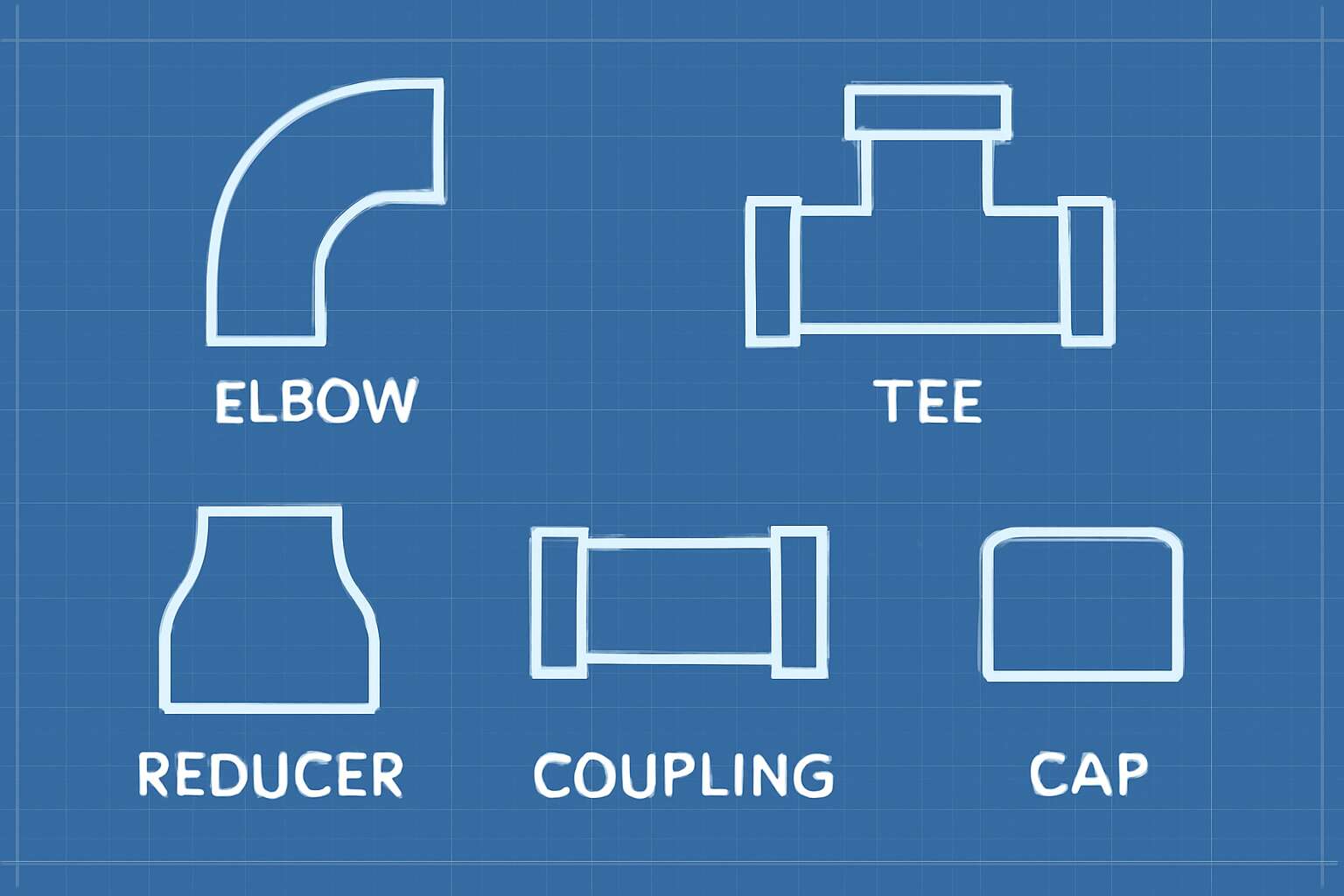
Foundations of Piping Symbols
Understanding Pipe Line Symbols
Foundations of Piping Symbols unfold like a map in a moonlit corridor—every line whispers a truth about flow, pressure, and safety. In a South African plant, a single misread line can cascade into days of downtime; some experts estimate that up to 30% of delays trace to unclear pipe fitting symbols. Understanding pipe fitting symbols isn’t magic, it’s method—the quiet grammar behind every schematic and spec sheet.
Foundations of Piping Symbols are built on consistent line types, clear fittings, and standardized marks. When you read them correctly, the drawing breathes and speaks with precision. Below are the pillars that keep the system steady:
- Line conventions and color codes that separate pipes by service
- Fitting indicators and joint symbols that show how components connect
- Valve, pump, and instrument symbols that govern control and monitoring
From Cape Town to Upington, the clarity of these symbols shapes reliability and speed—no mystique, just mastery.
Line Types and Their Meaning
Across South African plants, misread drawings never sleep. A single forgotten line type can trigger days of downtime; some experts estimate up to 30% of delays trace to symbol confusion. Foundations of piping symbols turn that chaos into cadence—the quiet grammar that keeps flow honest and safe. This is why pipe fitting symbols matter, shaping how a drawing breathes and proves its integrity.
Line conventions and color codes separate pipes by service, while the shapes of fittings tell you how components meet. Consider these common lines:
- Solid lines indicate primary process pipes
- Dashed lines map indirect or future services
- Dotted or chain-dotted lines mark insulation or temporary routes
Fitting indicators and joint symbols reveal connection types; valve, pump, and instrument symbols govern control and monitoring. Together they choreograph the system’s rhythm, from a Cape Town plant to Upington, turning complexity into confident, legible design.
Coordinate with Industry Standards
Foundations of piping symbols coordinate with industry standards to ensure drawings breathe the same language from a Cape Town workshop to a Port Elizabeth refinery. In South Africa, misread plans still squander up to a third of project time—these foundations are the quiet cockpit of safe, efficient operation.
Foundations are built on these pillars:
- ASME/ANSI and ISO symbol libraries for fittings, joints, valves, and instruments
- P&ID conventions that travel across multi-service plants
- Local guidance (SANS) that keeps equipment and drawings interoperable
When these pipe fitting symbols are aligned with standards, designers and technicians communicate with clarity, and the rhythm of a plant—from Gauteng to the coast—stays steady.
Interpreting P&ID and Isometrics
Across South Africa, misread drawings can waste nearly a third of project time, a loss felt from Cape Town to Port Elizabeth. Foundations of pipe fitting symbols act as a quiet cockpit, guiding safe, efficient operation through every mile of pipe and panel. When these symbols align with shared libraries and local guidance, the plant breathes with a single, confident rhythm.
Interpreting P&ID and isometrics is an art of reading space and connection. P&ID drawings trace process flows, while isometrics place every elbow and valve in 3D truth, letting teams trace paths without stepping into the fabrication daydream. The clarity of pipe fitting symbols in both views keeps multi-service plants coherent—no guesswork, no ambiguity.
- Consistent symbol libraries across drawings
- Clear tagging for valves and instruments
- Logical connectivity from source to discharge
That is how a South African plant sings from Gauteng to the coast!
Common Fitting Symbols and Their Interpretations
Valve and Actuator Symbols
Pipe work speaks in symbols, and misreading them costs time and money. A crisp line on a P&ID is not decoration; it’s a contract with reality. In the realm of pipe fitting symbols, clarity is currency—”Symbol language is the shortest road from plan to action,” quips a veteran engineer.
Common fitting symbols and their interpretations hinge on valves and actuators. Valve symbols convey type—globe, ball, gate, check—while attached actuator icons reveal automation: pneumatic, electric, or manual override. The moment you spot a circle, square, or small actuator tag, you glimpse control in action.
- Globe valve with pneumatic actuator
- Ball valve with electric actuator
- Check valve with spring return actuator
This fluency in pipe fitting symbols keeps teams aligned, especially in South Africa’s bustling plants, where every handover benefits from readable marks rather than guesswork.
Elbows, Tees, and Cross Fittings Notation
In South Africa’s bustling plants, a single misread elbow symbol can halt a line and burn rand. Pipe fitting symbols are the language that keeps teams in sync. Elbows, Tees, and Crosses carry intent as clearly as they carry flow.
Common fittings—elbows, tees, crosses—use notation to show direction and branch points. Elbows route flow; tees branch; crosses link four paths. The symbols pair with linework to reveal true topology.
- Elbow: marks the bend and the angle—90° or 45°—so fitters place it correctly in the layout.
- Tee: signals a branch; the branch leg shows where a new run attaches, not its end point.
- Cross: a four-way junction; orientation matters for isometrics and plant routing.
Consistency with established standards prevents rework and keeps handovers crisp on site.
Flanges, Gaskets, and Couplings Symbols
South Africa’s plants run on momentum—and the moment a symbol misreads, that momentum stalls and rand burns. A single glyph can ripple through a line faster than a lunch break.
Flanges are the grand joiners. The symbol hints at bolt pattern, flange type, and whether a blind or welded connection is intended. In pipe fitting symbols, the flange icon reveals how parts fasten and gasket seating aligns.
Gaskets keep pressure honest; their symbols signal material, seating orientation, and the seal type. A compact gasket icon can spare rework by clarifying specifications:
- Material compatibility
- Seal orientation
- Seating surface
Couplings signal flexible or rigid links, alignment needs, and whether a connector is one- or two-piece. Read correctly, coupling symbols map how power and flow cooperate with the rest of the topology.
Specialty Fittings Symbols
South Africa’s plants move on momentum, and a misread pipe fitting symbol can derail a line and burn rand in minutes. The language of pipe fitting symbols is both map and gatekeeper—one glyph revealing bolt patterns, connection type, and the path of pressure.
Common Fitting Symbols and Their Interpretations map bolt patterns, seating surfaces, and transition types. Specialty fittings symbols push precision further, flagging sensor ports, sampling points, and inline filtration—features that protect integrity and uptime.
- Thermowell port symbol — signals a temperature sensor insertion point.
- Sampling port symbol — marks a point for material sampling or testing.
- Inline filtration symbol — indicates integrated filters and flow-cleaning roles.
Mastery of pipe fitting symbols translates into leaner ops and safer, more predictable plants.
Standards and Regional Variations
ISO, ANSI, DIN Standards Overview
Across South Africa’s yards and plants, a single symbol can prevent a spill and keep people safe. The world of pipe fitting symbols is guided by ISO, ANSI, and DIN—each framing meaning workers trust when pressure rises and quick decisions matter. It’s a shared grammar that steadies fieldwork from farming to factory.
These standards lift regional variations into a global vocabulary.
- ISO: universal symbol family
- ANSI/ASME: North American clarity
- DIN: European specificity
South Africa follows ISO-led practice, letting drawings and isometrics speak a common language. When symbols are clear, teams move from plan to site with quiet confidence.
Regional Differences and Compliance
Around South Africa’s industrial heartland, more than 60% of field errors trace back to unclear pipe fitting symbols. A single symbol can avert a spill and safeguard lives. Across borders, ISO, ANSI/ASME, and DIN shape a shared grammar, with ISO-leading practice guiding drawings and isometrics so teams move from plan to site with confidence.
Regional differences surface in compliance, affecting how symbols are drawn and interpreted.
- Local regulatory alignment and code adoption
- Supplier and contractor certifications
- Site-specific inspection and testing protocols
South Africa harmonizes with ISO while accommodating domestic codes, ensuring that the global vocabulary translates into practical, on-site clarity. That balance keeps maintenance teams efficient, drawing on a shared language from workshop to field.
Symbol Legends and Documentation Best Practices
In South Africa’s critical plants, a single misread pipe fitting symbol can halt a line for hours and cost thousands.
Standards such as ISO, ANSI/ASME, and DIN provide a shared grammar, but regional differences force careful adaptation. ISO-leading practice guides drawings and isometrics, while local codes shape how legends are written and interpreted on site—often a quiet beacon through the maze of equipment. A harmonized symbol library keeps everybody aligned—from workshop plans to field crews.
Robust standards and documentation turn ambiguity into clarity. A well-maintained legend, clear revision history, and cross-references across P&ID, isometrics, and equipment lists ensure that pipe fitting symbols translate across teams, suppliers, and contractors, smoothly and safely.
How to Verify Symbol Accuracy
Across South Africa’s critical facilities, misread pipe fitting symbols can cascade into costly stoppages. Recent audits show up to 12% of field errors trace to symbol misreads, underscoring why standards matter. ISO guides drawings and isometrics, while local codes shape on-site legends, turning a complex maze into a shared language!
- Compare against the current sanctioned library and verify revision.
- Cross-check P&ID, isometrics, and equipment lists for consistency.
- Validate with a quick field walk-through before installation.
With rigorous verification, teams speak the same language—from procurement to commissioning—keeping the plant humming and the pipe fitting symbols trustworthy.
Practical Applications in Design and Fabrication
From Diagrams to Fabrication Drawings
From Diagrams to Fabrication Drawings, the journey is a choreography. Diagrams translate into living instructions, where pipe fitting symbols guide welders, fitters, and inspectors through elbows, tees, and flanges. The cadence of lines tells where to cut, how to align, and what to verify before test. In South Africa’s diverse workshops, this language links design intent with field reality, turning spec sheets into pressure-tested pipelines that withstand everyday use.
- Document connection types and orientation using the signaling language to standardize assembly
- Streamline the bill of materials and fabrication drawings for ordering and fabrication
- Enable QA with traceable verification records
Around South Africa, this heritage of symbols accelerates fabrication and preserves safety, turning complex piping networks into reliable, repeatable builds.
Using Software Libraries for Symbols
Symbols that travel from screen to steel whisper precision into every weld. In practical terms, design and fabrication teams lean on software libraries that house symbol sets—the breath and bones of a project. Through these libraries, pipe fitting symbols become consistent across CAD, BIM, and shop-floor workflows. In South Africa’s busy workshops, this digital choreography translates spec sheets into precise, field-ready instructions, cutting ambiguity and speeding approvals without sacrificing safety.
- Centralized symbol libraries unify representation across drawings and models
- Automated checks flag mismatches and enable early clash detection
- Version control and audit trails support QA and compliance during fabrication
Adopting software libraries for symbols renders a resilient pipeline culture—repeatable, legible, and adaptable as conditions shift from workshop to site.
Quality Assurance and Symbol Review
In SA workshops, pipe fitting symbols become the spoken language between CAD, BIM, and the welder at the bench. When the model meets the shop floor, design intent translates into field-ready instructions with speed and far fewer reworks.
For practical applications in design and fabrication QA and symbol review, we lean on structured checks and a living symbol library:
- Cross-checks between drawings and 3D models to catch inconsistencies early
- Versioned symbol libraries with audit trails for QA and compliance
- Automated mapping of symbols to correct pipes, components, and standards
That discipline becomes a quiet superpower on the floor—clear signals, fewer misinterpretations, and a smoother handoff from office to site as conditions shift from design room to field.
Best Practices for Client-Ready Drawings
Across South Africa’s corridors, field rework often stems from murky symbols rather than faulty welds. A tight corridor of drawings, where intent survives the crawl from CAD to bench, can shave days off installation and keep projects on budget. In this context, pipe fitting symbols act as a shared language guiding fabricators, installers, and inspectors toward a single outcome: clarity from design room to field.
Practical applications hinge on three pillars:
- Clear legend mapped to SA standards, so every crew references the same point of truth
- Version control with audit trails that capture design intent through revisions
- Automated checks that map symbols to pipes, components, and fittings on the bill of materials
This discipline translates design dreams into field-ready instructions, reducing rework as conditions shift from the office to the site. The outcome is a smoother handoff, safer operations, and client-ready drawings that keep SA projects competitive.

0 Comments