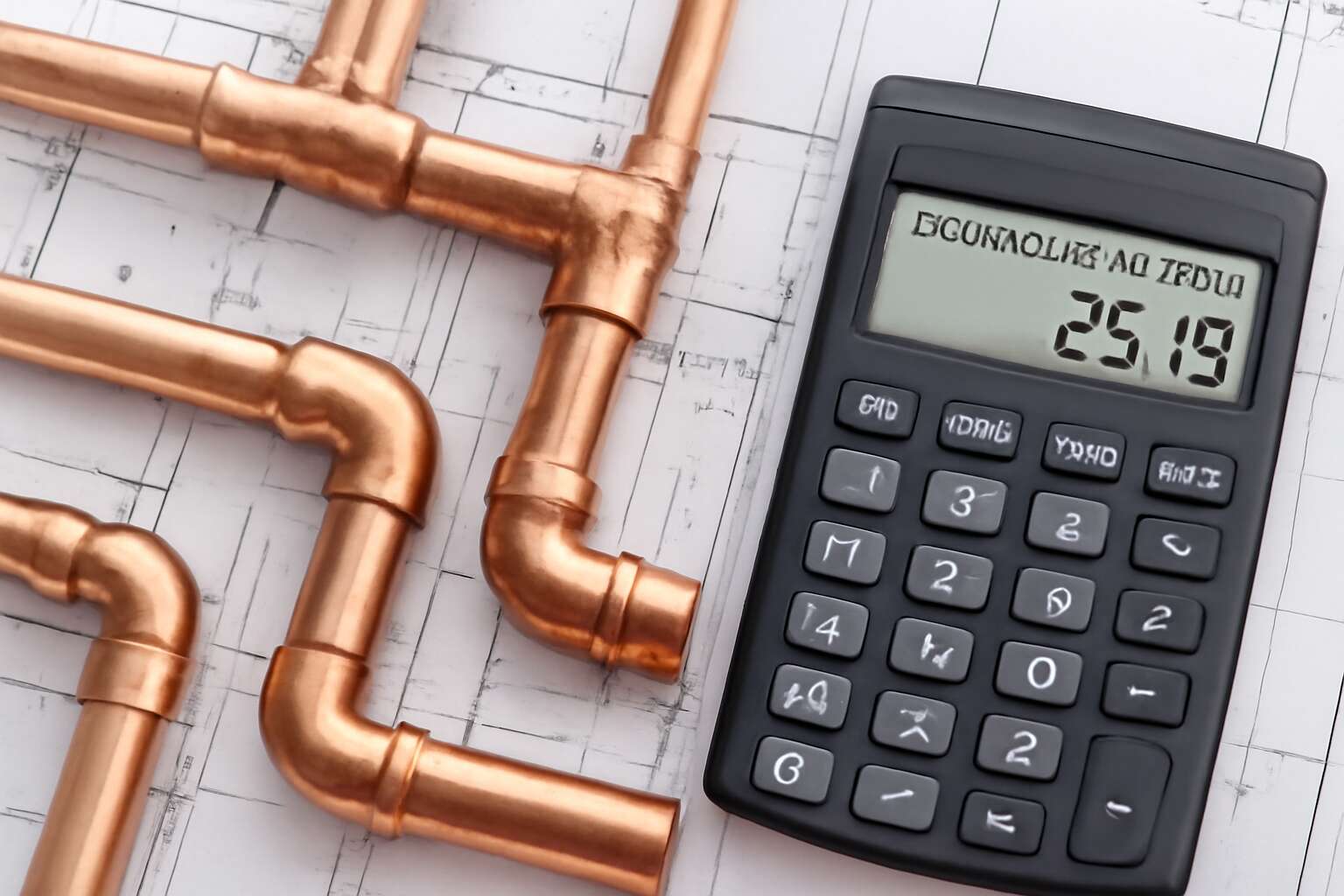
Understanding equivalent length for pipe fittings
What is equivalent length and why it matters
Across South Africa’s piping networks, a handful of fittings can whisper louder than a pump. Studies show small fittings can contribute up to 15% of a system’s head loss. The pipe fittings equivalent length calculator reveals how every elbow, tee, or valve behaves like extra pipe—often several meters—shaping pressure loss and flow. It turns a tangled maze of components into a readable map, guiding engineers and artisans alike.
To understand what lives inside that calculator, consider these factors:
- Fitting type (elbow, tee, reducer) and their approximate equivalent length
- Pipe diameter and flow rate, which shift losses
- Temperature and roughness affecting friction
With such understanding, piping designs in South Africa become more precise, and the network hums with efficiency.
Key factors affecting equivalent length (fitting type, diameter, and flow rate)
Across South Africa’s sprawling pipelines, a lone elbow can whisper louder than a pump, nudging up to 15% of a system’s head loss. A pipe fittings equivalent length calculator shines a light on this hidden friction, turning a tangle of fittings into a legible map—and I’ve watched projects tighten performance as the map comes alive.
Three levers shape that shadow:
- Fitting type (elbow, tee, reducer) and their distinctive equivalent length.
- Pipe diameter: smaller lines magnify losses; larger ones soften them.
- Flow rate: higher velocity shifts friction with surface roughness.
Understanding these elements helps SA designs hum with precision, letting engineers and artisans alike choreograph pressure and flow with confidence!
How to estimate equivalent length using standard tables and charts
Across SA pipelines, a single elbow can steer performance as surely as a pump—head loss can spike by 15%. Understanding equivalent length turns a tangled field of fittings into a legible map, guiding the design from concept to clearer pressure curves.
To estimate, engineers consult standard tables and charts that translate elbows, tees, and reducers into equivalent lengths for common diameters and flow regimes. The result is a practical read on friction, enabling proactive adjustments before commissioning.
For quick turnarounds, a pipe fittings equivalent length calculator converts chart data into actionable numbers.
- Fitting type and nominal diameter as listed in project drawings.
- Corresponding equivalent length values from standard tables or charts for that diameter and typical flow.
- Aggregate the equivalent lengths to estimate overall head loss adjustments.
- Cross-check with field data and chart-derived values for consistency.
Common mistakes to avoid when calculating
Across South Africa’s winding pipelines, a lone elbow can swing head loss by as much as 15%—a small twist with outsized consequences. Understanding equivalent length turns a maze of fittings into a clear river map, guiding engineers from concept to steady pressure curves.
Common mistakes slip into the design stream:
- Forgetting to convert every fitting to its equivalent length for the correct diameter and flow regime.
- Applying chart values from one size to another without adjustment.
- Ignoring the cumulative effect of multiple fittings by double-counting or skipping them.
- Overlooking changes in velocity or friction factor when diameter changes along the run.
To avoid these snags, many teams lean on a pipe fittings equivalent length calculator, a compass that keeps the numbers honest and the design confident.
Fundamental equations and methods
Darcy-Weisbach vs Hazen-Williams approaches for head loss
The fundamental equations that govern head loss act like quiet judges in a pressure regime, weighing roughness, velocity, and gravity. The Darcy-Weisbach formula h_f = f (L/D) (V^2 / 2g) keeps a universal ledger, with f matching the flow’s turbulence and pipe surface roughness. By contrast, Hazen-Williams is an empirical shorthand tuned to clean water in common pipes, offering quicker estimates for everyday layouts.
For practical design, a pipe fittings equivalent length calculator translates these theories into a single metric: length. This enables engineers to compare fittings as if they were straight pipe, streamlining layouts and safeguarding acceptable head loss. Consider these distinctions:
- Darcy-Weisbach emphasizes a friction factor that reacts to Reynolds number and roughness.
- Hazen-Williams is straightforward for water systems but bounded by its empirical scope.
In South Africa, where municipal pressures and varied pipe networks test reliability, the calculator anchors decisions in both rigor and pragmatism.
Using equivalent length in head loss calculations
Flow has a memory. In head loss design, fundamental equations and methods weigh roughness, velocity, and gravity with careful discernment. The Darcy-Weisbach formula h_f = f (L/D) (V^2 / 2g) keeps a universal ledger, while Hazen-Williams offers a brisk empirical path for clean-water mains. For fittings, those ideas condense into a single, practical story: length.
Enter the pipe fittings equivalent length calculator. It translates every elbow, valve, or tee into an equivalent straight-pipe length, letting engineers compare layouts as if the pipeline were uninterrupted. This angle balances rigor with pragmatism—especially in South Africa’s varied municipal networks—keeping head losses within bounds while designs stay elegant.
- Fittings contribute an equivalent length
- Flow and diameter shape L_eq
- Layouts compare like straight runs
Converting fittings into equivalent straight pipe length
In SA’s municipal networks, about 20% of head loss comes from fittings—the elbows and valves that hate being seen. Not glamorous, but true. The pipe fittings equivalent length calculator translates every snag into a straight-run story, letting layouts be judged as if the pipe never turned.
Fundamental equations anchor the method: Darcy-Weisbach with h_f = f (L/D) (V^2/2g) for pressure drop, and Hazen-Williams as a brisk path for clean water. Converting fittings into equivalent straight length lets engineers compare layouts as if the pipeline were uninterrupted.
- L_eq acts as the translator between fittings and straight pipe.
- Layout comparisons become apples-to-apples, not apples-to-parts.
- Rigor meets pragmatism, keeping head losses in check without overcomplicating drawings.
The pipe fittings equivalent length calculator blends theory with street-smart insight, giving SA designers a cleaner canvas for network planning.
Sample calculation workflow for a piping network
Momentum in SA networks hinges on every elbow. In municipal mains, fittings siphon a surprising share of head loss—roughly 20% comes from elbows and valves that hate a straight path. The pipe fittings equivalent length calculator translates those snarls into an equivalent straight length, letting layouts be judged as if the pipeline never turned. Fundamental equations anchor the method: Darcy-Weisbach, h_f = f (L/D) (V^2/2g), and Hazen-Williams for clean water. L_eq becomes the translator between fittings and pipe, keeping head losses honest without overcomplicating drawings.
Here’s a sample calculation workflow for a piping network: using a pipe fittings equivalent length calculator, map each fitting to L_eq, sum with straight lengths, then apply the head-loss model to compare layouts.
- Identify all fittings and their L_eq values.
- Convert each fitting to its equivalent straight length via the calculator.
- Sum total length: straight pipes plus summed L_eq.
- Compute head losses using Darcy-Weisbach or Hazen-Williams for the network.
- Compare alternative layouts by total head loss and practical constraints.
Fitting types and their equivalent lengths
Elbows and bends: 90°, 45°, and long radius variants
Flow in a piping system is a saga of turns, and even small bends can tip the balance of pressure. A robust pipe fittings equivalent length calculator helps engineers in South Africa translate every elbow into straight-line loss, keeping networks efficient and predictable. Elbows and bends—90°, 45°, and long-radius variants—demand special attention because their equivalent lengths diverge from straight pipe by geometry and flow behavior.
- 90-degree elbow
- 45-degree elbow
- long-radius elbow
Each variant reshapes head loss differently, and the pipe fittings equivalent length calculator assigns a length to that turn so it can be added to a straight-pipe equivalent. The method mirrors field practice: recognise the fitting, apply its length, and weave the result into a network-wide estimate.
Valves and throttling devices: gate, globe, and ball valves
In South Africa’s sprawling water and process networks, every valve acts as a gatekeeper of pressure—and a single small head loss can ripple through a plant. A pipe fittings equivalent length calculator translates bends and throttling into straight-pipe penalties, giving engineers a common yardstick for design and retrofit.
Valves and throttling devices—gate, globe, and ball valves—exert different losses because their internal passages bend the flow in unique ways. Gate valves suit on/off service and stay unobtrusive when fully open; globe valves introduce more loss due to the seat and flow path; ball valves deliver low resistance when open, but offer limited throttling. A pipe fittings equivalent length calculator helps map these behaviors into equivalent straight lengths, keeping the head loss picture consistent across network.
- Gate valves: low friction when fully open; not ideal for throttling
- Globe valves: higher friction; precise throttling control
- Ball valves: minimal drop when open; limited throttling range
Tees and branch connections: branch vs run lengths
In South Africa’s sprawling networks, a single bend can rearrange a plant’s rhythm and fortunes. Fitting types yield different losses, and the pipe fittings equivalent length calculator translates those penalties into straight-pipe terms, giving engineers a shared yardstick for design and retrofit.
- Branch take-offs disrupt flow more than a straight-through tee, increasing the equivalent length.
- Run-through tees channel flow with fewer deviations, lowering the penalty in the straight-pipe model.
- Long-radius tees soften the bend, reducing head loss compared with sharp branches.
Tees and branch connections deserve careful mapping when plotting a network’s heartbeats. By translating each branch and run into an equivalent length, teams illuminate the path from source to sink—without sacrificing performance or elegance.
Miscellaneous fittings and adapters: reducers, caps, and plugs
In South Africa’s sprawling industrial arteries, a single reducer can rearrange a plant’s rhythm. A pipe fittings equivalent length calculator translates those penalties into straight-pipe terms, giving engineers a shared yardstick for design and retrofit.
Fitting types each wear their own signature on the flow. Reducers disrupt the path with diameter changes; caps seal off a line, and plugs block it. The calculator assigns an equivalent length to these acts, letting the network reveal the true length of pain.
Here are the main miscellaneous fittings and adapters:
- Reducers (concentric or eccentric) add penalty proportional to diameter change and disruption.
- Caps and plugs seal lines; their equivalent length mirrors the blocked straight segment.
- Adapters and couplings introduce small penalties dependent on geometry and fit.
Across SA, the calculator stitches fittings into measurable lengths.
Practical tools and online calculators
Choosing a reliable calculator for project needs
“Measure it right the first time,” a veteran plumber likes to say. In piping projects, a single miscalculation can ripple into costly rework. The stakes are high in South Africa’s varied installations, where precision is not a luxury but a necessity.
Practical tools and online calculators streamline this task. When choosing a reliable calculator for project needs, look for up-to-date libraries of fittings, clear unit handling, and the ability to map your network and export results. A dependable pipe fittings equivalent length calculator keeps your design honest and auditable.
- Up-to-date library of fittings and standards
- Intuitive inputs and transparent results
- Easy export to reports and CAD flow diagrams
Assess support, data privacy, and whether the tool accommodates local materials and norms. In South Africa, reliable calculators become part of your project backbone, not a one-off helper.
Input parameters you typically need (diameter, flow rate, viscosity)
South Africa’s piping projects don’t forgive miscalculations; a recent industry pulse puts rework at roughly 20% of project budgets. A dependable pipe fittings equivalent length calculator keeps design honest from the start, translating complex networks into auditable numbers that stay on site and in reports.
Input parameters you typically need include core geometric and fluid properties:
- Diameter (nominal or actual) with units in millimetres
- Flow rate (litres per second or cubic metres per hour)
- Viscosity (dynamic or kinematic, with SI units)
Look for tools with an up-to-date library of fittings, clear unit handling, and easy export to reports and CAD diagrams. In South Africa, a pipe fittings equivalent length calculator becomes part of the project backbone, ensuring precision and accountability.
Interpreting results and unit considerations
South Africa’s piping ambitions rarely forgive miscalculation; the cost of rework can creep into 20% of a project’s budget. A reliable pipe fittings equivalent length calculator acts as a compass, turning tangled networks into auditable numbers you can trust on site and in reports.
I’ve learned that practical tools and online calculators shine when they deliver a clean unit workflow—from millimetres to metres and litres per second to cubic metres per hour. Interpreting results becomes artistry: maintain unit consistency, check rounding, and compare against project baselines before data leaves the desk.
- Up-to-date library of fittings
- Clear unit handling
- Export to reports and CAD diagrams
- Audit trails on project changes
With every calculation, the pipe fittings equivalent length calculator becomes a quiet partner in precision, a veil lifting between diagram and reality, ensuring the project breathes in the same measured rhythm as design.
Understanding calculator limitations and accuracy
Practical tools and online calculators act as the steady hand on South Africa’s project floor, yet every portal has limits. Calculations depend on assumptions about fluid properties, temperature, and flow regime, and small misreads can magnify into tangible errors. Rounding and unit conversions may creep into final numbers, especially when networks grow complex. A well-used pipe fittings equivalent length calculator shines when those constraints are understood, turning tangled schematics into auditable figures you can trust on site and in the reports.
- Rounding error tolerance and significant figures
- Assumptions about viscosity, density, and temperature
- Input data quality and measurement uncertainty
When used with care, the tool supports clean export to reports and CAD diagrams, elevating confidence without stalling collaboration.
Applications, industry examples, and SEO considerations
HVAC piping versus water supply and industrial process piping differences
Head loss is a stealthy budget killer, and in South Africa projects feel it long before the first weld. A single misread in equivalent lengths can push budgets over the edge.
Applications span HVAC retrofits, municipal water expansions, and mining and chemical piping.
- HVAC retrofits in malls
- Municipal water expansions
- Mining and chemical piping
HVAC piping favors compact fittings and quiet service, often copper or PEX with moderate pressures; water-supply networks lean on steel or ductile iron for durability under static head; industrial process lines demand corrosion resistance and higher-temperature alloys. The pipe fittings equivalent length calculator helps translate a forest of fittings into one readable length, unifying design language and boosting SEO relevance by matching reader intent.
In South Africa, mining, urban housing, and water projects demand clear calculators and consistent terminology to keep content credible when the pipework does the talking on site.
Real-world use cases: optimizing network design
Across South Africa’s skylines, the heady math of flow is a quiet budget killer. A single misread in equivalent lengths can turn a tidy plan into a costly surprise, especially in malls, water networks, and industrial lines. Applications span HVAC retrofits, municipal water upgrades, and mining and chemical piping, where every bend and valve speaks in numbers.
- HVAC retrofits in malls
- Municipal water expansions
- Mining and chemical piping
SEO considerations: The pipe fittings equivalent length calculator translates cluttered fittings into a single readable length. Readers in South Africa seek clear terminology and credible, consistent language. Use the phrase naturally and match reader intent, so design intent and site realities align from the design office to the field. This approach supports municipal, mining, and housing projects by clarifying how small changes ripple through the system.
Presenting results for engineering reports and specifications
Every bend in a piping network speaks a number—and a single misread can turn a tidy plan into a costly surprise. The right calculator converts elbows, valves, and tees into one actionable length, helping teams size pumps, ducts, and pipes with confidence.
Applications span commercial retrofits, municipal upgrades, and heavy-industry piping projects. Industry leaders use it to forecast pressure losses and ensure compliance without overdesigning.
- Commercial retrofit projects in malls and office complexes
- Municipal water and wastewater network expansions
- Industrial process piping in mining and chemical facilities
SEO considerations in South Africa demand clear terminology and consistent language that mirrors site realities from the design office to the field. pipe fittings equivalent length calculator is the natural, credible bridge that aligns project intent with on-site performance.
SEO-focused content strategy: keyword placement, meta tags, and internal linking
In South Africa’s design rooms, the path from plan to pipework is measured in quiet clarity: a single metric can unlock or wreck a project. The right tool—your pipe fittings equivalent length calculator—translates elbows, tees, and valves into one actionable length, turning complexity into confidence.
Applications span retail and office retrofits, municipal upgrades, and heavy industry. Here are common industry contexts:
- Retail and office complex retrofit piping projects
- Municipal water and wastewater network expansion schemes
- Industrial process piping in mining and chemical facilities
SEO-focused strategy for South Africa relies on clear terminology, keyword placement, meta tags, and internal linking. Place the pipe fittings equivalent length calculator in titles, descriptions, and body copy, then weave links to related topics—What is equivalent length, standard tables, and head loss calculations—to guide readers and search engines.

0 Comments