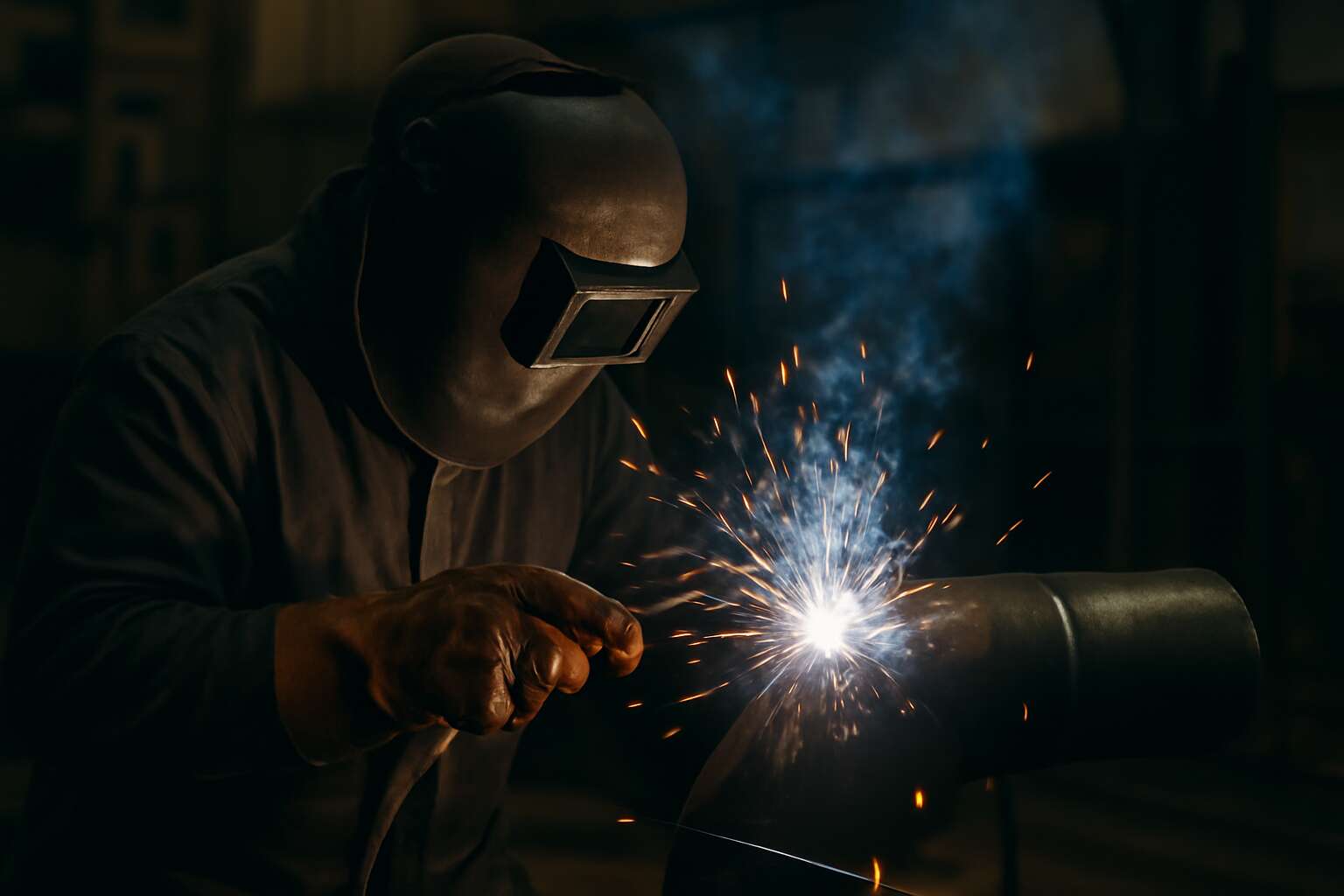
Comprehensive guide to welding pipe fittings
Safety and prerequisites for welding pipe fittings
Across busy South African workshops, a single spark can rewrite a day—and nearly one in five safety incidents in pipe-fitting work trace to missing prerequisites. Safety isn’t a box to check; it is a mindset that steadies a welder through heat, noise, and risk!
The prerequisites for welding pipe fittings set the stage for competent practice:
- Personal protective equipment (PPE) tailored to welding tasks
- Adequate ventilation or fume extraction
- Fire prevention measures and a clean, clearly marked work zone
- Formal training or supervision by an experienced mentor
For those curious about how to weld pipe fittings, safety begins before the torch is lit, with planning, PPE, and a culture of care. In South Africa, this approach aligns with rigorous standards and a shared duty to protect workers and communities.
The craft thrives where curiosity meets restraint; the material reveals the character of its keeper.
Welding methods and joint types for pipe fittings
The labyrinth of pipes in South African workshops hums with possibility, and the right joint turns a chaotic corridor into a reliable conduit for progress.
This guide explores welding methods and joint types that hold up under pressure—MIG, TIG, MMA, and the classic butt, socket, threaded, and flanged connections.
- Butt weld joint
- Socket weld joint
- Flanged joint
For those asking how to weld pipe fittings, the craft rests on material compatibility, fit-up, and the chosen process—MIG, TIG, or MMA—paired with carbon steel, stainless, or alloy pipes, and the eye of inspection.
In essence, the metal reveals its keeper: patient design, careful fit, and a craft that respects safety while shaping seamless flow.
Preparation steps before welding pipe fittings
A strong weld starts before the torch. A veteran welder in South Africa’s shops often says, “Preparation is the weld you never see.” In pipe fittings, quality rests on a solid foundation—this prep sets the tone for how to weld pipe fittings, emphasizing clean surfaces, precise fit-up, and steady focus.
Preparation steps before welding pipe fittings travel from the bench to the pipework, and they matter more than you might think:
- Cleanliness: remove oil and grease from mating surfaces.
- Fit-up: verify gaps and alignment.
- Beveling and edge prep: bevel edges to recommended angles.
- Dryness and storage: keep parts dry until welding begins.
- Inspection: check burrs, rust, scratches.
Before the first tack, lay out a quick checklist and confirm material compatibility: carbon steel, stainless, or alloy piping. Keep the work area clean and ventilated, and ensure tools are calibrated. These steps build reliability as joints progress through the workshop.
Welding techniques, parameters, and quality control
This comprehensive guide to welding pipe fittings dives into techniques, the delicate balance of heat, filler, and cadence. When you ask how to weld pipe fittings well, you think beyond the torch toward material kinship and joint demands. In South Africa’s workshops, seasoned hands temper heat to avoid warpage while ensuring proper fusion. The frame rests on careful parameter control—current, voltage, travel speed, and interpass temp—adapted to carbon steel, stainless, or alloy piping.
Quality control is the quiet guardian of every joint. Visual checks, nondestructive testing, and meticulous records ensure consistency from root bead to cap. A disciplined workflow, balanced with practical know-how, keeps joints true as they progress through the shop.
- Documentation and traceability
- Acceptance criteria
In the end, the art blends patient hands with reliable process, telling a story of workmanlike pride across the veld and city alike.


0 Comments