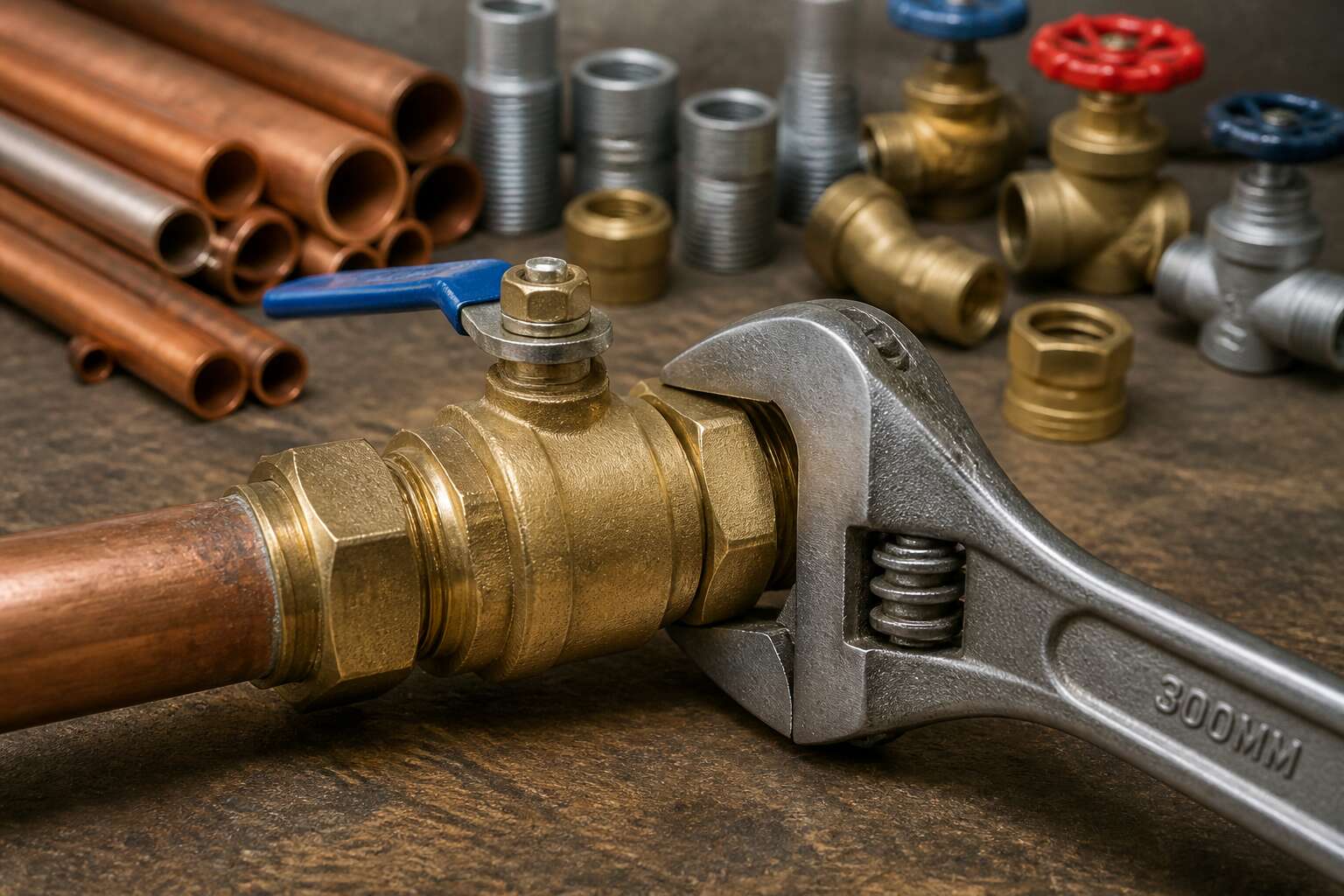
Core Components of Residential Plumbing Systems
Pipes and Tubes: The Backbone of Water Flow
A single house contains dozens of metres of concealed piping. That network begins at the water meter and branches into every tap, geyser, and toilet. The choice of pipe material determines how long that network will last. Copper remains a favourite for its durability, while PEX offers flexibility for tricky routes. PVC quietly handles the drainage work.
In South Africa, the gap between a reliable system and an endless repair bill often narrows to pipe fitting and plumbing done properly. Every joint, bend, and coupling must align with precision. A misaligned fitting can cause water hammer, pressure loss, or worse.
Inside the wall cavities:
- Risers carry water vertically between storeys.
- Manifolds distribute supply to individual fixtures.
- Vent stacks release sewer gases safely.
Those components work as one system, and their integrity starts with skilled installation. A simple mistake inside that cavity can become a costly problem decades later!
Valves and Fittings: Controlling Flow and Direction
South African homes rely on a hidden network that does far more than carry water. It directs, regulates, and protects. The true command centre of this system is found in its valves and fittings. These components do not merely connect pipes; they determine how water moves, where it stops, and how efficiently your entire plumbing performs. Without them, a simple leak becomes a structural threat, and a routine repair turns into a major excavation.
Valves act as the guardians of flow. They allow you to isolate a bathroom suite without shutting down the whole house. A gate valve, for instance, offers a straight path for water when fully open, making it ideal for main lines. Ball valves provide a quick, quarter-turn shutoff, which proves invaluable during emergencies. Pressure-reducing valves manage the high municipal pressures common in Gauteng, protecting appliances from damage. Thermostatic mixing valves blend hot and cold water to prevent scalding, a critical safety measure in any family home.
Fittings, by contrast, manage direction and connection. They are the silent navigators that bend water around corners and join different materials. Consider these common roles:
– Elbows change direction, typically at 90 or 45 degrees, fitting neatly into wall cavities.
– Tees create branches, allowing a single supply line to feed multiple fixtures.
– Reducers transition between pipe diameters, maintaining pressure as flow demands decrease.
– Couplings join two straight lengths, either permanently or for future disassembly.
Each fitting must match the pipe material. Copper demands soldered joints. PEX relies on crimp rings. PVC needs solvent cement. A mismatch here invites corrosion, leaks, or even burst lines. Proper pipe fitting and plumbing practice dictates that you never mix these joining methods, as each creates a distinct seal under different thermal expansion rates. This precision is what separates a dependable system from a recurring problem.
The real test comes with water hammer. When a tap closes quickly, a pressure wave travels through the pipes. Poorly installed fittings amplify this shock, causing banging noises and eventual joint failure. A correct installation, with appropriate air chambers or water-hammer arrestors, absorbs this energy. This is where professional expertise in pipe fitting and plumbing becomes non-negotiable. A skilled hand knows exactly where to place a support clip and how much torque a compression nut requires.
For South African homeowners, water conservation adds another layer. A slow-dripping valve wastes thousands of litres annually, hitting both your bill and the municipal supply. Good fittings ensure a positive seal, while accessible valves allow you to find and fix leaks quickly. In older homes, galvanised steel pipes often fail at threaded fittings. Replacing these with modern options improves water quality and restores peace of mind.
Valves and fittings form the decision-making skeleton of your home’s water system. They isolate, direct, and safeguard. When installed with care, they work silently for decades. When ignored, they create persistent, nagging issues. The distinction lies not in the pipes themselves, but in the quality of the connections between them. That distinction starts with knowledgeable selection and ends with exact installation.
Fixtures and Appliances: The End-User Touchpoints
The average South African household uses over 230 litres of water per person each day, and every single litre exits through a fixture. These endpoints are where the pressure is felt, quite literally. While the pipes and valves operate behind the scenes, fixtures and appliances are the physical interfaces of your plumbing system.
A tap that sputters or a toilet that runs endlessly is more than an annoyance; it is a sign that the system is under duress. Proper pipe fitting and plumbing for these touchpoints demands a keen awareness of water pressure. A standard tap throws a waterfall, but a mixer shower needs balanced pressure to prevent scalding. The installation must account for this.
Consider the appliances that work tirelessly:
– The washing machine requires a high-pressure hose and a drain with a proper air gap.
– The dishwasher connects to the hot water line and demands a leak-proof seal.
– The geyser, a critical component, needs a temperature and pressure relief valve that functions flawlessly.
– A standard toilet uses roughly 40 litres of water per flush to operate if the internal flapper is compromised.
The science of water is a lesson in fluid dynamics. A shower head forcing water through a small opening changes the water’s velocity and pressure. If the fixture is not designed for that specific flow rate, you invite whistling sounds and erosion within the joints. A skilled plumber calculates these variables.
Ultimately, a sink is just a bowl, and a tap is just a spout. But through the lens of pipe fitting and plumbing, they are the final sentence in a story about pressure control and thermal expansion. When you turn that handle, you are not just washing your hands. You are commanding the culmination of every meter of pipe in the foundation, and you expect it to respond instantly.
Seals and Gaskets: Preventing Leaks Effectively
Every year, millions of litres of treated water vanish into the ground between the meter and the tap, often through a component smaller than a coin. In the quiet suburbs of Johannesburg or a coastal cottage in the Western Cape, the humble gasket holds the line. It is the unsung hero of pipe fitting and plumbing, a soft witness to immense pressure and thermal shifts. When a seal fails, it is rarely dramatic. It is a slow, damp stain on a ceiling or a persistent trickle that never quite stops.
A well-fitted seal requires more than brute force. It demands a clean cut and a surface free of debris. Over-tightening a joint is a common mistake, as it squeezes the elastomer out of its groove and destroys its memory. The choice of material matters, from nitrile for oil resistance to EPDM for hot water lines. Each compound has a story and a specific purpose. The goal is to create a static barrier that remains flexible, absorbing the micro-movements of a house settling on the Highveld clay without losing its grip.
The true test of pipe fitting and plumbing is not how quickly water flows, but how quietly the system rests. A good seal ensures that the pressure stays where it belongs, preventing the constant cycling of your pressure pump. It protects the threaded joints from galvanic corrosion that can fuse metals together permanently. In my years of inspecting homes, I have found that peace of mind often rests on a few rand worth of rubber. The physical act of seating a new washer is a moment of trust between the installer and the future.
Ventilation and Drainage: Ensuring Proper Airflow
It is easy to overlook the network of air that breathes life into a home’s drainage system. While the pipes you see handle water, the vents you do not see handle pressure. Without proper ventilation, a basic flush becomes a gurgling struggle, and a simple drain turns into a slow, frustrating trickle. These vents act as the architectural lungs of the house, equalising pressure so that waste can move freely and water can flow without resistance.
The principle is straightforward: every drain needs a supply of air to prevent a vacuum from forming. When water rushes down a pipe, it creates negative pressure. If that pressure cannot equalise, it will suck the water out of nearby traps, breaking the water seal that keeps sewer gases out of your living space. This is where the vent stack comes into play. It routes harmful gases safely up and out through the roof, while simultaneously allowing fresh air to enter the system and maintain a stable balance.
Vent pipes are often referred to as the silent partner in a plumbing system. They are the reason your sink drains quickly and your toilet flushes with authority. The design requires careful calculation, as the length and diameter of the vent must match the capacity of the drain line it serves. A common issue in older homes involves a condition called “siphoning,” where the waste water creates a suction force strong enough to empty a trap completely. A well-installed vent interrupts this action, breaking the siphon before it can cause damage.
A failing ventilation system presents symptoms that are often misdiagnosed. You might hear a deep, wet gurgle when the washing machine pumps out, or you might notice a persistent odour despite cleaning the drains thoroughly. These are signs that the air balance is off, and it points to a specific area of pipe fitting that requires professional attention. Debris, bird nests, or even frost can block the vent opening on the roof, turning a functional system into a chaotic one overnight.
The drainage and venting systems share a symbiotic relationship, but they serve distinct purposes. The drain line removes waste using gravity and a slight downward slope. The vent line removes gas and regulates pressure. When you think about pipe fitting for these systems, the joints matter just as much as the pitch. A poor seal on a vent pipe can allow moisture to condense inside the wall cavity, leading to rot and mould that is difficult to detect until it becomes a structural problem.
For those living in regions with heavy rainfall, the integration of the vent system with the roof flashing is critical. A compromised flashing point invites water ingress, which can travel down the pipe and undermine the foundation of the plumbing structure. The goal is always to create a system that operates without human intervention, silent and dependable. When it works, you never think about it. When it fails, the entire house knows. Regular inspections of the roof vent opening and listening for tell-tale sounds in the walls can prevent a minor inconvenience from turning into a major renovation.
Selecting Materials for Pipe Fitting and Durability
Copper Piping: Classic Reliability and Heat Resistance
Copper piping carries an almost supernatural reputation in pipe fitting and plumbing. It refuses to age. It handles heat without complaint. This metal shrugs off pressure surges, temperature swings, and aggressive water chemistry. Pinhole leaks, so common with lesser materials, rarely appear here.
For South African homes, this resilience matters. Our water supplies vary wildly from region to region. The sun hammers exposed lines, but copper holds its shape.
- Handles hot water distribution without warping
- Withstands UV exposure when correctly installed
- Maintains smooth internal bore for decades
Selection in this trade comes down to preparation. Copper is plain troublesome to solder without care. But the result is a system that delivers. No other metal balances workability, heat resistance, and longevity this well in a pipe fitting and plumbing setup.
PVC and CPVC: Versatile Plastics for Varied Uses
PVC and CPVC are the introverts of the pipe fitting and plumbing world. They don’t boast about longevity like copper; they just quietly get the job done without corroding or reacting to aggressive water chemistry. In South Africa, where municipal water can sometimes taste like a swimming pool, these plastics shrug off chlorine and acidic conditions that would chew through metal. They also cost a fraction of the price, which matters when you are running lines for a whole household.
CPVC, in particular, steps up for hot water applications. Its chlorinated structure handles higher temperatures without softening or warping. The installation process is also a lifesaver for DIY enthusiasts. You simply use solvent cement, no flames, no heavy tools, and no need for a plumber’s torch. That ease of assembly saves serious time and cash.
Here is what you are really paying for with these plastics:
– Lightweight handling and transport
– Excellent resistance to scale buildup inside the bore
– A smooth interior that keeps water velocity steady and quiet
They are not glamorous, but they are pragmatic. For many local projects, especially renovations, they are the smart choice in pipe fitting and plumbing.
PEX Tubing: Flexibility Meets Cost-Efficiency
PEX tubing, the plastic coil in the “freeze-dried coffee” aisle of the hardware store, brings a special kind of relief to pipe fitting and plumbing. Since it spools off a roll, you can weave it through your roof trusses without a single glue joint. Fewer connections mean fewer potential drips hiding under your floorboards.
Here is the gritty truth about the material itself:
– It expands when water freezes, so it cracks far less than rigid pipe
– It has a reasonable pH tolerance, so take a minute to check your municipal water report
– It gets grumpy with direct sunlight, so guard it wisely
The real cost saver appears when you stop using elbows and couplings. You just bend the thing. Your plumber might grumble about the learning curve, but for a straightforward rerun, this is a smart, practical approach to pipe fitting and plumbing.
Galvanized Steel: Heavy-Duty but Prone to Corrosion
Galvanized steel remains a familiar sight in older homes and commercial buildings across South Africa. Its silvery, spangled surface promises a rugged strength that plastic simply cannot match. This material has carried water for generations, and its track record speaks to a certain heavy duty reliability that many property owners still trust for their pipe fitting and plumbing needs.
However, that initial strength hides a slow ticking clock. The zinc coating is a sacrificial layer, meaning it corrodes over time to protect the underlying steel. Once that coating is spent, rust begins to form inside the pipe. This is the hidden cost of choosing galvanized steel for your pipe fitting and plumbing projects.
Here is what you need to consider before committing to this metal:
– The internal bore narrows over decades due to rust and scale buildup.
– Water pressure at the tap can diminish significantly as a result.
– Discoloured water, often brown or yellow, indicates active corrosion.
– Threaded joints are prone to leaks once the protective layer degrades.
Working with galvanized pipe requires specific skills. Cutting it demands a hacksaw or a metal cutter, while joining sections involves threading machines and heavy wrenches. This is labour-intensive work, which can make the initial installation cost higher than other options. Yet, in certain scenarios, such as exposed outdoor lines or structural support systems, the sheer rigidity of galvanized steel is a distinct advantage.
The durability you gain comes with a caveat. While the pipe might last fifty years or more in ideal conditions, the reality of South African water chemistry often speeds up the corrosion process. Aggressive water, with low pH levels, will strip the zinc protection faster than you might expect. This is a critical consideration for any pipe fitting and plumbing decision. Understanding the water quality in your specific region is not just a suggestion, it is a necessity when this metal is on the table.
Ultimately, galvanized steel offers a fascinating paradox. It is a robust, heavy duty solution that is simultaneously vulnerable to its own internal decay. For those undertaking a major renovation or a new build, weighing this duality against other materials is a step you cannot afford to skip. The choice is a balance of upfront toughness against long term maintenance, a trade-off that defines the very essence of a sound infrastructure.
Cast Iron and Others: Specialized Options for Specific Needs
Choosing the right material for your project is a decision about longevity and performance. While modern plastics dominate new installations, the conversation often turns to the classics. The selection process involves weighing cost against the expected lifespan of the system, a balance that defines the success of any build.
Cast iron stands as the stalwart of high-end durability. It offers unmatched sound deadening, which is a blessing in multi-story buildings where the sound of rushing water can be a nuisance. Its resistance to deformation under heat and pressure makes it a premier choice for main stacks. However, working with it demands significant physical effort and specialized tools. Fittings are heavy, and cutting requires a snap cutter or a sawzall with the right blade.
When you lay out the options for pipe fitting and plumbing, the comparison often comes down to specific properties:
– Impact Resistance: Cast iron shrugs off accidental impacts that would crack PVC.
– Fire Rating: It does not burn or melt, providing a crucial firestop in structural penetrations.
– Maintenance: It requires a firm commitment to proper support; hanging it incorrectly can lead to stress fractures at the joints.
The decision isn’t about which material is universally superior, but which is superior for your specific context. For a homeowner seeking peace and quiet, the investment in cast iron is justifiable. For a quick repair on a budget, the flexibility of plastic wins. The true craft lies in matching the inherent strength of iron to the demands of the building, ensuring the water flows quietly and safely for decades to come.
Comparing Material Costs and Lifespans
A Detailed Walkthrough of Pipe Fitting Installation
Measuring and Cutting Pipes with Precision
Threading, Soldering, and Gluing: Joining Methods Explained
Threading, soldering, and gluing each demand a steady hand and a respect for the material’s temperament. Threading cuts a spiral into galvanized steel, creating a mechanical bond that holds under pressure. Soldering relies on capillary action, drawing molten metal into the joint with precise heat. Gluing, or solvent welding, fuses PVC into a single, unyielding body.
Each method has its own rituals:
- Threading requires a die and cutting oil, and a clean, burr-free end.
- Soldering demands dry pipe, flux, and a flame that moves without hesitation.
- Gluing needs primer and cement, applied with a brush in one swift motion.
Mistakes in pipe fitting and plumbing surface later, often as a slow drip or a sudden burst. The joint is where the system lives or dies. In pipe fitting and plumbing, the quality of the join determines the silence of the wall.
Installing Fittings for Direction Changes and Branching
The silence of a wall is often a lie. It hides a network of decisions that were made at the worst possible time, usually when water was already rushing. Installing a fitting to change direction is where the pipe fitting and plumbing trade reveals its true nature. An elbow is not a shortcut. It is a confession that the initial geometry was flawed.
Before you cut, you must measure three times and dry fit everything. This is the moment to look for the subtle angles that a tape measure will not show you. When you join a tee into an existing line, the alignment of the branch is sacred. A degree of tilt here means a leak that will only announce itself after the ceiling is closed. Your hands must be certain. The pipe fitting and plumbing work here is unforgiving.
The sequence of assembly carries its own logic:
– Clean the ends of all pipes and remove every burr.
– Dry assemble the entire section to check for alignment.
– Mark the depth of insertion on each pipe.
– Disassemble and apply the chosen joining method.
– Make the final connection, watching for stress on the joints.
A common mistake is to pull the pipes together with force. This creates a strained connection that will fight you forever. The joints should fit with a quiet, natural ease. When you torque the last nut or finish the final solder, the branch should stand true, pointing exactly where the blueprint demanded. The whisper of water moving through that clean, balanced turn is the only sound a good fitter wants to hear.
Support and Hanger Placement for Stability
A pipe without support is a pipe with a plan to fail. Hangers and supports are the unsung heroes of any drainage or supply system, carrying the weight of water and the vibration of flow. In South African installations, where temperature shifts can be extreme, rigid support is non-negotiable.
Spacing is the first rule of support. A horizontal copper line may need a hanger every meter, while a PVC waste pipe requires a different interval to prevent sagging. Sag creates low points, and low points create blockages. The support must also isolate the pipe from the building structure to allow for thermal expansion. Without this flexibility, the pipe will fight the very brackets meant to hold it, leading to stress fractures. This is where pipe fitting and plumbing expertise matters most. A proper installation uses riser clamps for vertical runs and adjustable clevis hangers for horizontal ones. The goal is to hold the pipe steady without crushing it or restricting its natural movement.
When you secure a pipe, also consider the following:
– Use a metal bracket for copper, but always insert a rubber isolator to prevent electrolysis.
– For plastic pipes, a plastic-coated hanger prevents abrasion and noise.
– Anchor points should be placed near changes in direction to absorb thrust.
The final tightness of a hanger is a judgment call. Crank it down too hard and you restrict flow; leave it too loose and you invite chatter. The best pipe fitting and plumbing work looks effortless because the support system is invisible. It is a silent, rigid skeleton holding the entire water network together. When the pressure surges and the water hammer hits, the supports take the punch. That is their job. This quiet diligence is the difference between a system that whispers and one that screams for attention.
Pressure Testing and Leak Detection After Assembly
Troubleshooting Common Pipe and Plumbing Faults
Identifying Leaks at Joints and Fittings
A single leaking joint can waste over 2,000 litres per month. In pipe fitting and plumbing, connections fail more often than straight runs. Moisture along a fitting edge signals trouble long before visible drips appear.
Common culprits include:
- Failed thread sealant
- Overtightened compression nuts
- Corroded solder joints
Discoloured stains or a faint hiss during pressurised flow reveal these faults. Thermal expansion also loosens fittings over time, especially in copper systems. Early identification prevents structural damp and mould growth.
Water Pressure Drops: Causes and Quick Fixes
A drop in water pressure can feel like the system itself is exhaling its last breath. The pipes remain full, but the force that once drove water to your tap has quietly retreated, leaving only a thin, apologetic stream. For anyone working in pipe fitting and plumbing, pressure loss is rarely a mystery of the water supply itself. It is usually a symptom of something more insidious within the network.
Sediment and scale are the usual offenders. They build up over years inside galvanized steel or older copper lines, shrinking the internal diameter until the flow is strangled. Corrosion can also create rough surfaces that slow the water’s journey.
- Check the main shut-off valve for a partially closed position.
- Inspect pressure-reducing valves for a faulty diaphragm.
- Flush the system to clear any trapped air pockets.
- Examine the water meter for signs of a supply restriction.
Another suspect is a hidden leak somewhere in the buried service line. That lost water never reaches your fixtures, yet it bleeds off the pressure required to push the rest forward. The answer lies in isolating sections of the pipe fitting and plumbing system to locate where the force fails. Sometimes the culprit is simpler, like a clogged aerator on the tap itself, a minor fix that masquerades as a major fault until you remove the tiny screen and see the debris collected there.
Corrosion and Scaling: Recognizing Warning Signs
Corrosion and scaling rarely announce themselves with a loud event. In my years working with pipe fitting and plumbing, the early signs are the quiet ones: a faint rust tint in morning water, gritty sediment in sink strainers, or a metallic taste that wasn’t there last month.
- Look for orange or green patches on exposed pipe surfaces.
- Notice rust-colored water after the system has been idle.
- Pay attention to stubborn drips or reduced hot water volume.
Scale often hides internally. It reveals itself through gradual flow loss and odd gurgling sounds. In older systems, corrosion and scaling accelerate damage to connected components. Recognizing these signs early separates a costly pipe fitting and plumbing emergency from a straightforward replacement. The metal may still be salvageable, provided the warning signs are caught before the integrity fails completely.
Noisy Pipes: Water Hammer and Other Acoustic Issues
Few sounds in a home are as unsettling as a deep thud echoing through the walls. Water hammer occurs when a valve shuts abruptly, sending a pressure surge through the contained water column. The resulting bang is not harmless noise! It indicates pressure spikes that can loosen joints and stress the entire pipe fitting and plumbing network over time.
Whistling and ticking point to different faults. A high-pitched squeal often comes from a restricted valve or undersized pipe. Ticking or creaking usually signals thermal expansion as hot water heats the metal. Gurgling from drains suggests trapped air rather than a flow issue.
The most common acoustic culprits include:
- Sharp bang when a tap closes quickly
- Whistle from faucet aerators or ballcocks
- Creak shortly after hot water use
Each sound carries a distinct cause. Identifying the noise correctly is half the repair in pipe fitting and plumbing.
Frozen Pipes: Prevention and Emergency Thawing
Frozen pipes are a formidable adversary in South African winters, particularly for homes in the Highveld or the Cape. When water turns to ice, it expands with relentless force, placing immense pressure on your metal or plastic lines. This sudden stress often leads to a rupture that only becomes apparent when the thaw sets in, resulting in a costly flood. The initial sign is usually a complete lack of water from a tap, or a gurgling sound that signals air is being pulled through the system.
Prevention is the most effective strategy for safeguarding your property. Before the first cold snap, focus on the vulnerable zones in your home, such as exterior walls, crawl spaces, and uninsulated garages. Insulating these exposed runs is a straightforward task for any competent handyman. Additionally, disconnecting garden hoses and draining outdoor taps is critical, as residual water in the spigot is often the first to freeze.
If you suspect a line is already frozen, act quickly but carefully. You must locate the blockage, which is usually where the pipe enters the building or along an external wall.
– Check for frost on the exterior of the pipe.
– Feel for a section that is significantly colder than the rest.
– Look for a slight bulge in the pipe, indicating ice expansion.
Once found, you need to apply gentle heat. An electric heating pad wrapped around the pipe or a hairdryer on a low setting works well. Always work from the tap towards the blockage to allow melting water to escape. Never use an open flame, such as a blowtorch, as this can ignite nearby wood or melt solder joints, creating a worse emergency than the freeze itself.
For a more proactive approach, consider installing a frost valve or a thermal mixing valve. These devices are crucial components of modern pipe fitting and plumbing, designed to release a small drip of water to prevent pressure buildup. Even a trickle of moving water is significantly harder to freeze. If you are dealing with a burst pipe, the immediate priority is to shut off the main stopcock. Then, call a professional to assess the damage, as a ruptured line hidden within a wall can compromise the structural integrity of your home and require precise pipe fitting and plumbing repair work to resolve.
Dealing with Clogs and Blockages in Drain Lines
Few things test a homeowner’s patience like a drain that refuses to cooperate. That gurgling protest from the kitchen sink or the slow, reluctant disappearance of bathwater signals a deeper issue within your waste lines.
Modern chemical cleaners often provide a temporary fix, but they rarely address the root cause of persistent blockages. The real culprits usually involve a combination of grease buildup, foreign objects, or mineral scale that has accumulated over time. A professional approach to pipe fitting and plumbing focuses on identifying these underlying problems rather than masking the symptoms with caustic solutions.
When tackling a stubborn clog, consider these practical steps:
1. Inspect the cleanout access point to determine if the blockage is isolated or affects the entire system.
2. Use a drain snake or auger to physically break up the obstruction, especially in bathroom drains where hair is the primary offender.
3. Employ a wet/dry vacuum to suck out debris if the blockage is located near the fixture opening.
4. Consider hydro-jetting for severe grease or scale buildup, as this method scours the pipe walls clean.
Proper pipe fitting and plumbing practices dictate that you avoid using your drains as a disposal unit for coffee grounds, cooking oil, or starchy foods. These substances congeal and create a sticky trap for other waste. For South African households, particularly those with older galvanised steel pipes, corrosion can also contribute to rough interior surfaces where debris easily snags.
If you encounter a recurring issue despite your best efforts, the problem might lie in the venting system. Poor ventilation causes slow drainage and creates a vacuum that could compromise your trap seals. Addressing a blocked vent requires access to the roof and is a task best handled with the proper safety equipment.
Remember that patience and the correct tool are your greatest allies. A plunger remains effective for simple toilet or sink clogs, but knowing when to escalate to more invasive methods saves you both time and potential water damage. Understanding these fundamentals helps you communicate effectively with a professional and keeps your drainage system functioning efficiently for years to come.
Advanced Techniques and Safety Protocols for Professionals
Using Modern Tools: Pipe Cameras and Digital Levels
Modern pipe cameras offer 360 degree articulation, so a technician can inspect a blind vertical drop without opening a single wall. Digital levels have removed the guesswork from gradient checks, particularly on long drainage runs where a one degree error becomes a recurring problem. These tools matter because pipe fitting and plumbing demand precision.
Yet the equipment is only as reliable as its operator. A digital level gives a false reading if the reference surface is dirty. A camera feed offers no insight if the cable counter has not been zeroed. Professionals who treat these instruments as delicate rather than indestructible avoid costly errors. Battery care and field calibration separate disciplined crews in the pipe fitting and plumbing trade from the rest.
- Confirm the camera monitor brightness before relying on colour contrast.
- Wipe the level’s base before placing it on any fitting.
None of this is glamorous, but it keeps callbacks low.
Implementing Green Plumbing: Water Conservation Practices
What is the true cost of a leaking tap? In South Africa, a single dripping faucet can waste over 30 litres of water every hour. That is more than 260,000 litres annually, enough to fill a small swimming pool. For a country where water security is a growing concern, this is not a minor inconvenience. It is a crisis measured in millilitres.
The modern plumber must now think like a water conservationist. There is a shift occurring in the field, moving beyond simple repairs toward holistic system efficiency. This involves installing low-flow aerators, dual-flush mechanisms, and pressure-reducing valves. It also means auditing existing systems for silent leaks that never reach the surface. The most effective work happens quietly, within the walls and beneath the floors.
The New Standard in Water Efficiency
Homeowners and businesses are demanding smarter solutions, and the industry is responding with sophisticated hardware. Here are the essential fixtures for a truly efficient system:
- Greywater recycling units: These divert water from showers and basins for garden irrigation.
- Rainwater harvesting systems: Properly installed tanks with first-flush diverters ensure clean, usable water.
- Smart leak detectors: These devices monitor flow and alert owners to anomalies immediately via smartphone.
- Thermostatic mixing valves: These provide instant hot water at the tap, reducing the seconds wasted while waiting for it to heat up.
These are not luxury additions. They are practical components for a sustainable future. The professional installing these must understand local municipal regulations and rebate programs, ensuring clients benefit from every available incentive. The discipline of pipe fitting and plumbing now carries an environmental responsibility that extends far beyond the immediate job site.
Precision is the new currency. A system that is properly designed and meticulously installed will operate at peak efficiency for decades. This requires rigorous testing, not just visual inspection. A professional will always perform a pressure test to certify the integrity of the entire network before leaving the premises. They understand that water is a finite resource, and every connection is a promise to preserve it. The era of the simple wrench-turner is over. The era of the water resource specialist has begun.
This is the challenge facing the industry today. It is no longer enough to simply make things flow. We must ensure they flow responsibly, efficiently, and without waste. Every joint, every seal, and every valve is a statement about our commitment to the future. By embracing these advanced techniques, the modern professional safeguards not only the property but also the community’s most vital resource.
Adhering to Local Codes and Standards
A single loose fitting or an improperly torqued joint can compromise an entire system. For professionals, the margin for error is measured in millimetres, and the consequences are measured in thousands of litres of wasted water. Advanced pipe fitting and plumbing demand a shift from reactive repairs to predictive precision. This means embracing pressure logging and thermal imaging to identify stress points before they become failures, rather than simply reacting to the symptoms of a burst pipe.
Safety protocols are the non-negotiable framework that supports this precision. Working with live systems introduces risks of scalding and sudden pressure releases, so isolating sections and tagging out valves is standard practice. Yet, true mastery extends to a strict adherence to local municipal standards, which often dictate specific slope gradients for drainage and particular solder alloys for potable water lines. These codes are not bureaucratic hurdles; they are the distilled lessons of past structural failures, ensuring that a repair done today does not become a lawsuit tomorrow.
The modern professional must also manage the physical environment with care. This includes:
– Verifying pipe grades with digital levels to prevent silent, chronic leaks
– Using non-contact voltage testers near metallic piping to avoid electrocution
– Implementing dust control measures when cutting into old walls to protect respiratory health
These techniques tie directly into the longevity of the installation. Rushing a solvent weld or skipping a de-burring step compromises the internal diameter of the pipe, reducing water pressure and increasing turbulence that erodes the material over time. A disciplined approach to preparation, measurement, and joint assembly ensures that the system performs to its design specifications for decades. Ultimately, the quality of the work is defined not by the speed of the fix, but by the integrity of the connection and the safety of the process that created it.
Personal Protective Equipment (PPE) and Safe Work Habits
The career of a pipe fitter is not for the faint of heart. It is a world governed by physics and pressure. While the layperson might see a simple network of metal and water, the professional sees a dynamic system where failure is the only constant threat. We have already discussed the bones of the industry, but the true craft lies in the complexities of pipe fitting and plumbing that go beyond the blueprints. It is in the unseen, the preventative measures, and the understanding that every joint is a potential point of surrender.
The Philosophy of Pressure
We operate on a simple yet unforgiving law: water will find its way out. It is not a question of if a system will be tested, but when. The most advanced diagnostics begin with the pressure gauge. Before you ever cut a section of pipe, you must understand the current state of the system. Fluctuations here reveal the health of the entire network. A steady reading is a rare harmony; a dripping tap or a screaming relief valve is the system crying out for intervention. We are not just mechanics; we are the guardians of a delicate equilibrium.
Diagnostics and the Shadow of the Leak
The tools of our trade have evolved into instruments of detection. The acoustic listening disc is our stethoscope, allowing us to hear the hiss of a hidden breach through solid concrete. Equally vital is thermal imaging. A cold patch on a heated floor is not a mystery; it is a confession. These non-invasive methods allow us to locate the silent saboteurs without the messy guesswork of blind excavation. Imagine the efficiency: we identify the exact intersection of failure, minimizing damage to the landscape and the structure. This precision is the hallmark of a professional who respects the environment they work in.
The Ballet of Isolation
Once the enemy is located, the skirmish begins. The protocol is strict and non-negotiable. Working on a live system is an invitation to catastrophe. The process of isolation is our protective ritual. We trace the line back to its source, closing the main shut-off valve to sever the supply. But the work does not end there. Residual pressure must be released. Opening the lowest tap in the house allows the system to exhale, draining the stored energy that could turn a simple repair into a spray of high-velocity water. Only when the pressure gauge reads zero do we dare to break the seal of the pipes. This discipline is the difference between a routine job and an emergency call-out.
The Crucible of the Wrench
The actual repair is where training meets instinct. The removal of a corroded fitting often requires patience and a steady hand. Heat is applied to expand the metal, breaking the bond of rust and old thread sealant. It is a delicate dance of expansion and contraction. Once the old guard is removed, the preparation of the new joint is paramount. The copper is cleaned until it shines like a new coin, and flux is applied as a sacrificial layer to prevent oxidation during the solder process. The flame is moved in a controlled arc, melting the solder which is drawn into the joint by capillary action. This molten ring is the silent promise of a leak-proof future. A hasty joint here means a callback later; perfection is the only acceptable standard.
The Guardians of the Standard
In South Africa, our work is governed by the SANS regulations, but true professionalism goes beyond simple compliance. These standards are the accumulated wisdom of past failures, a guidebook written in the language of water damage. Adhering to the correct pressure ratings and specifications is not just about passing an inspection; it is about honouring the safety of the occupants who will rely on the system long after the trench is filled. The difference between a technician and an artisan is the respect they hold for these codes. The artisan understands that a properly torqued fitting is a piece of art that functions under immense stress.
The Final Act
The project concludes not when the tools are packed, but when the system is validated. The water is turned back on, slowly, deliberately, to let the air escape. We listen for the tell-tale hiss of a failed seal. We check every joint with a dry rag, looking for the dark stain of a weeping connection. This final scrutiny is the stamp of approval. In the world of pipe fitting and plumbing, we do not have the luxury of “close enough.” We deal in absolute certainty. The quiet hum of a pressurised system is the most satisfying sound to a professional’s ears, a testament to a job executed with the reverence it deserves. It is hard work, but for those of us drawn to the trade, there is a profound satisfaction in ensuring that the lifeblood of a building flows safely, hidden within the walls, held together by skill and steel.
Estimating Project Costs and Time for Clients
The pressure test is the final exam. A system might look perfect, but looks are a lie. We push water through at one and a half times the working pressure, holding it there for a set period. This is where the real skill surfaces. Watching the needle on the gauge for the slightest twitch. A tiny drop in pressure tells us more than a puddle ever could. It confirms a faulty seal or a hairline crack hiding inside a fitting.
Advanced diagnostics go beyond the simple visual check. Thermal imaging cameras are now standard kit for finding hidden leaks in underfloor heating. Acoustic sensors can hear a leak from metres away, even through concrete. Dye testing traces silent leaks in waste pipes. For a professional, these tools are essential. Working on a live system is a hazard, so absolute compliance with safety protocols is non-negotiable. Consider your risk assessment before you begin:
– Confirm the water supply is fully isolated and locked off.
– Drain the system completely and open a vent point to relieve any residual pressure.
– Wear the correct PPE. Impact gloves, safety glasses, and steel-toe boots for handling heavy metal pipes.
– Use a calibrated pressure gauge and never exceed the rated test pressure.
Estimating a job is about more than just counting fittings. It is about reading the building. Older properties often hide surprise. A simple pipe replacement can turn into a full re-thread when you meet corroded steel. Professionals factor in this potential. They measure twice, check the drop, allow for waste. They quote the project, but they also plan for the process. Accurate quotes come from experience, a clear understanding of labour rates, and the cost of materials in the current market. This is how to build a reputation. A reputation for honesty and precise work. Every project offers a lesson, and the best tradespeople are always learning. They know that in this trade, a single missed detail is a call back. And a call back is the only true failure.
Expanding Skills: Soldering vs. Press Fitting Systems
The debate between soldering and press fitting isn’t about a rivalry of tools but a measured choice of craft versus convenience. Each plumber develops a preference, yet the true professional recognises the distinct advantages each method brings to a specific task.
Soldering remains a test of skill, an elemental process that fuses copper with heat and precision. It provides a permanent, rock-solid joint ideal for high-temperature water lines. On the other hand, press fitting offers a rapid, clean, and safer alternative. It eliminates the fire risk entirely, a major consideration for retrofits in older buildings. The press tool delivers consistent, verifiable connections without the need for a hot works permit, saving precious time on a tight schedule.
– Ideal for tight spaces where a torch isn’t safe.
– It creates a stronger joint against vibration.
– It requires less skill to produce a reliable connection.
For specific applications, press fitting excels. Consider Type M copper pipes in confined roof spaces. The fittings are more expensive upfront, yet the labour savings often offset the material cost. Conversely, soldered joints remain the standard for their proven longevity. The choice ultimately hinges on access, budget, and the required speed. In South Africa’s diverse climate, from humid coastal regions to dry Highveld winters, material selection matters. However, the core decision remains a technical one: match the method to the environment, and your work will stand the test of time.

0 Comments