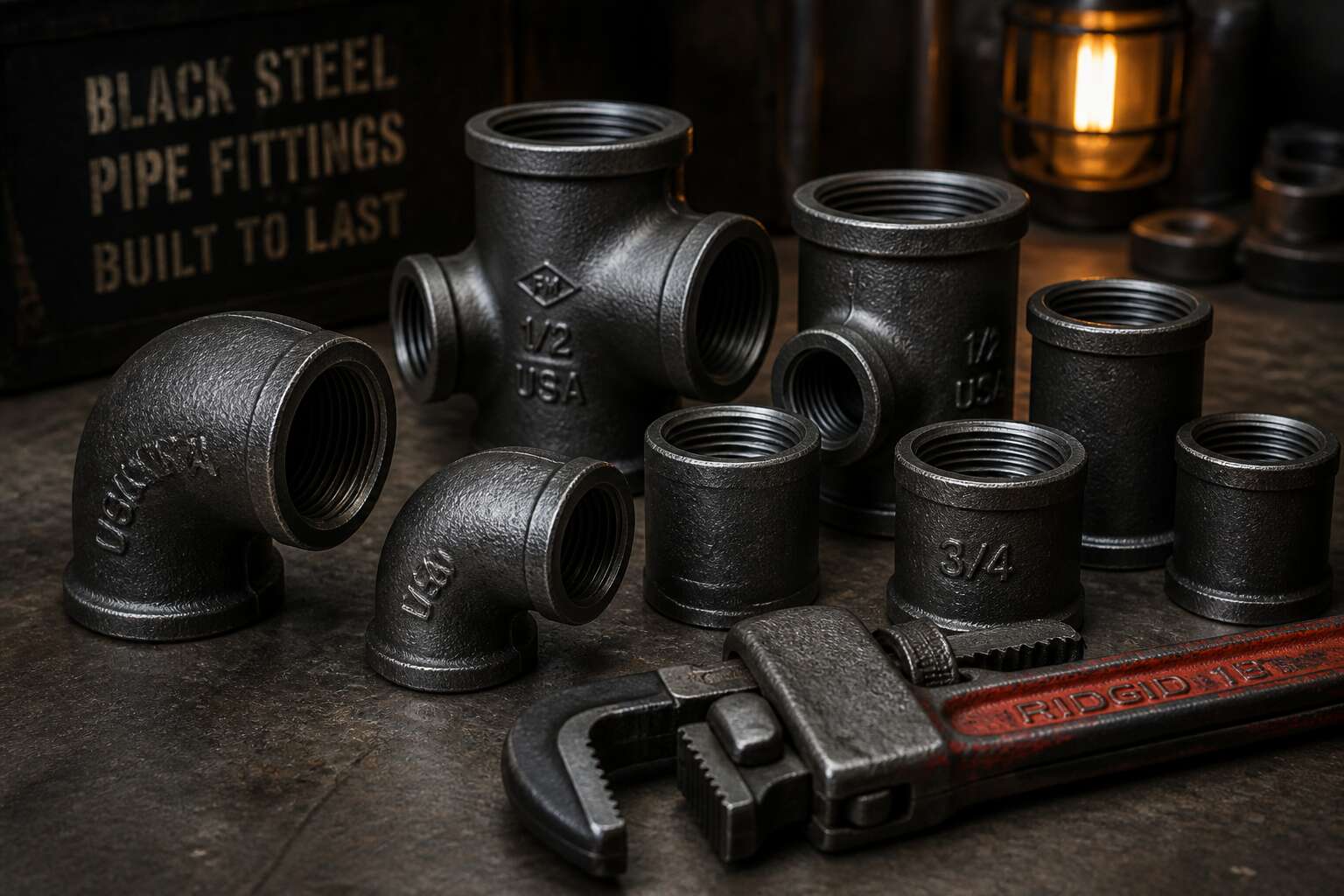
Key Considerations for Gas Piping Systems
Material Properties and Long-Term Durability
For a gas installation, the choice of material is a conversation with time itself. Black steel gas pipe fittings offer tensile strength that withstands constant pressure, but their true value emerges over decades. The carbon content in these fittings provides structural rigidity, yet it also demands attention to environmental exposure. Moisture, soil chemistry, and even slight temperature shifts can influence how the steel ages.
Long term durability depends on several measurable factors:
– Wall thickness consistency prevents weak points
– Thread integrity resists stress fractures
– Protective coatings delay oxidation
Repeated thermal cycling can cause micro-expansion, which is why careful installation remains paramount. In South Africa’s varied climate, from coastal humidity to highveld dryness, the same fitting behaves differently. Understanding these properties transforms a simple purchase into a long term investment! Remember that black steel gas pipe fittings are not passive components; they carry the quiet responsibility of every flame they feed.
Threaded vs. Welded Connection Methods
The debate between threaded and welded connections has persisted for decades. Threaded joints offer speed and simplicity, but every thread is a potential leak path. Welded joints fuse the metal into a single body, yet they require skilled hands and strict quality control.
In South Africa, where labour costs and skills vary by region, the choice often comes down to practicality. Threaded black steel gas pipe fittings remain popular for smaller diameters and accessible runs. Welding becomes the preferred method for high pressure lines or buried sections where disassembly is unlikely.
- Threading suits domestic gas systems and visible piping.
- Welding suits industrial networks and high integrity requirements.
Each method also influences maintenance. A threaded joint can be undone with a spanner. A welded joint demands cutting and rewelding, which means downtime. The final decision should respect the gas pressure, the environment, and the people who will service the line.
Pressure Ratings and Safety Standards
Pressure ratings are the first thing I check on any gas line. They tell you what black steel gas pipe fittings can endure before the metal deforms. In South Africa, the governing standards are not suggestions; they are legal boundaries. SANS 62 and the Pressure Equipment Regulations shape every specification.
Selecting the correct rating requires more than reading a label. You must consider operating temperature, surge pressure, and the corrosive nature of the gas itself. A fitting that works at 50 degrees Celsius may fail at 200. The safety margin is your insurance.
- Verify the pressure rating against your system’s maximum operating pressure.
- Confirm compliance with SANS 62 for threaded fittings.
- Inspect certificates and test reports before installation.
I have seen many installations where paperwork was an afterthought. That is where accidents begin. Black steel gas pipe fittings are reliable, but only within their rated envelope. Respect the numbers, and the numbers will respect you.
Corrosion Resistance and Protective Coatings
“That quiet hiss of escaping gas is a sound no engineer wants to hear,” a veteran Johannesburg plumber once told me, and the heat of a Highveld summer has a way of exposing weaknesses in any infrastructure. The rusty smear weeping from an uncoated joint is the first whisper of a much larger problem. Corrosion is not a matter of chance, it is a chemical certainty that must be managed with intention. For black steel gas pipe fittings, the environment is a relentless opponent. The combination of moisture, oxygen, and the specific chemical composition of the gas creates an electrochemical reaction that eats away at the metal’s integrity from the outside in. An unprotected surface becomes pitted and scarred, creating micro-fractures that are invisible to the naked eye but dangerous to the system as a whole.
Protective coatings are the frontline defense against this slow decay. Hot-dipped galvanizing, though less common for gas lines due to potential flaking, offers a sacrificial layer, while the more traditional mill-applied black coating serves as a moisture barrier. The efficacy of these safeguards depends entirely on the preparatory work. A coating applied to an unclean or moist surface will fail prematurely, trapping the corrosive agents beneath the paint where they work undetected.
When inspecting these essential components, look for uniformity in the finish and ensure the application process used by the supplier was fit for purpose.
- Check for surface damage or scratches that expose the raw metal to the elements.
- Verify the coating’s adhesion by isolating sections of the pipe under stress.
- Consider the ambient humidity levels where the pipe will be housed before choosing a specific finish.
The choice of coating often decides whether a system has a lifespan of five years or twenty-five. For black steel gas pipe fittings, the sacrifice of protection is one that pays dividends in safety. The installation environment dictates the necessity of a heavier-duty epoxy or polyurethane wrapping, especially in coastal regions like Durban where the saline air accelerates the oxidation process. prevent corrosion from becoming a silent failure in the night, and ensure the metal’s promise of strength remains unbroken.
Types of Fittings for Gas Line Installation
Elbows and Bends for Directional Changes
When it comes to directing the flow of gas through a structure, the humble elbow serves as a quiet conductor. After considering the robust properties of black steel gas pipe fittings, the architecture of a piping system truly comes alive with the addition of directional components. These fittings navigate corners and vertical rises with a precision that straight pipe simply cannot achieve, fundamentally altering the path of energy to its destination.
The most common directional change relies on the 90-degree elbow. This fitting provides a sharp, efficient turn, which is essential for navigating the framing of a building. However, there is a nuance in performance regarding these turns. A standard short-radius elbow offers a compact solution for tight spaces, while a long-radius version minimizes pressure loss, allowing the gas to flow with greater ease. Industry professionals often select a long sweep to ensure a smoother transition for high-volume systems.
For subtler adjustments, the 45-degree fitting is a clever asset. It allows installers to gently offset a line, bypassing an obstacle without introducing a harsh restriction. This capability is not just about convenience; it reduces stress on the joints and supports the integrity of the entire assembly. Consider these common applications for directional black steel gas pipe fittings:
– Connecting branch lines to a primary main.
– Navigating around structural beams or foundation walls.
– Positioning a drop line for a specific appliance connection.
– Creating a gradual rise for a vertical riser.
Ultimately, the radius and angle determine the hydraulic efficiency of the system. By choosing the appropriate elbow, you ensure that the gas maintains its velocity and pressure, reaching the appliance in optimal condition. The installation becomes a testament to careful planning, where every turn is a deliberate decision toward reliability. Following this, the next consideration involves the variety of connection points, specifically reducers and couplings, which we will explore next.
Tees and Crosses for Branching Lines
Couplings and Unions for Straight Connections
Couplings and unions solve a straightforward problem: how to join straight pipe segments or break them apart later. For black steel gas pipe fittings, a coupling is a threaded sleeve that connects two pipes in a permanent manner. A union adds a detachable central nut, so you can separate the line without cutting. This becomes essential when accessing a buried valve or performing maintenance. Here are the standard options to keep in mind!
- Threaded couplings for rigid, closed joints
- Union fittings with metal to metal seats
The sealing faces on a union require careful inspection. A small scratch on these surfaces can lead to leakage. I have learned to check every mating face before tightening. The thread compound must be applied evenly, and the nut torqued to specification. That is where the true reliability of black steel gas pipe fittings emerges!
Reducers and Adapters for Size Transitions
Types of Gas Line Fittings: Reducers and Adapters for Size Transitions
Mismatched pipe diameters can halt an entire installation. Reducers and adapters solve this by bridging different sizes cleanly and safely. They are essential components when working with black steel gas pipe fittings, ensuring a tight seal where dimensions change.
A reducer transitions from a larger pipe to a smaller one. Choose a concentric reducer for vertical lines where alignment matters. Use an eccentric reducer for horizontal runs to prevent trapped condensation. Both types are machined precisely to maintain consistent flow and pressure.
Adapters change the connection method itself. You might need a male adapter to join a threaded pipe to a plain-end fitting, or a female adapter for the reverse. Some adapters switch between NPT threads and other standards such as BSP. This flexibility is key when integrating new equipment into an older system.
Here are common size transitions you will encounter:
– Reducing couplings from 1 inch to 3/4 inch
– Hex bushings for stepping down two sizes
– Adapters with male NPT on one end and female NPT on the other
Always verify both the inside and outside diameters of your pipes before purchasing. A slight measurement error can lead to a poor fit and potential leaks in black steel gas pipe fittings. When in doubt, consult the manufacturer’s specification chart to match the exact thread type to your application.
Caps and Plugs for Sealing Open Ends
An open end in a gas line is a promise of trouble. Caps and plugs are the quiet guardians that keep that promise unfulfilled. A cap threads over the outside of a pipe end, while a plug seats into the fitting itself. Both are precision machined to match the same NPT standards as the rest of your black steel gas pipe fittings.
These parts earn their keep long before the line goes live. They shield threads from the scrapes and knocks of transit, hold pressure during system testing, and give you the freedom to seal a branch for future use. I always keep a few extra plugs in the van. When you are installing black steel gas pipe fittings on a deadline, an unsealed end is a headache you do not want.
Installation Best Practices for Gas Distribution Lines
Proper Threading Techniques for a Secure Fit
A single poor thread can compromise an entire gas line. I have witnessed the result of hasty work, and the consequences are never pretty. South African conditions, with our temperature swings and dusty sites, demand respect for the material.
When you cut threads for black steel gas pipe fittings, cutting oil is non-negotiable. It carries away heat and waste. Before you even think about jointing, inspect your work:
- Check for a clean, unbroken thread profile.
- Remove all chips and burrs with a wire brush.
For a proper seal, apply jointing compound to the male threads only. Always use a proper pipe wrench, not an adjustable spanner. I tighten a quarter turn past the snug point to seat the joint without over-stressing the metal.
Applying Thread Sealant and Joint Compound Correctly
Proper sealant application is the difference between a system that endures and one that whispers its failures in the dark. The joint compound exists to fill the microscopic voids between male and female threads, not to lubricate a careless connection.
Apply the sealant as a single, unbroken band around the male threads, leaving the first thread free for alignment. This prevents the compound from migrating into the gas stream.
- Use a consistent, moderate bead size to achieve even coverage.
- Press the compound into the thread roots with a brush for maximum contact.
For residential and commercial installations alike, the integrity of black steel gas pipe fittings depends on this single moment. Rushed application results in leaks that manifest in the quiet hours.
Support and Hanging Requirements for Pipe Runs
Correctly supporting a run of black steel gas pipe fittings is often treated as an afterthought, yet it is the silent guardian of the entire system. A schedule 40 pipe filled with gas carries significant dead weight, and neglecting proper hangers invites stress fractures at the very joints you worked so hard to seal. The goal is to ensure the pipeline remains static, with no movement that could loosen a fitting over time.
Hanger spacing is not a guess; it is a calculation based on nominal bore. For a 25mm pipe, supports must be placed at intervals of no more than 2.4 metres, while a 50mm line requires a hanger every 3.0 metres. Adhering to these distances prevents sagging, which creates low points where condensate can pool. Elevation changes require additional support at the base of the riser to bear the vertical load, and you should always use a rigid cleat or a split-ring hanger that grips the pipe without crushing it.
The method of attachment to the structure matters just as much as the spacing. When fixing to masonry, use a drop rod anchored with a sleeve anchor or a rawl bolt. For timber frames, a coach screw with a stand-off bracket prevents corrosion where dissimilar metals touch. Do not rely on plastic cable ties for permanent support, as they degrade under UV exposure and fail to provide the rigidity required for a gas line.
> A practical checklist for the installer:
> Support within 300mm of every change in direction.
> Support within 150mm of the final connection to an appliance.
> Use a riser clamp for all vertical runs exceeding 2 metres in height.
The long-term integrity of your installation depends on the pipe resting exactly where you placed it. Vibration from nearby pumps or traffic can be transmitted through rigid supports, so consider inserting a rubber isolation pad between the hanger and the steel where vibration is a concern. This simple addition protects the threads on your black steel gas pipe fittings from fatigue, ensuring the system remains leak-free for decades without requiring intrusive maintenance.
Testing for Leaks and Verifying Pressure Integrity
The quiet moment after the final wrench turn is deceptive. A visually flawless joint can conceal a microscopic path for gas to escape, so the test is where installation ends and confidence begins. For black steel gas pipe fittings, this process is a deliberate ritual that separates a functional line from a catastrophe waiting for a spark. The initial phase involves introducing air or inert nitrogen into the system, raising the pressure to a level exceeding the working rating. This is not a casual check. It is a measured challenge to the entire distribution network.
A systematic approach prevents oversight and grounds the process in verified data. The procedure follows a logical sequence that any competent installer can replicate:
– Close all outlet valves and seal the open ends with caps or plugs.
– Attach a calibrated test gauge with a bleed valve at the lowest point.
– Pressurize the system slowly to the specified test pressure, typically 1.5 times the working pressure.
– Isolate the pump and observe the gauge for a period of 30 minutes to detect any gradual decay.
Pressure decay is only one symptom. The more telling signature of a flawed connection is the bubble. Applying a proprietary leak detection fluid, which foams at the site of escaping gas, remains the most reliable method despite the advent of advanced electronic sniffers. Paint a generous layer over every thread, union, and valve stem on your black steel gas pipe fittings. A steady stream of bubbles indicates a defect that demands immediate rework. The quiet satisfaction comes when the gauge holds its mark and the soapy film remains placid, confirming the integrity of your work before the system ever carries its first molecule of fuel.
Clearance and Ventilation Guidelines for Confined Spaces
Gas weighs less than air, but the danger it carries is heavy. In a confined space, a leaking black steel gas pipe fitting can pool explosive vapour at floor level, where one spark becomes a detonator. Clearance prevents that spark from finding fuel. Give every joint room to breathe and room to inspect.
Installers often pack black steel gas pipe fittings tight against walls. That saves space, but it costs safety. Respect the clearances in SANS 10254. Keep 25 mm between the pipe and combustible material.
- Keep 600 mm of working space in front of valves.
- Never install fittings above switchgear.
- Provide ventilation openings at high and low levels.
Ventilation is not an afterthought. A closed meter box traps a tiny leak until it hits the lower explosive limit. High vents release rising gas; low vents sweep out heavier vapour. No fitting survives a design that ignores airflow.
Using Dielectric Unions to Prevent Galvanic Corrosion
Dielectric unions are easily overlooked on a gas line, yet they prevent a failure mode that takes years to surface. When copper or galvanised components meet black steel gas pipe fittings, the junction becomes a small battery. Moisture in the soil or air acts as the electrolyte. Over time, the steel gives up ions and the fitting corrodes from the inside. An installer who skips the union saves a few minutes on the first day and spends days on a dig-up five years later.
Fit the dielectric union between the steel pipe and any dissimilar metal. Position it where it can be reached with a spanner after installation. The insulating washer and sleeve are the parts that matter, so check both before assembly. If either shows cracks or deformation, replace the union.
- Install the union upstream of the appliance connection
- Keep the insulating sleeve aligned with the pipe bore
- Tighten the nut with a backup wrench on the steel side
Gas distribution lines in South African conditions, with high salinity in coastal air, need this protection more than most. The corrosion is silent. It does not announce itself with a hiss or a smell until the pipe wall has thinned enough to fail. By then the black steel gas pipe fittings in the same line often show no visible damage, which makes the problem harder to trace. A dielectric union does not add strength or sealing capacity. It only stops one metal from eating another, which is exactly the job it should do.
Compliance and Safety Standards for Pipe Assemblies
Understanding Local Plumbing and Gas Codes
The assurance of a gas installation often rests on paperwork as much as pipework. In South Africa, the authority of the South African Bureau of Standards (SABS) and the specific provisions of SANS 10254 dictate the operational reality for installers. These local plumbing and gas codes are not abstract bureaucracy; they are the established criteria for determining whether a connection is acceptable or a liability. A certified installer understands that the approval of black steel gas pipe fittings hinges on adherence to these documented standards.
The pressure test is the moment of truth, yet the surrounding regulations dictate every preceding action. Proper support intervals, the correct use of sealants, and even the accessibility of joints for future inspection are all mandated by code. These requirements force a consideration of longevity and maintenance, not just immediate function. Ignoring a local by-law to save time creates a hidden risk that surfaces during inspection or, worse, during an emergency.
An installation must navigate a specific set of prerequisites to pass muster. The following are the primary pillars of code compliance for a typical assembly:
1. Verification that the material grade of the black steel gas pipe fittings matches the project specification.
2. Confirmation that the installer holds the necessary registration with the relevant authority.
3. Documentation of the pressure test results with a signed certificate of compliance.
4. Physical inspection for adequate clearance from electrical sources and unprotected ignition points.
The true test of an assembly occurs when it is assessed against these local rules, not just against physical pressure. This process forces an honesty about the workmanship that is impossible to fake. The final approval is a professional endorsement, a formal statement that the system meets the legal threshold for safety, protecting both the occupants and the reputation of the practitioner who signs off on the work.
Comparing Black Iron and Galvanized Options for Gas Service
In South Africa, a gas installation is only as sound as its most vulnerable joint. I have seen compliance certificates fail on minor details, turning a straightforward job into a costly rework. The difference often lies in the small components, which must meet SANS 429 standards.
For a durable system, you need certified black steel gas pipe fittings. They are the backbone of any permanent, high-pressure line. When the inspector arrives, they will verify that you have used the correct schedule pipe and fittings.
To ensure a seamless sign-off, consider these points for your next project:
– Verify the class of the fitting matches the pipe wall thickness.
– Confirm thread tolerances are within specification for a gas-tight seal.
– Check that the protective coating is undamaged for corrosion resistance.
With the right components, the pressure test passes on the first try.
Inspection Schedules and Routine Maintenance Checks
An inspection schedule is a promise you make to the system, not a suggestion for a rainy day. A row of black steel gas pipe fittings can look impeccable on the day of installation, yet the months after are where true character emerges. I recall an inspector who asked for the maintenance log before he even glanced at the joints. That moment separates the diligent from the hopeful.
Routine maintenance checks are about noticing the quiet signals. A faint odour, a loose bracket, a thread that shows the first blush of moisture. None of these announce themselves loudly. The inspector expects records, not recollections.
- Examine the black steel gas pipe fittings for corrosion every quarter.
- Confirm that support hangers remain firm after seasonal shifts.
- Document any pressure fluctuation observed during normal operation.
This habit keeps the installation honest and the sign-off uncomplicated.
Selecting the Right Components for Your Project
Evaluating Flow Capacity and Proper Pipe Sizing
Selecting the right components for a gas line starts with ruthless honesty about your flow capacity needs. Oversizing a black steel gas pipe fittings system seems safe, but slow gas velocity leads to pressure drops at the appliance. Undersizing invites turbulent flow and a grumpy geyser.
When you evaluate pipe sizing, calculate the total BTU load, then measure the effective run length. A straight line is a myth, so add a generous allowance for every subtle turn.
– Confirm the appliance pressure requirement.
– Measure the longest run from the regulator.
– Convert to an acceptable diameter using a standard chart.
Proper flow capacity is a precise discipline, not a guessing game. Choose your black steel gas pipe fittings based on schedule consistency, and never mix thread standards. It saves you from a frustrating hiss and a costly re-do.
Identifying Compatibility with Natural Gas or Propane
Propane moves through a pipe with a different temper than natural gas; the orifice sizes and pressure regulators speak a separate language. Before you thread a single fitting, verify which fuel source you are feeding. Black steel gas pipe fittings do not discriminate by gas type, but the surrounding system must match the fuel’s specific gravity and vapour pressure.
Check the appliance rating plate for its gas designation. Confirm the supply pressure at your regulator. Inspect the existing line for residue or coating traces that might hint at a previous fuel. Mixing gases without recalibrating can corrode components or starve burners.
- Natural gas: lower pressure, higher volume.
- Propane: higher pressure, stored as liquid.
Select valves and connectors rated for the exact service. Compatibility is a measured truth, not a convenience.
Sourcing Certified Materials and Quality Assurance
A pressure rating stamped on a fitting means nothing if the steel came from an unverified mill. Across South Africa, gas installers lean on black steel gas pipe fittings that carry documented traceability from melt to finished thread.
Certification separates a line that passes inspection from one that fails on the first pressure test. I insist on SANS approved components or an equivalent international standard. I ask suppliers for batch certificates. I check the manufacturer’s mark on every single piece.
Here is what I look for during selection:
– SANS 62-1 or ISO 7-1 thread compliance
– Material test certificates from the foundry
– Visible batch numbers and pressure ratings
Quality assurance is a physical act. Measure wall thickness. Inspect thread profile. Look for pitting, scale, or irregular cuts. Reject anything that looks wrong. The right black steel gas pipe fittings verify themselves before you ever pick up a wrench.

0 Comments