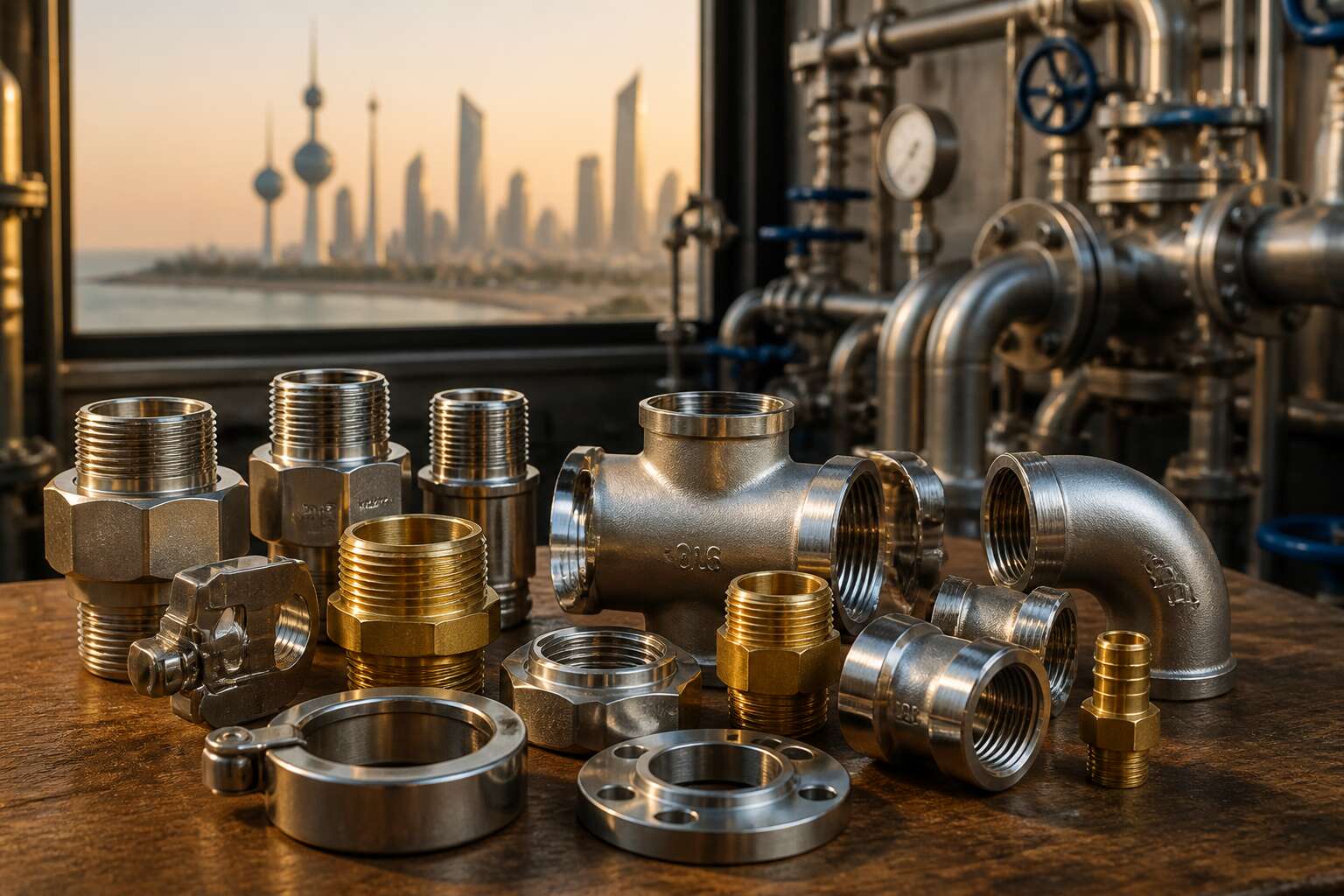
Types of Pipe Fittings Commonly Used in Kuwait
Elbows, Tees, and Reducers for Directional Flow
Plumbing in Kuwait is not for the faint of heart. Between the scorching sun and the constant strain on infrastructure, a piping system needs fittings that can take a beating and keep flowing. Elbows, tees, and reducers are the workhorses here. They manage directional flow, combine lines, and adjust diameters without complaint!
I have watched seasoned contractors argue for an hour over a single elbow. The wise ones source their pipe fittings kuwait from suppliers who understand the climate. A reducer is more than a smaller pipe. It is a controlled transition that prevents undue stress. Consider the common mistakes people make:
- Forgetting to factor in pressure drop
- Choosing a short-radius elbow where a long radius works better
- Joining dissimilar metals without a thought
Avoid these and your flow stays smooth. Otherwise, be ready for a messy afternoon.
Couplings and Unions for Pipe Connections
One loose coupling can halt a whole plant. Couplings and unions solve this problem daily. A coupling creates a permanent pipe connection, while a union allows fast disassembly for repairs. Both are fundamental to pipe fittings kuwait in demanding industrial settings.
Threaded unions simplify valve replacements. Compression couplings work for emergency fixes in tight spaces. Always match the fitting material to the pipe, whether steel, copper, or PVC. A mismatched joint results in leaks.
- Verify thread compatibility before assembly
- Apply sealant on external threads only
- Torque unions to manufacturer specifications
Choosing the right coupling or union prevents unexpected shutdowns.
Flanges and Gaskets for High-Pressure Systems
High-pressure systems refuse to tolerate weakness. A flange is a pipe fittings kuwait connection point where failure risks everything. The gasket is what actually seals the joint. Match gasket material to the fluid. Spiral wound works for heat. Ring joint handles brutal pressures. Never reuse gaskets. That is false economy.
Inspect flange faces for scratches and pitting. Clean both surfaces. Apply proper bolt torque in sequence. A skipped step leads to leakage. I have seen entire plants pause because someone ignored torque specs. Pipe fittings kuwait suppliers stock various flange types, but expertise matters more.
- Confirm pressure class and flange rating
- Check gasket size and material
- Verify bolt grade and lubrication
That is the backbone of reliable connections. Respect the process.
Valves and Fittings for Flow Control
Valves are where flow control meets real-world demands. In Kuwait’s industrial corridors, gate valves handle on/off service with minimal restriction. Ball valves offer quarter-turn operation and tight sealing for hydrocarbons. Butterfly valves suit large-diameter pipelines where weight and space matter. Check valves prevent backflow, protecting pumps and compressors.
I have seen projects stall when valve specs ignored the actual medium. The body material, seat type, and actuator all influence performance. API standards guide most selections.
When sourcing pipe fittings kuwait, verify pressure-temperature ratings and end connections.
- Gate valves for isolation
- Ball valves for quick shutoff
- Butterfly valves for large lines
- Check valves for backflow prevention
Flow control extends beyond valves. Orifice plates and control valves maintain process stability. Pipe fittings kuwait suppliers carry these components, but engineers must match them to actual conditions.
Specialty Fittings for Oil and Gas Applications
Pipe fittings kuwait suppliers stock a broad range of components beyond the standard elbows and flanges. Socket weld and threaded fittings dominate smaller bore lines. Butt weld fittings handle high-pressure hydrocarbon service. For specialty applications, engineers often specify weldolets and sockolets for branch connections where space is tight and stress relief is critical.
Swage nipples transition between pipe sizes without adding a flange. Stub ends allow quick disconnection in maintenance-heavy areas. Their metallurgy and thread tolerances decide whether a line holds under Kuwait’s extreme summer heat.
A glance at typical inventories reveals:
- Socket weld fittings for corrosion-resistant alloys
- Threaded fittings for low-pressure utility lines
- Weldolets for reinforced branch connections
I remain surprised at how often contractors overlook rating differences across pipe fittings kuwait. The same nominal size can carry vastly different pressure limits depending on schedule and material.
Materials and Standards for Pipe Fittings in Kuwait
Stainless Steel and Carbon Steel Options
Kuwait’s refineries run at temperatures that would anneal lesser metals. That is why material selection for pipe fittings kuwait starts with specification, not guesswork. Carbon steel handles high pressure and moderate corrosion with cost efficiency. Stainless steel, particularly grades 304 and 316, resists chloride attack from seawater and sour gas common to this region. ASTM A234 and A403 define the governing standards. These are not optional. They dictate chemical composition, mechanical properties, and dimensional tolerances for every fitting installed across the country.
Engineers choose based on the service environment:
- Carbon steel for dry gas lines and low temperature service.
- Stainless steel for marine and chemical processing systems.
- Duplex grades where chloride stress corrosion cracking is a known risk.
Each material carries its own heat treatment and testing requirements. Misapplication leads to premature failure. In Kuwait’s climate, a fitting that fails costs more than money; it shuts down production. That is why buyers demand certified materials and traceable documentation before any pipe fittings kuwait order moves forward.
PVC, CPVC, and Plastic Fittings for Water Systems
Nearly 90 percent of Kuwait’s potable water arrives from desalination plants. That water moves through a grid where plastic fittings carry a heavy load. PVC and CPVC dominate the low pressure side of the network, covering apartment risers, district cooling loops, and irrigation laterals.
PVC handles cold water and drainage without fuss. CPVC steps in where temperatures pass 60 degrees Celsius. Both resist scale and corrosion, which accumulate quickly in soft, desalinated water. They also cut installation weight, a real advantage in congested urban sites. We see CPVC specified more each year for hot water recirculation lines.
- PVC for buried drainage and sewage laterals
- CPVC for hot water recirculation in commercial towers
- PPR where chemical resistance is critical
Sourcing pipe fittings Kuwait means verifying pressure ratings against ambient heat. A plastic fitting that performs in Europe may soften under Kuwait’s summer sun.
Copper and Brass Fittings for HVAC and Plumbing
The silent enemy of copper in Kuwait is the atmosphere, not pressure. Saline dust and 50 degree heat attack the surface, yet copper holds its ground in HVAC loops and steam lines. Kuwait’s desalinated water is aggressive, but copper resists biofilm and scaling, keeping heat exchangers reliable.
Brass fittings, forged or cast, handle vibration and thermal cycling of chiller plants better than alternatives. A standard ASTM B16 fitting might perform in a temperate climate, but local ambient temperature demands a review of pressure ratings and lead content. I have seen copper nickel specified for corrosive zones; for general plumbing, brass remains the standard choice!
When sourcing pipe fittings kuwait, the standard depends on heat cycling as much as material grade. The difference between a fitting that cracks in two years and one that lasts decades is the temper of the copper or trace elements.
Compliance with International Standards and Kuwaiti Regulations
Kuwait’s regulatory framework is unforgiving. A fitting without a traceable standard is a liability, plain and simple! Pipe fittings kuwait suppliers must comply with ASTM, ISO, and API specifications, yet that is only the baseline. Kuwaiti regulations, especially those from the Ministry of Electricity and Water and the oil sector, add their own layers of scrutiny.
Material selection follows the environment. Carbon steel for high-pressure lines, stainless for corrosive media, ductile iron for buried networks. Every grade must be verified through mill certificates and third party testing. I have watched projects stall because a supplier could not produce documentation.
Common compliance documents include:
- Mill test certificates with heat numbers
- Pressure test reports
- Third party inspection certificates
Pipe fittings kuwait projects demand proof, not promises. Suppliers who align with international standards and local regulations deliver fittings that pass inspection and perform for decades. Those who skip the paperwork fail fast.
Key Sectors Driving Demand for Pipe Fittings in Kuwait
Oil and Gas Infrastructure Projects
Kuwait’s oil and gas sector is the single biggest driver for pipe fittings kuwait. Raising crude output and expanding downstream assets like the Al-Zour refinery means project teams order fittings in enormous volumes. The operating conditions are demanding: sour crude, elevated temperature, and continuous vibration from pumps and compressors.
The infrastructure segments affecting demand include:
– Wellhead facilities and gathering manifold systems
– Long distance trunk lines between fields and processing plants
– Booster stations and pressure maintenance units
– Crude export terminals with metering and loading systems
Each installation creates a new requirement for pipe fittings kuwait during construction, then again during scheduled maintenance over the plant’s life. This cycle is why oil and gas remains the strongest source of demand in the local market.
Construction and Building Services
Construction activity in Kuwait has changed character over the past decade. The government has pushed major urban schemes, from South Sabah Al-Ahmad City to new commercial districts. High-rise residential blocks in Kuwait City generate steady orders for pipe fittings kuwait across HVAC risers, domestic water mains, and drainage stacks. One tower alone might use thousands of fittings before handover.
Commercial projects bring their own complexity. Hospitals, shopping centres, and hotels require fire suppression loops, chilled water systems, and medical gas networks. Each circuit relies on correctly specified pipe fittings kuwait to match pressure ratings and fluid characteristics. Contractors routinely balance carbon steel for cooling lines, PVC for waste, and copper for smaller bore services.
Building services teams coordinate several core systems:
- Chilled water distribution for air conditioning
- Pressurised fire mains and sprinkler branches
- Sanitary drainage and vent stacks
- Domestic hot and cold water supplies
Water Desalination and Distribution Networks
Kuwait produces around 90% of its potable water through thermal desalination, among the highest per capita rates on earth. That dependence creates sustained demand for pipe fittings kuwait across every stage of the water cycle, from raw seawater intake to product water delivery.
The transmission mains that carry desalinated water to residential districts and industrial zones run for hundreds of kilometres. Each pumping station and storage reservoir relies on correctly matched fittings to withstand pressure transients and the corrosive nature of concentrated brine. Mild steel handles many aboveground services, while HDPE and ductile iron dominate buried lines.
Key components in these networks:
- Expansion joints that absorb thermal movement in hot feed lines
- Reducing fittings where trunk mains step down to branch supplies
- Flanged connections at pump stations and valve chambers
New desalination capacity is under construction to meet growing municipal demand. That programme of works translates into steady procurement of pipe fittings kuwait for both replacement and new builds across the country.
Industrial and Petrochemical Facilities
Kuwait’s industrial belt is anchored by its petrochemical complexes in Shuaiba, Ahmadi, and Shuwaikh. These facilities operate under punishing conditions: high temperatures, corrosive hydrocarbons, and continuous flow. Reliability is not optional. It is the difference between operational continuity and unscheduled shutdowns that cost millions per hour.
The demand for pipe fittings kuwait in this sector follows a clear logic. Plants need components that hold up to sulfur-laden crude and high-pressure steam. Let me be blunt. A faulty fitting in a process line can bring an entire unit down. The stakes are enormous!
Key applications include:
– Feedstock transfer lines that connect upstream processing units
– Cooling water circuits that reject heat from compressors
– Instrumentation branch connections for pressure and temperature monitoring
Maintenance cycles, turnarounds, and capacity expansions keep procurement of pipe fittings kuwait active. Each project, whether a retrofit or a grassroots build, requires fittings that meet exact specifications. The purchasing decisions are technical, deliberate, and ongoing.
Where to Buy Pipe Fittings in Kuwait
Authorized Distributors and Wholesale Suppliers
In Kuwait, the gap between a successful pipeline project and a stalled one often narrows down to sourcing. Authorized distributors for pipe fittings kuwait hold direct contracts with mills in Europe and Asia, which ensures certified material traceability. Wholesale suppliers focus on volume, keeping large inventories of common sizes for immediate dispatch.
When comparing vendors, check these details:
- Stock depth for carbon steel and stainless alloys
- Lead times for large-diameter flanges
- Local warehouse presence in Kuwait
A physical location in Shuwaikh or Ahmadi means faster responses than a port-based operation. For South African buyers on Kuwaiti projects, this distinction shapes procurement decisions.
Online Marketplaces and E-Commerce Options
For procurement teams in South Africa managing Kuwaiti projects, the digital shift has changed how pipe fittings kuwait are sourced. Online marketplaces now offer real time stock visibility and digital certificates, which shortens the cycle between inquiry and dispatch. Many Kuwaiti suppliers operate e commerce portals with API integration for purchase orders, although the depth of these systems varies substantially.
A useful practice is to compare the following on any platform:
- Material certifications attached to each product listing
- Actual stock location versus displayed inventory
- Terms for international shipping to South African ports
The most accurate portals link directly to warehouse management systems in Shuwaikh or Ahmadi. Others merely list goods from foreign suppliers. For a buyer hunting pipe fittings kuwait, the platform is a window, not the warehouse itself. Understanding this distinction prevents costly missteps.
Direct Sourcing from Domestic Manufacturers
The industrial zone in Shuwaikh hums with a particular energy, a chorus of clanging metal and hissing hydraulics that no digital catalogue can quite replicate. Direct sourcing from domestic manufacturers offers a tactile certainty that online portals simply cannot convey, especially when the final destination is a project site thousands of kilometres away in South Africa. Walking the factory floor, you can witness the precise threading of a carbon steel joint or the casting of a flange destined for a high pressure system.
Visiting these foundries and workshops provides procurement teams with a direct line to the source of quality control.
– Immediate access to mill test certificates and heat number traceability
– The ability to physically verify wall thickness and thread finish before shipment
– Direct negotiation on bulk pricing for desalination or infrastructure projects
This approach shortens the supply chain, removing the intermediary layers that often obscure the true origin of goods. For a buyer sourcing pipe fittings kuwait, the journey to Ahmadi or Shuwaikh is not just a logistical step; it is an audit of the very material that will carry water, gas, or oil across the desert. The documents you hold after that visit carry a weight that a PDF file never will.
Import Considerations for International Brands
Importing international brands into pipe fittings kuwait demands careful scrutiny. Nearly 60% of overseas shipments require revised documentation upon arrival. While local options offer immediacy, foreign catalogues present specialised alloys and pressure ratings. A buyer must weigh freight costs against compliance with Kuwaiti standards, such as the Gulf Conformity Mark.
Consider these steps when sourcing from abroad:
- Verify the mill’s ISO 9001 accreditation
- Request pre-shipment inspection reports
- Clarify Incoterms for the Shuwaikh port
Each choice affects project timelines. Imported fittings still need heat number traceability. International brands simplify warranty claims, but dispute resolution across time zones becomes complex.
Evaluating Bulk Order Discounts and Logistics
A warehouse in Shuwaikh can quote a price per kilogram for pipe fittings kuwait that looks magnificent on paper. Then the transport invoice arrives. Bulk order discounts vanish when you overlook the logistics chain connecting port to project site.
Freight costs swing with global steel demand, and local haulage fees rarely appear in the initial quote. Some suppliers offer tiered pricing, but the threshold often sits higher than expected. I have seen buyers pay a premium just to split deliveries across multiple sites.
- Ask about demurrage charges at Shuwaikh port
- Confirm whether unloading and storage are included
- Check if the price holds for mixed alloy orders
Consolidating shipments helps, but only when the schedule tolerates a two week wait. Negotiate a fixed quote for the project duration. That locks the discount and keeps the budget predictable.
Installation Considerations for Pipe Fittings in Kuwait
Choosing the Right Fitting Size and Pressure Rating
In Kuwait’s demanding climate, selecting the correct fitting size and pressure rating is not trivial. Thermal expansion, sand erosion, and aggressive media shift the effective operating envelope. A fitting that appears sound on paper may fail under cyclic loads or transient pressure spikes. For pipe fittings Kuwait, engineers must verify that the nominal bore matches the pipe schedule exactly, especially at transition points.
- Measure the actual outside diameter and wall thickness
- Confirm the pressure class for static and surge conditions
- Cross reference the temperature derating factor
Pressure ratings are often misunderstood. The stamped value assumes ideal conditions, but Kuwait’s ambient heat can reduce the allowable working pressure by 20 percent or more. Always consult the manufacturer’s derating tables and factor in the fluid temperature. Getting this right saves costly downtime and keeps installations compliant.
Threaded, Welded, and Compression Fittings
Nearly half of all fitting failures trace back to installation practices, not material defects. That figure should unsettle any engineer specifying pipe fittings kuwait. The joint method determines how the assembly ages under strain.
Threaded fittings rely on precise cutting and sealing. A single burr creates a leak path that thermal cycling widens. Welded fittings transfer full load through the joint, yet they demand strict preheat and post weld treatment. Compression fittings require exact torque and clean pipe ends.
Sand abrasion attacks exposed threads. Solar radiation accelerates sealant breakdown. A method that works in a temperate climate can fail here within two seasons. For pipe fittings kuwait, installers weigh:
- The medium’s aggressiveness toward the joint material
- The ambient temperature range during installation
- The accessibility for future inspection and maintenance
I have seen each method fail when the maintenance regime was ignored. Threaded joints need re tightening. Welded joints need radiographic testing. Compression joints need torque verification.
Thermal Expansion and Contraction in Kuwait’s Climate
Steel expands and contracts with every temperature swing. Kuwait’s asphalt can hit 70 degrees Celsius on summer afternoons. That movement twists pipe fittings Kuwait in ways designers rarely calculate. South African engineers on Gulf projects know this strain firsthand.
A fitting locked in place during the morning cool may face severe stress by noon. The thermal cycle repeats daily. For pipe fittings Kuwait, this is not theoretical.
- The coefficient of expansion for your pipe material
- The maximum surface temperature of exposed lines
- The flexibility of supports between fixed points
Fittings must absorb this movement without transferring strain to valves or pumps. I have seen flanges creep and gaskets extrude from thermal cycling alone. No pressure rating compensates for poor thermal planning!
Corrosion Prevention and Coating Requirements
Corrosion in Kuwait is relentless. The Gulf air carries salt. Seasonal humidity condenses into a film on exposed surfaces. For pipe fittings Kuwait, this film is the primary cause of degradation. Coatings are not decorative. Their purpose is survival. I have inspected fittings where the coating failed within eighteen months, leaving pitting corrosion underneath.
Installation matters more than most admit. Wrench scratches and careless handling become starting points for corrosion. In this climate, shortcuts create failure. Surface preparation must be thorough! Hot-dip galvanizing works well for carbon steel. Fusion bonded epoxy handles chemical exposure in industrial zones. Coating alone is insufficient.
- Maintain distance between dissimilar metals to prevent galvanic corrosion.
- Ensure bolt threads receive anti-seize compounds before torqueing.
- Weld seams need grinding and reapplication of the original coating.
The protection for your pipe fittings Kuwait depends on the environment. The coating selected today determines whether the system fails quietly tomorrow or stands silent for decades.
Inspection and Testing Procedures
Somewhere in the ground, between the refinery and the holding tank, a fitting is waiting to be judged. The installation phase is where most future failures are born. It is not a question of if the system will be tested, but when. I have stood on site and watched crews torque flanges with the same carelessness one might use to open a jar of pickles. The result is always the same. Misalignment, stress fractures, and silent weeping leaks that surface months later, when the paperwork has long been filed away.
The contractor who respects the torque spec is a rare breed. For pipe fittings Kuwait, the margin for error is thin. The desert heat expands metal during the day, and the night air cools it, creating a constant flexing at every joint. A bolt torqued too tight in the morning can be dangerously loose by midnight. The procedure must account for the temperature at the moment of assembly. It is a matter of arithmetic, not guesswork.
Testing is its own form of theatre. The hydrostatic test, where the system is filled with water and pressured beyond its operational limits, is the moment of truth. The water does not care about your schedule. It will find the flaw in the weld that looked fine to the naked eye. We ran a test once where a fitting held for twenty minutes, and then the pressure dropped like a stone. The crew discovered a hairline crack that had been there since the factory. It would have failed within a year of service.
– Verify the pressure gauge is calibrated to the test range before you begin.
– Isolate each section to prevent the entire system from bearing the load at once.
– Record the ambient temperature during the test, as it will affect the readings.
These steps are the difference between confidence and catastrophe. When the gauge holds steady, you can breathe. But the knowledge that the fitting is now buried under sand, unreachable, is a sobering thought. The work is done. The fate of pipe fittings Kuwait rests on the integrity of that single afternoon.
Cost Factors and Pricing of Pipe Fittings in Kuwait
Raw Material Price Fluctuations
Global raw material price fluctuations reshape the economics of pipe fittings Kuwait. Steel coil costs follow international markets, while copper cathode prices swing with exchange rates. In my years around procurement, I have watched quotes change weekly.
Several forces drive these movements:
- Crude oil prices, which influence production energy
- Logistics rates through the Arabian Gulf
- Supply decisions by major mills in Asia and Europe
Each element lands on the final invoice. A distributor’s margin can compress overnight, forcing buyers to adapt. Those who monitor raw material price fluctuations and secure orders early face less uncertainty. The market rewards vigilance.
Import Duties and Shipping Costs
For some projects, the real price of pipe fittings kuwait emerges only after arrival at port. Import duties and shipping costs often outweigh the factory’s listed value. A buyer who weighs only the ex-works quote misses these burdens. Customs tariffs depend on origin, material, and trade protocols. Steel from certain countries may carry duties double that of others. Freight charges fluctuate with fuel prices and vessel availability through the Arabian Gulf.
Several components determine final landed cost:
- Customs duty calculated on CIF value
- Shipping charges by weight and cubic volume
- Insurance covering transit risks through the Gulf
- Port handling and documentation fees
In my experience, procurement teams in Kuwait often focus on unit cost while ignoring logistics. That habit invites surprises. A shipment delayed at customs costs more than any discount negotiated upstream. Knowing these factors transforms purchasing from a simple transaction into a strategic exercise. The wise buyer scouts freight lanes before signing orders. For pipe fittings kuwait, understanding import duties and shipping costs is not optional.
Certification and Quality Assurance Costs
Certification and quality assurance quietly inflate the price of pipe fittings kuwait. A flange might look identical to a competitor’s, but the documentation behind it affects the final cost. Third party inspections, material traceability, and hydrostatic testing all carry fees. These costs multiply when buyers demand full documentation for every batch.
Buyers often forget that a cheap fitting without verified certification is a gamble. Unapproved components can stall a project completely.
- ISO 9001 audits and recertification
- Third party testing by inspection agencies
- Material test certificates and mill reports
The wise procurement team budgets for these expenses before comparing quotes. Otherwise, the lowest bid becomes the most expensive decision.
Comparing Local Versus Imported Pricing
When buyers compare pipe fittings kuwait, the gap between local and imported pricing often comes down to timing and risk. A local manufacturer can quote for the exact quantity needed, and their price includes the convenience of immediate delivery. Imported goods look cheaper on paper, but that number hides longer lead times and the cost of holding inventory while everything clears customs.
Local suppliers also carry the burden of local taxes and higher operating expenses, so their unit price will be higher. Yet that margin buys you accountability. An import price changes when currency moves, whereas a local quote stays stable.
- Local pricing covers ready availability and simplified replacement.
- Imported pricing may rise with currency shifts and brokerage fees.
Choosing between the two requires looking at the total cost across the duration of a project, not the initial quote alone.
Quality Certifications to Look for in Pipe Fittings Kuwait
ISO 9001 and Quality Management Standards
When procuring pipe fittings Kuwait, ISO 9001 certification should be a non-negotiable baseline. This standard verifies that manufacturers maintain consistent quality management systems across every production cycle. It is not a one time seal of approval; regular audits ensure compliance over years of operation.
Beyond the certificate itself, look for documented traceability of raw materials and batch testing records. A reliable supplier often provides third party inspection reports, which offer deeper assurance than a paper certificate alone.
- EN 10204 3.1 material certificates
- Heat number traceability
- Pressure test documentation
These elements reveal a genuine commitment to governance, protecting your project from hidden defects and costly rework.
API Certification for Oil and Gas Applications
The API monogram demands auditable proof. Every weld, every heat treatment, every pressure test must meet a published standard. When sourcing pipe fittings Kuwait, that proof separates genuine manufacturers from traders with borrowed paperwork.
The API Q1 quality program operates differently from generic certifications. Audits happen unannounced. Nonconformances carry correction deadlines. I have watched suppliers lose their monogram status for gaps in traceability that seemed minor on paper. For pipe fittings Kuwait suppliers serving upstream projects, current API monogram status is a baseline requirement.
For oil and gas applications, typical documentation includes:
- API Q1 certificate with current scope
- API 5L material specifications
- Charpy impact test reports at design temperature
The API monogram functions as a continuous audit loop, not a one-time approval. That operational reality shapes how fittings perform in wells, pipelines, and processing facilities.
ASTM and ASME Compliance
ASTM and ASME standards are not the same thing, though both appear on most fitting certificates. ASTM A234 covers wrought carbon steel and alloy steel fittings for moderate and high temperature services. ASME B16.9 governs factory made wrought steel butt welding fittings. When you source pipe fittings kuwait, a certificate that lists both numbers tells you the material chemistry and the dimensional tolerances were verified against separate, specific criteria.
The difference matters in practice. An ASTM compliant fitting may meet the raw material grade, yet fail the wall thickness tolerance required by ASME for a specific pressure class. That gap is exactly why dual certification exists.
For pipe fittings kuwait suppliers, ask for the mill test certificate and the dimensional inspection report together. One without the other is a partial answer.
Third-Party Testing and Inspection Reports
Ask a seasoned procurement manager to name the most forged document in the piping industry, and they will likely say the mill test certificate. That is why third party testing and inspection reports matter so much. For pipe fittings kuwait, independent verification separates a reliable supply chain from a costly gamble. Independent agencies verify raw material chemistry, mechanical properties, and dimensions against the applicable standards, free from the commercial pressure that can colour a supplier’s own quality documentation.
When you review an inspection reportr, look for these markers:
- the laboratory’s accreditation number and its issuing body
- the calibration dates for every test instrument listed
- the signature and stamp of the authorised inspector
A report missing any of these should raise questions about thoroughness as much as quality. Some suppliers forward a scanned PDF from years ago, hoping no one checks the material grade or heat number. An independent report ties test results to a specific batch, giving you a direct line back to the foundry. That link is what makes third party inspection valuable for pipe fittings kuwait projects, particularly when a substandard fitting leads to expensive shutdowns or safety incidents.

0 Comments