Understanding Valves and Pipe Fittings
Defining Valves in Piping Systems
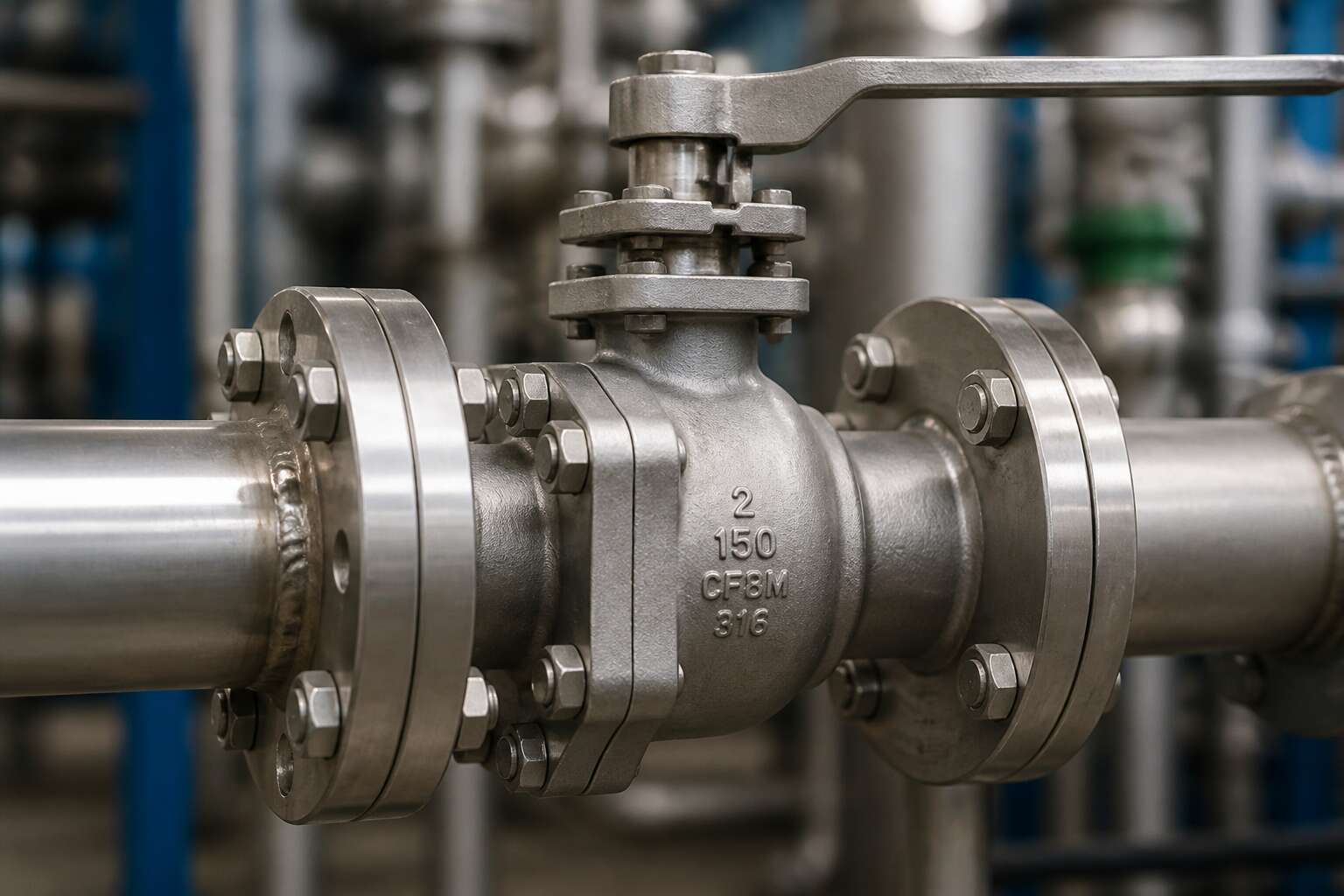
When I trace the flow of water through a typical South African industrial plant, the distinction between components starts to blur. The question, are valves pipe fittings, deserves a precise answer because it affects maintenance and safety.
A valve is a flow control device. It starts and stops, throttles, or redirects fluid. A pipe fitting, by contrast, connects, branches, or terminates straight pipe sections. They serve different purposes!
Consider that the valve body is a fitting-like shell, but the internal mechanism sets it apart. Valves include seats, discs, and stems. Fittings, on the other hand, are passive.
- A gate valve isolates flow.
- A reducer changes pipe diameter.
- A non-return valve prevents backflow.
- An elbow changes direction.
Understanding this difference prevents costly errors when specifying components for water treatment or mining systems.
Defining Pipe Fittings and Connectors
Of all the components in an industrial pipeline, the humble connector often receives the least attention. To answer the question, are valves pipe fittings, one must first understand what a fitting actually does. A pipe fitting is the passive infrastructure of a system. It handles the geometry and the layout. Elbows change the direction of travel, reducers adjust the flow area, and couplings join two straight lengths of pipe. These pieces are static, permanent, and silent. They do not think; they merely exist to provide a path.
The distinction depends on function:
– An elbow redirects flow by a fixed angle.
– A tee splits flow into two branches.
– A union allows for quick disassembly.
– A reducer transitions between pipe sizes.
Valves are different. They are active participants in the system. The valve body might look like a fitting, and it often connects to the line in the same way, but that is where the similarity ends. Inside that shell lies a mechanism of seats and stems, a moving heart that responds to command. While a fitting is a static route, a valve is a checkpoint. It holds back pressure, regulates volume, or opens fully to release a surge of fluid. In South African mining operations, this difference is critical. A fitting adapts the pipe. A valve protects the process. So, are valves pipe fittings? In a strict, technical sense, they are not, because a fitting cannot control flow. The only true answer is that they are complementary partners, each fulfilling a role the other cannot.
The Shared Role in Fluid Control
In any working line, the question are valves pipe fittings fades when you watch them labour together. A fitting charts the route; a valve decides what may pass. Neither can complete the job alone. Consider a slurry line in a Mpumalanga plant. The bends and reducers shape the journey, but a gate valve holds the line steady during maintenance. That partnership is the real story of fluid control!
Some engineers still ask are valves pipe fittings because both share flanges and thread standards. The shared vocabulary fools the eye. Yet the distinction matters for procurement and maintenance schedules. I have seen a team order a dozen fittings only to discover they needed actuated valves.
- A fitting is passive geometry.
- A valve is active command.
- Both are essential partners in flow regulation.
Why the Distinction Matters for Buyers
Procurement may be the only place where the question are valves pipe fittings causes actual physical pain. A valve quotes a motorised actuator, a pressure rating, and a delivery date. A fitting quotes a bend radius. Swap them in the purchase order and one department gets a shiny doorstop while another waits two weeks for a real gate valve.
Buyers who treat them as one line item inherit certain joys. They also inherit these:
- Mismatched end connections that need adapters, which need their own delivery dates.
- Spare parts that neither close nor connect anything.
- A maintenance manager who uses your name as an expletive.
So when someone asks are valves pipe fittings, the accurate answer is no. The practical answer is that you will be the one explaining the difference to your financial director.
Key Differences Between Valves and Pipe Fittings
Functional Purpose: Flow Regulation vs. Direction and Connection
Few questions in piping generate as much confusion as whether are valves pipe fittings. The functional purpose splits them apart. Valves regulate flow. Pipe fittings manage direction and connection. A valve modulates, stops, or throttles the fluid’s movement. A fitting merely guides or joins the pipework. Consider a basic water line. An elbow redirects the pipe around a corner, while a gate valve halts the water completely.
These roles rarely overlap. In industrial installations, you might find:
- Valves that act as flow regulators, from full shutoff to partial throttling.
- Pipe fittings that act as fixed connectors, directing fluid along a predetermined route.
That fixed versus adjustable nature answers the broader query of are valves pipe fittings. The answer lies in their distinct duties, not their physical similarity.
Operational Complexity and Moving Parts
Valves are busy contraptions. Inside a gate valve, a wedge climbs and descends on a threaded stem. A ball valve rotates its sphere to align a bore. A globe valve lowers a plug toward a seat. All of this motion demands precision. Fittings are inert by comparison. An elbow bends, a tee branches, a coupling sleeves, and none of them moves a millimetre.
This operational gap clarifies are valves pipe fittings. The moving parts create maintenance duties:
- Stem lubrication and packing adjustment
- Seat inspection for erosion and pitting
- Disc or ball alignment checks
Fittings require none of this. They carry no schedule. Their failure comes from corrosion or impact, not from fatigue. Point to the stem and the wedge. Every South African plant manager understands that difference. A valve demands attention. A fitting tolerates neglect.
Installation and Replacement Considerations
Walk any wastewater plant in the Western Cape and you will see where the technicians gather. I have watched them cluster around the same component in plants across Gauteng. The pipe runs sit silent. The fittings hold their shape. The valves attract the attention because they are the ones that stop working. Most unplanned shutdowns trace back to a valve that will not close or a stem that will not turn. That pattern shapes how we answer whether are valves pipe fittings.
Installation crews handle the two categories very differently. An elbow or a reducer gets positioned, welded, and checked. Done. A valve demands more. The stem orientation must respect gravity. The flow direction must match the arrow cast into the body. Flange bolts require even torque, applied in sequence. The installer who asks are valves pipe fittings before bolting up will save hours of downtime later.
– Stem orientation relative to gravity and actuator clearance
– Flow direction arrow alignment with the line
– Even bolting torque on flanged ends
– Support brackets to stop pipe strain from twisting the body
Replacement tells the same story from a different angle. When a fitting fails, the crew cuts it out, dresses the pipe ends, and welds or threads in a new unit. That is a mechanical task. Valve failure demands diagnosis. Seat erosion, stem pitting, and packing degradation each point to different spares. Sometimes you can refurbish the valve in place. Sometimes you must isolate the line and replace the whole assembly. This is where the classification of are valves pipe fittings directly affects your maintenance budget. Buyers who treat them as one category end up with too many elbows and too few valve internals.
Categorization in Industrial Piping Components
I have stood in a Durban warehouse and watched the stock clerk hesitate between the bins. On the left, pipe fittings: silent, static, their shapes final. On the right, valves: weighted boxes with unknown interiors. The clerk knows the question, are valves pipe fittings, and the answer is written in the spare parts catalogue.
That catalogue separates them by behaviour. Fittings are categorized by dimension and angle. Valves are categorized by function and failure mode. This is why are valves pipe fittings matters long before the purchase order lands. The distinction dictates storage, inspection schedules, and procurement budgets. A plant in Gauteng that treats them as one category finds its shelves full of reducers while the maintenance crew waits on a single seat ring.
The crews will tell you the difference without paperwork:
- Fittings define the path; valves define the behaviour.
- Fittings demand dimensional checks; valves demand operational tests.
- Fittings die by impact; valves die by corrosion and fatigue.
Impact on System Pressure and Integrity
Pressure treats fittings and valves differently. A correctly rated fitting preserves the system’s pressure envelope without intervention. A valve is a controlled interruption of that envelope, a deliberate point where flow is held back or released. The question of are valves pipe fittings becomes a question of where stress concentrates.
Integrity failures follow different timelines. Fittings fail suddenly, from impact or a poor weld. Valves fail slowly, through seat wear and stem corrosion, and the leak grows over weeks. Inspectors must therefore test them on different schedules.
- Fittings require pressure ratings matched to the pipe wall.
- Valves require cycle counts, torque checks, and seat leakage tests.
A plant in Gauteng that understands are valves pipe fittings knows the pressure drop across a gate valve is not the drop across an elbow. One remains constant. The other changes with every turn of the handwheel.
Common Types of Valves Used in Piping
Gate Valves and Globe Valves
Gate valves operate by lifting a wedge out of the fluid path. They are built for isolation, meaning fully open or fully closed service. Leave one half open to throttle flow and you will erode the seats. That repair bill will haunt you.
Globe valves solve the throttling problem. Their internal disk moves toward a ring seat, allowing incremental adjustment. The cost is a significant pressure drop across the valve. In South African steam and water lines, you will find globe valves where control outweighs pressure efficiency.
Consider the selection:
– Gate valves for on/off isolation
– Globe valves for flow regulation
– Gate valves for low pressure drop
– Globe valves for frequent adjustments
The debate over whether are valves pipe fittings rarely surfaces when engineers select these components. They simply choose the valve that matches the duty. Gate and globe valves are fittings in the broad sense because they connect pipe sections. Yet they function as independent flow control devices. The category matters less than the application.
Ball Valves and Butterfly Valves
One quarter turn. That is all a ball valve needs to stop a line completely. Inside, a bored sphere rotates against elastomeric seats. The design gives positive shutoff, even after long periods of inactivity. This makes ball valves a default choice for isolation in many South African process plants.
Butterfly valves work differently. A disk mounted on a shaft rotates within the pipe bore. Even when fully open, the disk remains in the flow path. That creates a small but permanent pressure drop. In return you get a compact, lightweight valve that costs less on large bore pipes. They also handle throttling duties reasonably.
- Ball valves for tight shutoff
- Butterfly valves for economy and space
Are valves pipe fittings? That debate rarely bothers the engineer choosing between these two. Both connect pipe flanges and both regulate flow. The label does not change the duty.
Check Valves and Relief Valves
Ask a process operator ‘are valves pipe fittings’ and they’ll likely shrug. But watch a check valve slam when a pump trips and you’ll see the real answer. A check valve uses a hinged disk or a spring-loaded ball to block reverse flow. It needs no manual input. A relief valve does the opposite duty. It stays closed until pressure climbs beyond a safe threshold, then it pops open to vent.
In South African plants, water hammer and overpressure are constant threats. I’ve seen relief valves chatter when sized wrong, and check valves clatter on pulsating flow. These valves provide the system with essential protection. The common variants include:
- Swing check valves for low velocity pipelines
- Lift check valves for horizontal runs
- Spring-loaded safety valves for precise setpoints
Plug Valves and Needle Valves
Most people assume pipe fittings and valves are interchangeable. The question of are valves pipe fittings gets more interesting when you look at plug valves and needle valves. These two components highlight the gap between simple connection hardware and true flow control devices.
A plug valve is robust and straightforward. Its tapered plug rotates a quarter turn to open or close a line. This design suits high viscosity fluids and gas lines. In contrast, a needle valve uses a finely threaded stem and a cone shaped tip. It allows operators to dial in extremely precise flow rates, making it a fixture of instrumentation piping.
In South African plants, you will often see these valve types performing roles that no fitting could handle. When procurement teams ask are valves pipe fittings, the answer is implied by the distinct maintenance procedures and operating demands these valves require:
- Plug valves isolate sections of pipeline quickly.
- Needle valves regulate bleed lines and pressure gauges.
Actuated Valves vs. Manual Valves
A valve left unattended is a statement of trust in human vigilance. The choice between an actuated valve and a manual valve rests on that trust versus the raw conditions of a South African plant. Manual valves demand physical presence. An operator walks the line, turns a wheel, and feels the resistance in the stem. There is no hidden logic, only the immediate result of a turn.
Actuated valves remove that human element entirely. They respond to a signal from a control room, sometimes kilometers away. This shift alters maintenance schedules and failure modes completely.
Consider the operational split:
- Manual valves offer direct, tactile control and lower initial costs.
- Actuated valves deliver remote operation and precise timing in hazardous zones.
When a procurement team asks are valves pipe fittings, they overlook that an actuator transforms a simple component into a logistical asset. The question of are valves pipe fittings becomes secondary once you calculate the cost of a missed stroke. An electronic actuator replaces the operator’s physical effort. That distinction changes procurement strategy, safety protocols, and spare parts inventory.
Common Types of Pipe Fittings and Their Applications
Elbows and Bends for Direction Changes
Ask any plumber in Durban where the real wear happens, and they will point to the elbows. These fittings change direction with minimal fuss, but they take the punishment from every surge and swirl. While valves manage flow, elbows and bends handle geometry. That separation clarifies the common query: are valves pipe fittings? The answer is no, because a valve’s job is to stop or start, while an elbow simply turns the line.
Elbows use sharp angles, typically 45 or 90 degrees. Bends use a gradual curve. Choose a bend when moving thick fluids, since a sharp corner will trap debris.
- Elbows: tight spaces, low cost.
- Bends: smoother flow, less pressure drop.
In any replacement project, this difference prevents confusion. Asking are valves pipe fittings misses the point entirely. Valves and fittings serve distinct roles, even when installed side by side.
Tees and Crosses for Branching
When a pipeline needs to branch, tees and crosses are the workhorses. A tee splits a line into two directions, while a cross gives you four connection points. Neither device stops or starts flow. The question are valves pipe fittings collapses under the weight of this clarity. A valve regulates, a tee merely divides.
Tees handle common supply lines and manifold setups. Crosses appear in sprinkler grids and hydraulic systems where multiple paths intersect.
- Tees: water distribution, compressed air branches
- Crosses: fire suppression loops, parallel piping arrays
Each fitting changes the pressure profile along the line. Crosses create more turbulence than tees. But neither one acts as a shutoff. That fundamental gap answers are valves pipe fittings without any ambiguity.
Reducers and Couplings for Size Adaptation
Reducers and couplings answer a different question. When pipe diameters change, or when two sections must join without leakage, these fittings handle the transition. Couplings connect straight runs of equal size. Reducers step the flow down or up, managing velocity and pressure across the change. Neither device regulates flow, which brings us back to the debate over are valves pipe fittings. A valve stops or throttles. A coupling holds two ends together. A reducer adjusts the bore.
In South African installations, from municipal water lines to mining slurry systems, reducers prevent cavitation damage by easing diameter shifts gradually. Couplings allow maintenance crews to swap sections without cutting new threads. I have seen couplings fail when crews skipped the torque spec. These are passive components. They do not actuate, seal shut, or modulate pressure. That absence of control answers the question definitively. A reducer adapts. A valve governs.
Flanges and Unions for Disassembly
Flanges and unions answer a different maintenance question entirely. When crews must pull a pump or valve out of a line without cutting or rethreading, these fittings make it possible. Flanges bolt two sections together with a gasket between them. Unions thread together and lock with a nut.
South African installations rely on both for different reasons:
- Flanges for high-pressure lines and large bore pipes
- Unions for smaller lines where access speed matters
A flange does not throttle flow. A union does not stop or start anything. That is why the answer to are valves pipe fittings stays the same. They exist to make servicing possible. They hold a system together and let it come apart again, which separates them from valves.
Caps and Plugs for Sealing
Every pipeline eventually needs a permanent close. Caps and plugs provide that boundary, sealing off pipe ends without cutting or rethreading. A cap fits over the outside of a pipe, while a plug threads into its interior. Both answer a practical question: how do we stop flow permanently without adding a valve? This distinction clarifies the classic question, are valves pipe fittings? Valves regulate and control; caps and plugs simply seal.
South African installations rely on these fittings to protect lines during maintenance or retirement. They guard against debris, moisture, and accidental discharge.
Common applications include:
- Sealing unused branch lines
- Protecting threaded openings during transport
- Closing off future expansion points
Each cap or plug holds pressure, but never manages flow. To understand are valves pipe fittings, remember this: they serve different purposes, and knowing which one you need saves time and money.
Nipples and Adapters for Transitions
In piping, the most common mistake is assuming a thread is a thread. In South African plants, BSP and NPT threads cross paths daily, and they do not always align perfectly. A nipple, a short pipe with male threads on both ends, bridges two female fittings. An adapter, meanwhile, converts between thread types or sizes, saving you from a full pipeline rework.
This is where the question are valves pipe fittings gets interesting. The answer to are valves pipe fittings is still no; valves regulate flow, while nipples and adapters simply establish the physical transition. Their role is to provide a secure joint without altering pressure or direction.
- Close nipples for tight spaces
- Hex nipples for easy wrenching
- Adaptors for metric to imperial conversions
They keep the system sealed, but they never throttle a drop. That is their whole job.
Choosing the Right Valves and Pipe Fittings
Material Compatibility with Media and Environment
The question “are valves pipe fittings” surfaces when buyers confront corrosion or premature failure. I have seen material compatibility with media and environment decide outcomes more than component labels.
A brass valve carrying acidic water degrades quickly. Stainless steel resists chloride attack but fails in high-temperature sulfuric acid. The environment matters equally. Coastal South African installations face salt-laden air, while inland systems deal with abrasive dust.
Consider these factors when selecting materials:
– Chemical composition of the media
– Operating temperature and pressure ranges
– Ambient conditions like humidity and UV exposure
– Galvanic corrosion risks between dissimilar metals
Each choice carries consequences. A polymer fitting may suit a clean water line but crack under thermal cycling. Matching material to media prevents downtime. The real distinction of are valves pipe fittings lies in how each component responds to specific conditions.
Pressure and Temperature Ratings
Pressure and temperature ratings separate components that survive from those that fail. A valve rated for 16 bar at 50 degrees Celsius may rupture at higher temperatures, even if the pressure stays constant. The same logic applies to fittings, which is why buyers ask whether are valves pipe fittings when comparing spec sheets.
Rated values assume steady conditions. Real systems surge. Water hammer, thermal expansion, and startup transients push components beyond their nominal envelope. I have seen systems where the fitting met the pressure spec but the valve did not. The answer to are valves pipe fittings depends on the operating envelope, not the label.
Connection Types and End Styles
The question are valves pipe fittings gets a practical answer when you examine connection types. A threaded valve mates with a threaded fitting. A flanged valve requires a flanged counterpart. Matching end styles make the assembly behave as one unit. Mismatched styles create leakage points or stress fractures.
- Threaded ends for low to medium pressure circuits
- Flanged ends for high pressure and maintenance access
- Butt weld ends for permanent joints
- Socket weld ends for compact bore piping
- Compression ends for rapid assembly
The clearest answer to are valves pipe fittings emerges at the interface. A valve acts as a fitting when its end style matches the network around it. The classification is mechanical, not semantic. South African plants often run mixed systems, so verifying end styles before purchase saves downtime and avoids compatibility failures.
Compliance with Industry Standards and Certifications
Compliance turns an abstract question into a tangible specification. The answer to are valves pipe fittings is found in the documentation that accompanies each component.
In South Africa, SANS 1163 governs threaded fittings, and SANS 1604 covers valves. Certifications such as ISO 9001 for manufacturing quality or API 6D for pipeline valves provide traceable assurance. When you select a valve for a flanged system, the fitting classification matters less than the standard it meets. A certified end style guarantees hydraulic integrity! Uncertified components introduce unpredictable failure modes. For mining and water utilities, local pressure equipment regulations demand marked pressure ratings. Without these, even a perfect mechanical match becomes a liability. The certification defines the boundary between semantic debate and operational reality.
Budget, Availability, and Long-Term Maintenance
In South Africa, budget often decides how you treat the question of are valves pipe fittings. It is both a mechanical and an economic matter. The price gap between a certified gate valve and an uncertified coupling shows that difference clearly. Upfront cost is only the first layer, though.
Availability shifts the calculus. A standard flanged valve from a local stockist in Johannesburg can arrive within a day. A specialized fitting may wait on a vessel from Durban harbour for weeks. That waiting period directly impacts maintenance schedules and system uptime.
Long-term maintenance creates the real separation. Valves contain moving parts that wear, packings that leak, and actuators that fail. Fittings sit silently in the pipeline for decades. When you ask are valves pipe fittings, consider replacement cycles and the maintenance ledger, not just the initial purchase order.
Maintenance, Safety, and Industry Standards
Inspection Schedules for Valves and Fittings
I have watched plant engineers in Gauteng trace unplanned downtime to a neglected joint, not the valve itself. Whether are valves pipe fittings or separate components matters less than how you maintain them, but the distinction shapes your inspection habits.
Routine checks vary by service. High pressure steam lines need quarterly inspection, while potable water systems can stretch to annual assessments. Torque audits on bolted connections catch creep that leads to leaks. Thermal imaging detects hot spots invisible to the naked eye.
Safety depends on lockout tagout procedures before any fitting is touched. Pressure must be bled off, and personal protective equipment worn at all times. These practices prevent catastrophic failures that ruin equipment and livelihoods.
Industry standards like SANS 347 and ASME B31.3 establish baseline schedules. Third party inspectors verify compliance with documented maintenance logs. Knowing whether are valves pipe fittings means applying the same discipline to both.
Signs of Wear, Leakage, and Corrosion
A weeping gland on a 6-bar slurry line erodes a pump casing before you see a puddle. Wear here is a thief. Erosion at an elbow, thread scoring on a union, or a cracked seat; these issues all announce themselves through micro-emissions.
Corrosion is a chemical vandal. It thins a fitting’s wall while the exterior stays pristine. Rust bloom under insulation is a classic deception. Safety protocols demand inspection over assumption. Lockout tagout protects you from the surge, but visual acuity protects you from the latent weakness.
Industry standards like SANS 347 force you to look harder. They require documented logs of dimensional checks. Whether are valves pipe fittings or separate components, you record the same progression of rust and pitting. Look for these tell-tale signs on your next shift!
- White powdery oxide on aluminium flanges.
- Tiny drips of hydraulic fluid on threaded adapters.
- Surface blistering on painted carbon steel bodies.
Best Practices for Proper Installation
Prevention starts with a clean spool piece and a quiet mind. A flange bolted with uneven torque will fail before the first pressure spike. I always check the studs twice. The question of are valves pipe fittings or separate inventory items matters less than how you bed them into the line. Proper installation demands alignment. A gap of one millimeter on a gasket face is a leak waiting for a hot day.
Use these steps for every joint:
1. Inspect the bore for swarf and scale.
2. Smear a light film of lubricant on the threads.
3. Tighten in a star pattern across the flange.
4. Mark the final position with a paint pen.
Safety rules still apply after the last bolt. Isolate the system, wear rated gloves, and bleed the line before opening anything. Industry standards such as SANS 347 dictate the tolerances you must verify. Whether are valves pipe fittings or standalone components, the pressure holds no debate. Install them right or replace them often.
Common International Standards and Codes
Maintenance reveals the truth behind the question, are valves pipe fittings or separate inventory categories. A stuck valve creates immediate pressure problems. A corroded fitting fails with less warning. Both demand different maintenance rhythms. Mixing them up costs money on the plant floor.
Safety rules exist because fluid systems hold stored energy. The distinction between valves and fittings does not change the hazard. A valve vents pressure gradually. A fitting rupture releases everything at once. Treat every joint as live until confirmation says otherwise.
Safety requirements:
- Never rely on a closed valve as a single isolation point
- Confirm the pressure gauge reads zero before opening a bleeder
- Keep the area clear of personnel before breaking a connection
Industry standards provide the boundaries. Common International Standards and Codes include ASME B16.34 for valve pressure ratings, ISO 7005 for flange dimensions, and SANS 347 for South African pipe thread tolerances. These standards answer one question, are valves pipe fittings or standalone components, by defining each component’s tested limits.
Replacement and Upgrade Strategies
Replacement strategies separate the prudent from the penny-wise. In South African plants, the question “are valves pipe fittings” or separate inventory categories surfaces during shutdown planning. The answer changes how you budget spares and schedule downtime. Maintenance teams often ask are valves pipe fittings when assessing risk, and the distinction matters for lifecycle planning.
Safety protocols govern every swap. A valve’s actuator may fail while the body holds pressure. A fitting’s thread may strip without visible damage. Both demand isolation, verification, and bleed-down. Treat every joint as live until the gauge reads zero.
Industry standards guide the upgrade path. ASME B16.34 gives pressure ratings, ISO 7005 governs flanges, and SANS 347 covers local thread tolerances. When replacing components, match material certificates and pressure classes to the original specification.
Consider these triggers:
1. Repeated leakage after re-torquing
2. Corrosion pits exceeding 10% of wall thickness
3. Obsolescence of the original standard
Upgrade only when the new component improves the system, not simply because the part number changed.

0 Comments