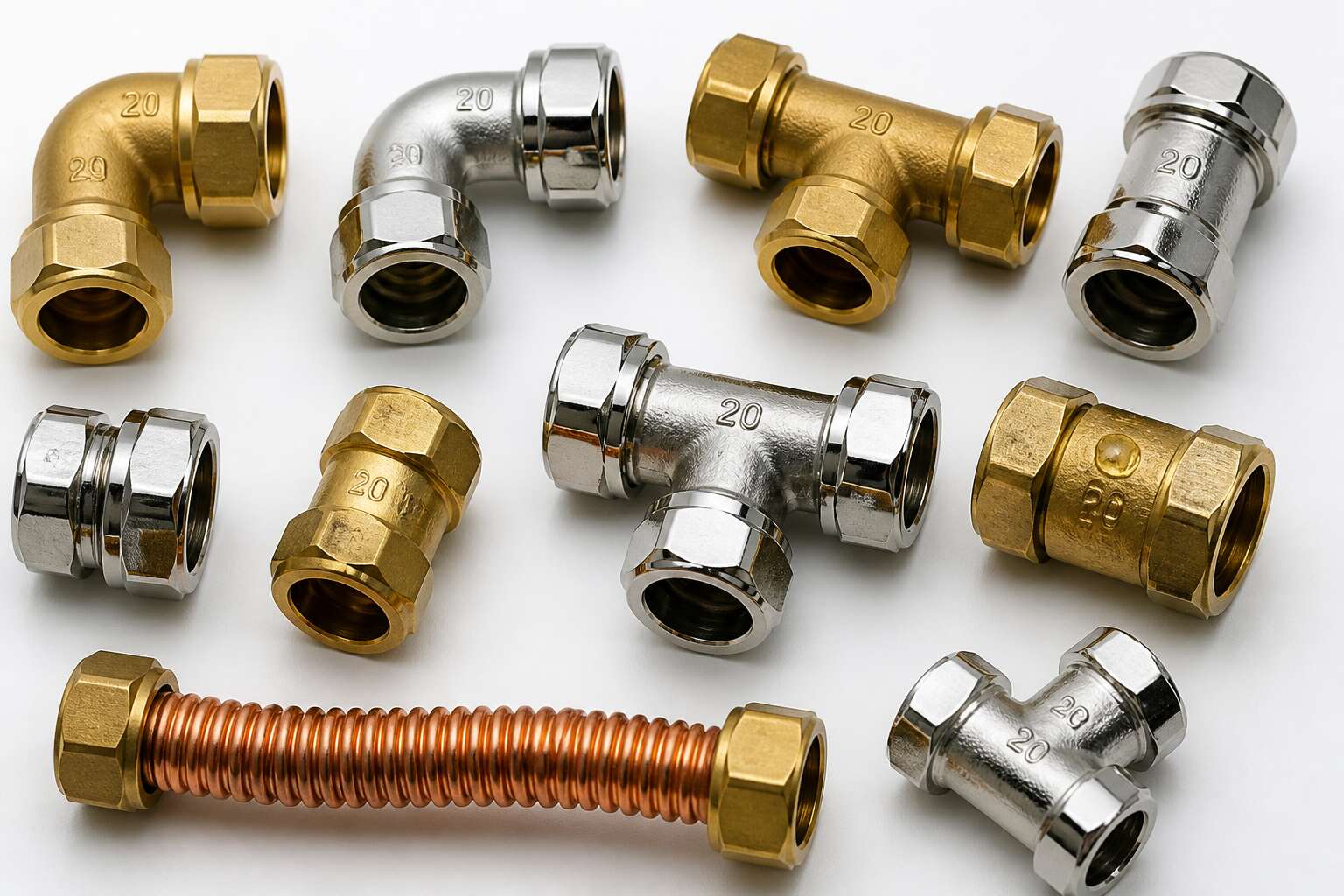
Understanding 20mm Plumbing Connections
What Does 20mm Mean?
Walk into any plumbing supplier in South Africa and the racks are dominated by one measurement: 20mm. This figure refers to the outside diameter of the pipe. It is the most common connection standard for household water supply lines, from geysers to garden taps.
Here is what 20mm actually tells you:
- The outside diameter is exactly 20mm, not the internal bore.
- Wall thickness determines whether the pipe is rated for high or low pressure.
- Fittings branded as water pipe fittings 20mm match this outside diameter precisely.
The distinction matters when you are mixing copper, PVC, and PEX components. A 20mm copper fitting will not grip a 20mm PVC pipe the same way. Adapters exist for this purpose, though their compatibility varies.
Metric vs Imperial Sizing
A half inch pipe and a 20mm pipe appear to be twins, but they only share a silhouette. Imperial sizing describes the internal bore; metric sizing measures the outside diameter. In South Africa, older homes still carry galvanised iron measured in inches, while modern supply lines run on 20mm. That mismatch silently corrupts many a joint.
- Metric fittings grip the outer wall of the tube.
- Imperial fittings thread onto a nominal bore.
The thread pitches differ, and so do the tools. Matching a 20mm copper pipe to a legacy inch fitting demands an adapter, and even then, the tolerances may haunt you. Most water pipe fittings 20mm are cut for metric tube, not imperial thread. If the house predates the 1970s, measure the thread before you buy anything.
Common Materials for Fittings
A 20mm joint either holds or it does not. There is no middle ground. In my years inspecting South African homes, I have seen stained ceilings and buckled floors from joints that failed quietly behind walls.
Understanding 20mm plumbing connections starts with material choice. Brass remains the standard for water pipe fittings 20mm, its threads gripping firmly while the body withstands pressure. Polypropylene fittings, fused by heat rather than adhesive, create joints with no seam to fail. Copper fittings dominate older installations. PVC handles cold water lines on a budget.
- Brass: threaded, tough, suited to hot and cold
- Polypropylene: heat-fused, seamless, lightweight
- Copper: traditional, reliable
- PVC: affordable, cold water only
Each material demands a different technique. The right choice depends on what the wall already holds, not on what the catalogue promises.
Essential Fitting Types for 20mm Pipework
Elbows and Directional Fittings
Statistically, no 20mm pipe has ever turned a corner by itself! That stubborn reality is why elbows exist. In South African plumbing, directional fittings are essential parts of the water pipe fittings 20mm family, routing water exactly where you intend it to go.
Common types:
- 90 degree elbows, for sharp turns that get the job done immediately
- 45 degree elbows, for gentler corrections that keep pressure loss lower
- Bend couplings, for gradual arcs when pipework needs to sweep
Each elbow adds a small amount of turbulence. The smoother the bend, the less energy the water loses. When I choose water pipe fittings 20mm for the corners of an installation, a 90 degree fitting is often a space compromise, while a pair of 45 degree fittings delivers more fluid routing and reduces wear over time.
T pieces also count as directional fittings, splitting flow rather than turning it. They deserve a proper introduction of their own, later.
Tees and Branch Connections
Every branch in a network is a point of division. The tee, a quiet component among water pipe fittings 20mm, splits one stream into two without ceremony. In South African installations, pvc and copper tees dominate, each chosen for pressure tolerance and thermal behaviour.
- Equal tees, where all three openings match in diameter.
- Reducing tees, which step down flow to a smaller outlet.
- Combination tees, merging supply and return lines.
Placing water pipe fittings 20mm branches correctly saves you from turbulent surprises! I always measure the main line’s direction first. A tee misaligned by a few degrees creates persistent strain on the joint. For vertical drops, consider a swept tee to guide water smoothly downward. The humble tee rarely gets attention, yet it determines how every tap and appliance receives its share.
Couplings and Adapters
Few plumbing components inspire less enthusiasm than a coupling, yet without it, every length of water pipe fittings 20mm would end without connection. A coupling joins two straight pipes; an adapter changes the connection type or size. In South African installations, compression fittings tighten a nut over a ferrule, while push-fit connectors grab the pipe with internal teeth.
- Compression couplings for metal or plastic pipes
- Push-fit couplings for quick work
- Threaded adapters for tap connections
- Reducing couplings for smaller bores
Adapters prove their worth where pipes meet. A 20mm PVC pipe meets a brass tap thread, or a copper pipe meets a plastic fitting. Choosing water pipe fittings 20mm means a threaded adapter with BSP threads. Solvent weld couplings fuse PVC into one piece, but they leave no room for second thoughts. I have watched a DIY enthusiast discover that a glued joint cannot be unglued.
Valves and Control Devices
Water pressure in a 20mm line can reach six bars. Without a valve, that pressure flows to the end of the pipe with no way to stop it. In any water pipe fittings 20mm collection, the ball valve is the most common choice. A quarter turn of the lever opens or closes a bore through a chrome plated ball.
For systems where backflow could contaminate drinking water, a check valve is essential in a water pipe fittings 20mm setup. This fitting allows flow in one direction only. The internal spring or flap closes the moment pressure drops.
A drain valve helps empty a system for winter or maintenance. Control devices deserve as much attention as the pipes themselves. Common valve types for domestic work include:
- Ball valves for full flow isolation
- Check valves to prevent backflow
- Drain valves for system maintenance
Compression vs Push-Fit Options
As one retired plumber told me, “You trust what you can take apart.” That trust separates compression from push-fit in any water pipe fittings 20mm job. Compression fittings use a nut and olive to bite into the pipe. You can loosen them later. Push-fit fittings rely on a collet and an O ring. They click in place and require a release tool to remove. Both are reliable if installed with care.
In South Africa, water pressure can spike without notice. A water pipe fittings 20mm system must handle that. Compression offers a firm, adjustable grip. Push-fit offers speed and simplicity. The trade-off is reusability versus convenience.
Consider these practical differences:
- Compression for permanent installs
- Push-fit for tight spaces
- Compression for frequent changes
- Push-fit for quick repairs
Neither option is superior. Your skill and your patience decide.
Selecting Fittings for Your 20mm System
Evaluating Water Pressure Requirements
Over a third of domestic leaks in South Africa trace back to poorly selected fittings. Selecting water pipe fittings 20mm means understanding pressure class alongside size. Municipal supply pressure typically ranges from 400 to 900 kilopascals. I have seen joints fail simply because the rating did not match the system. Each fitting carries a maximum working pressure.
Consider the following:
- Match the pressure rating to your system’s peak demand.
- Account for temperature, since hot water lowers pressure tolerance.
- Count every elbow and tee, as each adds resistance.
Evaluating water pressure requirements begins with static pressure at the tap. Then measure dynamic pressure under flow. Pipe length, elevation changes, and the internal bore of each fitting affect the final figure. If your geyser sits above the outlet, subtract the head height. Water pipe fittings 20mm with generous bores preserve pressure across long runs.
Matching Fittings to Pipe Material
Selecting water pipe fittings 20mm begins with the pipe material. Copper pipe requires different fittings than HDPE or PVC. A compression fitting designed for polyethylene will not seal on copper. Wall thickness matters too. Metric 20mm pipe from one brand may differ from another’s.
I always check the specification sheet before committing to water pipe fittings 20mm. Some fittings suit only specific materials. Push-fit fittings with O-rings work on copper and PEX, but insertion depth varies. A scratched pipe end compromises the grip. That simple scratch causes more failures than people realise!
When matching fittings to pipe material:
- Consider the pipe’s stiffness and thermal expansion
- Check whether the system uses solvent weld, threaded, or mechanical connections
- Verify chemical compatibility between the fitting’s seal and the pipe
A mismatch creates leaks that surface months later. I have replaced plumbing where a brass fitting met galvanised steel without a dielectric union. The corrosion was inevitable.
Temperature and Chemical Considerations
A geyser outlet in a South African home delivers water at 60°C, pushing through water pipe fittings 20mm at temperatures that stress seal materials. PVC fittings soften near this threshold, while polypropylene tolerates more heat.
Chemical exposure matters more than most installers admit. Municipal water treated with chlorine attacks certain rubber compounds. I have seen O-rings swell and lose their grip within two years! Water pipe fittings 20mm with EPDM seals resist chlorinated water. Acidic borehole water, common in parts of the country, corrodes brass fittings over time.
- The continuous operating temperature rating for the fitting body and seal
- Resistance to chlorine, chlorine dioxide, or chloramine used by your municipality
- Tolerance for the pH range of your water source
UV exposure also matters for exposed installations. A 20mm fitting in direct sunlight degrades faster than one indoors.
Quality Standards and Certification
Nearly a third of plumbing failures in South Africa trace back to fittings that never carried a valid certification mark. When you choose water pipe fittings 20mm, the difference between a certified component and a lookalike often shows up years later, hidden behind a wall or under a slab.
Quality standards start with the SABS mark, which verifies compliance with SANS specifications. International buyers often demand ISO 9001 certification from manufacturers as well. The fitting should carry a stamp identifying the material grade, pressure rating, and standard it conforms to. Reputable suppliers provide traceable batch documentation without hesitation. Beware of unmarked fittings; they typically skip critical quality control steps.
- SABS or SANS certification number stamped on the body
- Material grade and pressure rating clearly marked
- Batch traceability through supplier documentation
Certification protects you from premature failures. For a system relying on water pipe fittings 20mm, that protection is worth every rand.
Installing 20mm Fittings Correctly
Preparing Pipes and Joining Surfaces
There is a moment in every plumbing job where carelessness reveals itself. It happens before the joint is made, when you decide the pipe end looks clean enough. It never is.
Surface preparation is the quiet discipline of the trade. Cut the pipe square, then remove burrs with a knife or deburring tool. Tiny shards tear at the sealing ring or prevent the compression nut from seating evenly.
For reliable connections with water pipe fittings 20mm, do the following:
- Wipe the pipe and fitting interior with a clean cloth.
- Check for scratches, dents, or ovality in the pipe end.
- Dry assemble the joint first to feel the resistance and alignment.
Each step takes seconds. Skipping them creates leaks that appear months later, inside a wall. I have watched meticulous friends make this mistake. Repairs cost ten times what you saved by rushing. Give water pipe fittings 20mm the extra minute.
Step-by-Step Compression Fitting Installation
Tightening a compression fitting is a moment of finality. The nut resists, then yields, and the connection is made. With water pipe fittings 20mm, the sequence matters more than the force you apply.
Here is the order I trust:
- Slide the nut and olive onto the pipe, with the olive’s tapered face toward the fitting body.
- Hand tighten the nut until it seats, then mark the nut’s position.
- Use two spanners to hold the body and turn the nut one full turn, or until the mark shifts a quarter turn past the body’s flat.
This method prevents overtightening, which distorts the olive. I have watched fine threads stripped by enthusiasm. Work steadily, and water pipe fittings 20mm will hold for decades.
Using Push-Fit Fittings Efficiently
Time is the one thing a plumber never has enough of. With push-fit technology, you can reclaim those minutes lost to spanner work. For water pipe fittings 20mm, this method removes the need for heat, solder, or complex tooling. You simply push the pipe into the fitting until it clicks. The connection is secure, reliable, and reversible with a release tool.
Preparing the pipe is still the primary rule. A clean, square cut is non-negotiable. Burrs and rough edges will damage the O-ring inside the fitting. I have found that a simple deburring tool makes all the difference. Before you begin, gather your essentials:
– A sharp pipe cutter for a clean edge
– A deburring tool to smooth the inner and outer rim
– A depth marker to ensure full insertion
– A release tool for future adjustments
Push the pipe in with a slight twisting motion until you feel it bottom out. Then, draw a line on the pipe to confirm the depth. The click is your signature, a quiet promise of a dry joint. Test with water pressure before closing up any wall or trench. This method suits both copper and PEX, making your water pipe fittings 20mm universally practical.
The efficiency of push-fit is not just about speed. It is about confidence. You can install a fitting in the same time it takes to find your spanners. For the odd repair in a tight corner, this is a blessing. Remember, always shut off the water and release pressure before removing any fitting. A gentle touch and a proper tool will save your fingers and your sanity. Good workmanship still matters, but the process is certainly kinder. You will save time, at least, every hundred repairs.
Heat-Based Jointing Techniques
Heat-based jointing remains essential in South African plumbing. Soldering water pipe fittings 20mm creates a permanent bond that push-fit cannot offer. The torch, flux, and solder demand careful sequencing.
I begin with a clean, dry pipe end. Apply flux to the pipe and fitting surfaces. Assemble the joint before lighting the torch. Heat the fitting body, not the solder. When flux bubbles, touch solder to the joint gap. Capillary action pulls the solder into the void.
A few constants guide this work:
- Lead-free solder is mandatory for drinking water lines.
- A neutral flame minimizes oxidation on the pipe surface.
- Excess flux must be wiped away after cooling.
Heat-based joints cannot tolerate moisture well. A single drop of water can create a pinhole leak, so double-check that supply line! These water pipe fittings 20mm require precision, for the resulting assembly is rigid and permanent. That rigidity suits concealed installations where access is impossible.
Pressure Testing Your Connections
Installing 20mm fittings correctly is where most DIY efforts unravel. The joint may look sound, yet hidden faults lurk beneath the surface. A fitting that appears seated can still sit at an angle, creating stress that manifests later as a weep or a burst.
Pressure testing reveals what the eye cannot see. Before closing any wall or trench, fill the system and raise the pressure to 1.5 times the working rating. Watch the gauge for thirty minutes. A stable needle suggests integrity. A slow drop demands investigation.
For water pipe fittings 20mm, follow a simple sequence:
- Bleed all air from the line.
- Close the outlet valves.
- Apply pressure gradually.
- Inspect every joint under load.
Any movement in the needle warrants attention. Do not proceed until the system holds perfectly. That discipline preserves the entire installation of water pipe fittings 20mm.
Avoiding Common 20mm Fitting Mistakes
Preventing Overtightening and Cracking
A torque wrench is a rare sight in most toolboxes, yet overtightening is the leading cause of premature failure in water pipe fittings 20mm. When I inspect a cracked joint, the culprit is usually the force meant to secure it. Overtightening creates micro-cracks in polypropylene and PVC bodies. These fissures weaken the walls, leading to weeping leaks months later.
The feel of a wrench turning further is reassuring, but it is a false comfort. Compression rings and olive seals work best at a specific compression. Forcing them beyond that point deforms the ring and transfers stress to the threads. Look for these symptoms:
- Stress whitening near the threads.
- A distorted hexagonal nut.
- A slight bow in the fitting body.
Respect the manufacturer’s turn counts! After snug, a quarter turn is usually the maximum for water pipe fittings 20mm. South African mains pressure often exceeds 6 bar, so a small crack can flood a home. Brass tolerates extra torque, but plastic will creep and crack.
Checking Thread Compatibility
Thread compatibility is where many installations quietly fail. The 20mm designation refers to the pipe’s outer diameter, not the thread standard. South African plumbing relies on British Standard Pipe threads, while imported water pipe fittings 20mm may use NPT instead. Screwing them together feels tight initially, then strips under pressure.
Check the thread profile before assembly. BSP threads are parallel or tapered depending on the fitting. NPT threads taper more sharply. Forcing a mismatch creates a joint that weeps at 6 bar.
Common warning signs:
– Threads that bind halfway through turning
– Visible gaps between the nut and fitting body
– Metal shavings on the wrench
Mixing brass threads with plastic threads on water pipe fittings 20mm adds another layer of risk. The harder metal cuts into the softer polymer, permanently damaging the thread path.
Accounting for Thermal Expansion
An 8 metre polypropylene line can swell nearly 60 millimetres when hot water flows. That movement targets the weakest joint, and water pipe fittings 20mm often become the victim. Brass and PVC expand at different rates, so the fitting carries the strain. Water pipe fittings 20mm need expansion clearance.
I have seen straight couplings shear off because nobody left a compensation loop. Thermal stress stays silent at first. It builds each time the water cools and heats again. The movement does not need to be large to crack a socket.
- Cracks appearing around the nut base
- Whistling sounds near the fitting
- Slight movement when you grip the pipe
Leave slack in the line, or anchor the fitting body while the pipe slides freely. Let the pipe move, or let the fitting break!
Fixing Leaks and Drips
Most drips do not announce themselves. A slow bead gathers under the sink, and only the musty smell alerts you. When I trace the source, the fault sits in the same spot. The nut was tightened one extra turn, or the pipe was not inserted fully. Small errors turn water pipe fittings 20mm from reliable joints into slow leaks.
Thread sealant belongs on the threads, not the first face. Plumbers in Johannesburg often ask me why their joints weep. The answer is an O ring that shifted during assembly, or a body cracked by a spanner used with too much enthusiasm. The usual culprits repeat themselves:
- Over-tightened nuts that crack the fitting body
- Unseated O rings that weep under pressure
- Angled pipe cuts that never seal properly
Drips worsen at night when the system pressurises. A drop every minute becomes a puddle by morning. Water pipe fittings 20mm fail quietly. The repair demands disassembly, inspection, and another attempt. Most leaks are not the fitting’s fault. They are ours.
Caring for 20mm Pipe Connections
Routine Inspection Practices
In South Africa, a single undetected weep from a joint can waste hundreds of litres before you ever see a damp patch. Routine inspection of your water pipe fittings 20mm is about catching those small failures early. I check my connections every three months, but the frequency depends on your water pressure and pipe material.
Start with visual checks. Look for mineral deposits around the nut, which indicate a slow seep. Feel the joint with your fingertips for moisture or temperature changes. Then test the tightness gently, but never force a fitting that resists movement.
- Inspect exposed fittings before the summer heat arrives
- Check buried connections for soil erosion or subsidence
- Monitor any fitting near a water heater for scale buildup
Keep a record of what you find with your water pipe fittings 20mm. That documentation helps you spot patterns before they become emergencies.
Replacing Old or Damaged Fittings
Over time, a fitting tightened and retightened loses its malleability. I have seen compression rings deform until they no longer grip, causing a seep that no wrench work can stop. Knowing when to retire a fitting is critical. I replace any water pipe fittings 20mm that show hairline corrosion or that have been opened more than twice. The cost of a new fitting is trivial compared to a burst joint.
- Replace water pipe fittings 20mm that have visible cracks or green oxidation
- Replace fittings that leak after a second tightening
- Replace fittings made from older, incompatible metals
When replacing, cut the pipe cleanly and inspect for scoring. Remove old solder or tape completely. Fit the new connector. If the nut does not move freely, stop and clean the threads. Forcing assembly stresses the body. This habit has saved me from hidden floods.
Preventing Corrosion and Scaling
Corrosion creeps quietly through a 20mm line, leaving rust that tightens around the inner wall. In South African homes, the mineral load in municipal water varies drastically, and each dissolved salt leaves its residue. Scale builds in layers, narrowing the bore until pressure turns to a whisper.
- Discoloured water emerging from taps
- Fittings that feel warm where they once ran cool
- A chalky film around the nut
The water pipe fittings 20mm in a wall reveal their condition slowly. When surfaces turn brittle and white, the pipe wall itself is already compromised. I have opened fittings in older Cape Town properties to find the inside of the connector eaten into a honeycomb. Nothing in the visible metal suggests it. The caretaker only noticed when the flow slowed to a trickle. Once corrosion takes hold, its process is relentless. The fitting no longer carries water cleanly. It merely holds the evidence of its own decay.
When to Upgrade Your Fittings
The silence of a well maintained plumbing system is something most homeowners take for granted. In older South African neighbourhoods, the walls hide a network that works hard every day. The difference between a building that flows effortlessly and one that groans with resistance often comes down to how those connections are treated.
A small leak at a joint is not just a drip. It is a signal. Water finds the path of least resistance, and eventually it will find a way around a failing seal. I have seen a single weeping nut erode a wooden floor board over years of slow neglect. Caring for the water pipe fittings 20mm in your home means paying attention to the temperature of the pipes, the sound of the water moving, and the consistency of the flow.
There comes a moment when cleaning and tightening no longer serve a purpose. The metal has done its work. Upgrading to a fresh set of fittings is a quiet investment in the future.
Signs that your fittings are ready for retirement include:
– Visible hairline fractures around the body of the fitting.
– Repeated leaks at the same joint after repair.
– Discolouration that persists after flushing the line.
– Fittings that are incompatible with modern push-fit technology.
Swapping out an old brass connector for a modern PEX or polypropylene equivalent can change the entire character of a home’s water delivery. The pressure returns. The flow steadies. The new water pipe fittings 20mm sit in the wall, ready for the next decade of service.

0 Comments