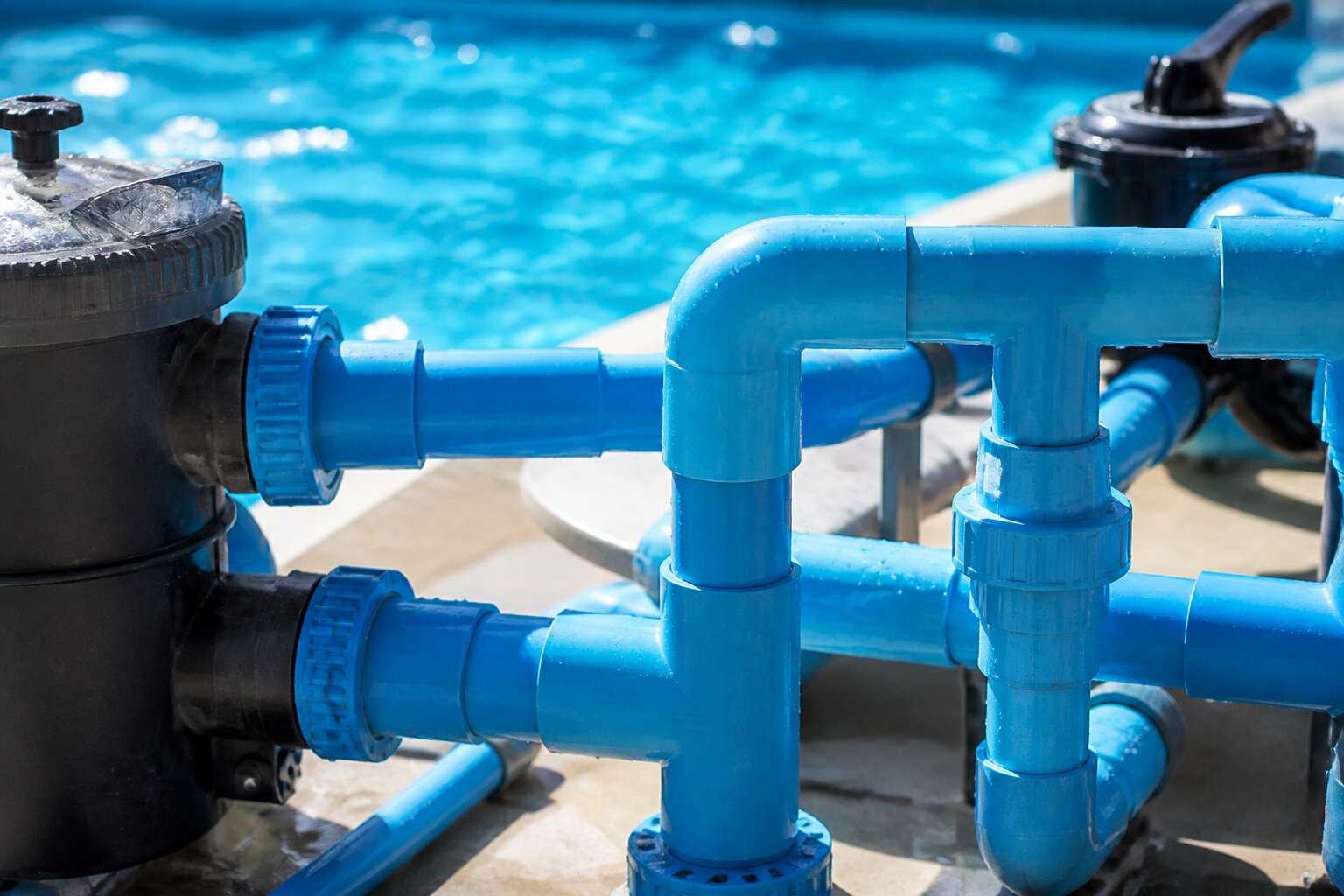
Understanding the Role of Pipe Work in Pool Circulation
Every six to eight hours, your pool recirculates its entire volume. All that water flows through a network of pipes that most owners never inspect. The weak points in that network are the pool pipe fittings. A single loose joint disrupts suction and forces the pump to work harder than it should.
That strain raises your electricity bill and shortens equipment life. In my years working with pools across South Africa, I have seen quality fittings resist UV damage, chemical corrosion, and the intense heat of a summer deck. Cheap ones crack within a season.
- Suction lines pull water from the skimmer basket and main drain.
- Pressure lines push water through the filter and heater.
- Return lines distribute clean water across the pool surface.
Choosing the Right Material for Your Pool’s Plumbing
Your pool’s plumbing is a silent network, and the fittings are the joints that decide its fate. Choosing the right pool pipe fittings in South Africa means battling UV rays, aggressive chemical loads, and the relentless sun. That combination is brutal on substandard materials.
Pressure changes tell the truth quickly. The water hammer from a pump startup stresses every connection. A rigid fitting cracks. The right material bends under that force without shattering.
- Schedule 40 PVC for most residential lines
- High temperature rated fittings near heaters
- Threaded or slip fit options for future maintenance
A cheap fitting saves a few rand today, but a failure means digging up concrete tomorrow. The best pool pipe fittings anticipate the harsh local climate and the constant flow. Choose with that reality in mind.
Key Connection Types and Configuration Methods
Nearly half of all pool leaks trace back to faulty connections in the pipe network. That is why understanding key connection types and configuration methods for pool pipe fittings matters more than just buying the cheapest parts.
Threaded fittings use a simple screw action, ideal for pumps and filters that need regular removal. Solvent weld fittings fuse PVC permanently, perfect for buried lines. Push-fit connectors offer fast assembly, but they demand precise alignment.
- The direct run: a single line from pump to return, minimal resistance.
- The loop system: circulates water evenly across multiple returns.
- The manifold: central hub feeding several branch lines.
Each configuration changes flow dynamics. A manifold reduces pressure spikes. A loop prevents dead spots. Your specific layout determines the best fit.
Sizing, Thread Standards, and Compatibility Factors
Over 40% of backyard pool leaks trace back to a mismatched pool pipe fitting. South African sizing follows nominal dimensions, so a 50mm fitting might actually measure 48.7mm. That small difference makes a simple repair difficult.
Thread standards complicate matters further. BSP threads dominate local pools, while NPT fittings occasionally appear, looking identical but sealing poorly. Trust me, you want to know which one you have before you tighten anything.
- Check the thread angle: BSP is 55 degrees, NPT is 60 degrees.
- Confirm the pipe schedule: Class 0 for low pressure, Class 4 for high pressure.
- Test the fit dry before applying any glue.
Compatibility factors extend beyond threads. Water temperature, chemical exposure, and even sunlight change how pool pipe fittings perform over time. Ignore these details, and you will own a fountain instead of a filtration system.
Ensuring Watertight Integrity and Preventing Leaks
Every year, thousands of litres of water vanish from South African pools through poorly sealed joints. That is a maintenance headache and a national resource issue in a water stressed country. The pool pipe fittings often get blamed, but the real culprit is usually careless installation or improper torque.
Getting a watertight connection means respecting the materials. PVC solvent cement needs a clean surface, not a hurried smear. Threaded fittings demand PTFE tape wrapped in the right direction. Over tightening can crack the socket, creating a slow weep that erodes pump efficiency.
- Inspect unions and O rings every season.
- Replace cracked or brittle fittings immediately.
- Pressure test the line before burying it.
Watertight integrity comes down to how you install your pool pipe fittings and how well you understand pressure and chemical exposure at each joint. When you get it right, the system runs quietly and you save water, money, and frustration!
Maintenance, Inspection, and Replacement Best Practices
Pool pipe fittings bear the brunt of every filtration cycle, yet they rarely get a second glance. The quiet truth is that most failures begin as tiny leaks, invisible to the untrained eye. I have seen fittings fail after years of silent duty, simply because nobody bothered to read the pressure gauge.
Inspection demands vigilance. Look for hairline cracks, discolouration, and moisture around the joints. These are early warnings, not cosmetic flaws. Act on them immediately, and you spare the entire pump system from unnecessary strain.
Maintenance follows a rhythm. Clean the threads, replace the O-rings, and torque every connection to spec. Do not overtighten, because that single error causes more stress fractures than age ever will.
Replacement of damaged pool pipe fittings is inevitable. Here is the sequence I follow:
- Match the material to the existing pipework.
- Apply PTFE tape to threaded connections.
- Pressure test the joint after installation.

0 Comments