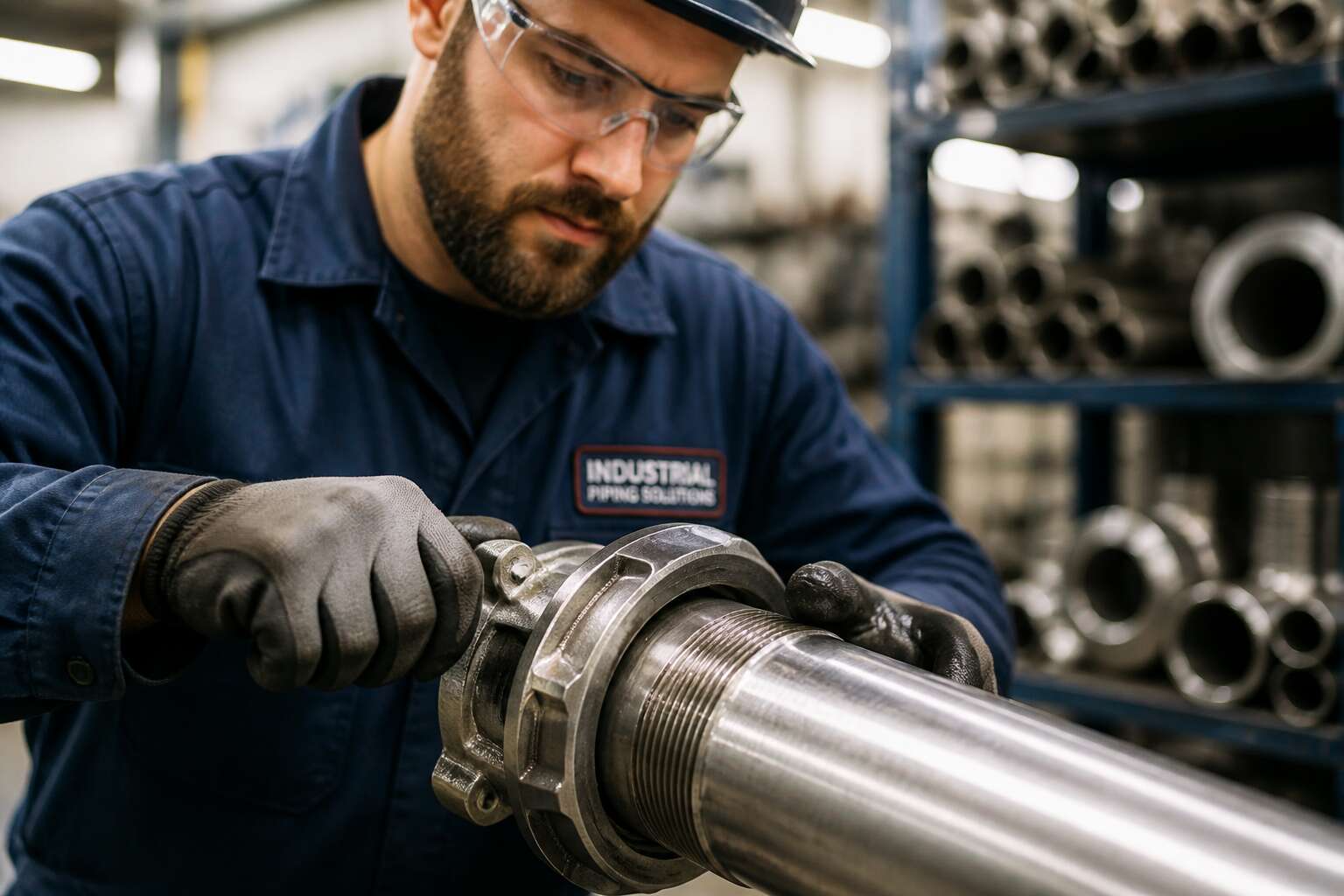
Core Trade Services and Specializations
Residential Plumbing Installations
Water damage from a failed pipe joint is one of the most common household insurance claims in South Africa. A single leak can compromise foundations and electrical systems before it is detected. This is where the real work of a pipe fitting business begins. Our tradespeople handle the complete water supply network inside a property, from the municipal connection point to the final tap fixture.
Residential installations are not limited to new builds. We routinely execute retrofits for older homes where galvanised steel has corroded. These projects demand precision and a clear understanding of pressure dynamics. Our skill set covers sanitaryware setup, geyser connections, and complex manifold systems for multiple bathrooms.
Key aspects of our residential service include:
– Pressure testing for hidden leaks
– Pipe rerouting for renovations
– Solar water heater integration
– Basin and toilet supply lines
The work sustains a domestic environment. A pipe fitting business relies on trust, and trust is built through clean, code compliant installations that last for decades. We handle both concealed and surface mounted reticulation with equal care. No job is too granular, as every joint determines the integrity of the system.
Commercial and Industrial Piping Systems
Commercial and industrial piping systems are a different discipline. The scale is larger, but the stakes are higher. A pipe fitting business working in this sector must think in terms of flow rates, pressure classes, and material fatigue. Factories, hospitals, and mining operations rely on water and steam lines operating around the clock.
- High pressure steam reticulation
- Chemical resistant pipework for processing plants
- Fire suppression water supplies
- Cooling water loops for HVAC systems
Each installation begins with a site survey that looks beyond the drawings. We measure actual pipe runs and check for existing services buried in the ground. In industrial environments, a pipe fitting business often works alongside electrical and structural teams, coordinating shutdowns to keep operations running. We have seen what happens when a contractor ignores pipe expansion rates. Steel and PVC behave differently under heat. Those differences shape every hanger spacing and joint design.
Maintenance, Repair, and Retrofitting Work
Maintenance is where a pipe fitting business truly earns its keep. New installations get the glory, but the real craft lies in keeping aged systems alive. Corrosion does not sleep, and neither does the water hammer that shakes loose a joint at 2 AM. We approach every repair with fresh eyes, even on pipes we installed years ago.
Retrofitting work offers a fascinating puzzle. Existing buildings hide their secrets behind drywall and concrete. We map out old piping networks, trace mysterious shut off valves, and identify where a previous contractor took a shortcut that now costs the owner pressure and money. This detective work is often more complex than any new build.
Our team routinely handles:
- Emergency leak detection and burst pipe response for commercial properties
- Upgrading galvanised lines to PEX or copper in older residential blocks
- Replacing outdated fittings to accommodate modern water pressure demands
The best part of repair work is the diagnosis. A persistent drain blockage might be a simple clog, or it could signal a collapsed line underground. A pipe fitting business must read the symptoms carefully before breaking ground. We have saved clients thousands by finding the true source of a problem, rather than treating the obvious symptom and watching it return.
Specialized Piping for Gas or Chemical Transport
In polite society, we do not discuss what happens when a chemical line fails. In this trade, we think about little else. One undetected methane leak in a food processing plant can halt production for a week. Specialised gas and chemical piping demands forensic attention to material compatibility, pressure ratings, and the chemistry between product and pipe wall.
Our pipe fitting business approaches every installation with gravity. We handle high purity gas lines, aggressive chemical transfer systems, and industrial work where a misaligned flange means a costly shutdown. We certify every joint and support to South African standards, because a leak in a chemical plant is not a repair call. It is an incident.
- Medical gas pipelines for hospitals and clinics
- Petrochemical transfer lines for refineries and storage facilities
- Corrosion resistant alloy fittings for acid handling
That is what separates a competent pipe fitting business from one that simply moves water.
Emergency Service Offerings and Response Times
A pipe has no sense of occasion. The frantic call arrives at 2am on a Sunday, never during office hours when a supervisor is watching. Our pipe fitting business maintains a 24 hour emergency roster with a two hour urban response time. We send a fitter who can actually fix things, not a salesperson with a clipboard and a promise.
Core trade services cover the quiet work that prevents drama. We manage material procurement, fabricate structural supports, commission systems under hydrostatic pressure, and document every joint for audit. Our teams hold certifications for hot works, confined spaces, and working at height.
Emergency response crews stock vehicles with:
- Pipe freezing kits
- Pre assembled replacement fittings
- Valve shutoff tools
Distance stretches response times in rural areas. We tell clients that before they sign, not after they panic.
Licensing, Certification, and Safety Standards
State and Local Licensing Requirements
In South Africa, an unlicensed pipe fitting business creates an unsettling risk for municipal inspectors, one that troubles building owners for years. Licensing demands are not uniform. Each province and local municipality enforces its own rules, and the gaps between them are where registrations lapse. The Plumbing Industry Registration Board (PIRB) sets national competency tests, but local authorities still require separate registrations for every district.
- A PIRB certificate of competency for each fitter on the payroll.
- A municipal business licence that names pipe fitting explicitly.
- Proof of compliance with SANS 10254 for installation materials.
Safety standards under the Construction Regulations 2014 are unforgiving. Believe me, they mandate a full risk assessment and a fall protection plan before work begins! A pipe fitting business that skips these documents will face penalty notices, and later, the erosion of their reputation with insurers.
Industry Certifications That Build Client Trust
A wall of framed certificates signals competence before you say a word. In the pipe fitting business, these documents separate the skilled from the hopeful. Clients in Johannesburg or Cape Town rarely read the fine print, but they recognize the logos. That recognition saves you from endless questions about your competence!
Certifications like PIRB registration or a Gas Installer Licence from SAQCC Gas provide evidence of accountability. They signal that your team has passed external scrutiny, not some self-appointed expertise. Here is what clients pay attention to:
- PIRB membership ensures workmanship meets national standards.
- SAQCC Gas certification proves safe handling of gas systems.
- ISO 9001 quality management shows consistent processes.
These credentials do more than satisfy inspectors. They give homeowners and project managers a reason to trust your pipe fitting business when it matters most.
OSHA Regulations and Job Site Safety Protocols
Somewhere between a blueprint and a finished pipeline lies a promise that no contract can fully capture; it is the quiet guarantee of a crew who understands that light is not the only thing that travels fast, and a leak cares nothing for deadlines. The operational currency of a pipe fitting business is not just expertise. It is the disciplined adherence to a rigorous suite of standards that govern every cut, weld, and seal.
This is where OSHA regulations move from a binder in the back office to the pulse of the workday. Where the international standards inform local practice. Adherence to these protocols is not a defensive maneuver against fines or the progression of a bureaucratic system; it is a value system. When you sign a gold seal or inspect a torque on a flange in Johannesburg, you are adapting and applying global safety tenets to local realities, often without blowing the horn about it. Compliance means your pipe fitting business treats the job site as a living entity that needs protection, not just a transaction point.
On these grounds, the protocols are effective precisely because they are predictable:
– Personal Protective Equipment is strictly enforced, from safety glasses to gloves, creating a baseline for everyone on shift.
– Live line lockout and tagout procedures are followed to the letter to prevent catastrophic energy release.
– Edge protection and designated fall arrest systems are used on elevated rigs to manage risk at height.
– Confined space entry requires a full atmospheric gas test and constant watchdog communication.
These rules establish a rhythm; they are often unsung, but they are respected and verified. From the first project in your pipeline to the last handover, the most telling digital footprint you leave is a site free of scars. That is the heroic part of the job, holding the line between temporary order and perpetual ruin. Ultimately, that creates a stream of credibility.
Insurance Coverage Options and Liability Protection
In the pipe fitting business, the strongest weld means little if the paper trail protecting it is weak. A single failure on a high pressure line can attract claims that dwarf the original contract value. Insurance coverage options are not a formality; they are the financial scaffolding that keeps a firm standing when a bolt shears or a seal gives way.
Liability protection in South Africa often hinges on three pillars:
- Public liability insurance for third party injury or property damage.
- Contractor’s all risk cover for the works under construction.
- Professional indemnity for design and advisory errors.
Each policy demands scrutiny. Exclusions hide in plain language, and a pipe fitting business must verify that its specific operations, including hot work and confined spaces, are named in the schedule.
Strategic Sourcing of Materials and Equipment
Selecting Wholesale Suppliers for Cost Efficiency
If materials were cheaper every time a supplier swore they were, the average pipe fitting business would be swimming in savings. The reality is that the lowest price often hides a financial landmine of inconsistent quality, delivery delays, and rework costs that quietly eat your margins. That three rand saved per fitting disappears when a substandard batch fails pressure testing on site.
Strategic sourcing is less about hunting for rock bottom prices and more about building a dependable supply chain with predictable costs. Wholesale suppliers who maintain transparent pricing structures and keep adequate stock levels for South African specifications are worth more than a once off discount. The real value shows up when you can quote a job with confidence, knowing your material costs will not shift mid project.
When vetting suppliers, consider the practical markers of a reliable partner:
- Delivery reliability measured against your projected installation schedules, not their promises.
- Consistency in material grades and compliance with SABS standards.
- Reasonable minimum order quantities that do not force you to tie up working capital.
- Clear returns policies for damaged or incorrect items.
A pipe fitting business that locks in these factors reduces the guesswork from every tender. You are not simply buying pipes and valves, you are securing the certainty required to keep your workforce productive and your clients satisfied, without the drama of last minute procurement scrambles. Prioritise suppliers who will answer the phone when a project changes overnight, because those changes are inevitable.
Inventory Management for Common Fittings and Pipes
A pipe fitting business that runs out of a common 15mm coupling loses more than the part, it loses the whole day. I have seen small inventory gaps turn into client disputes, not because the pipe was wrong, but because the delivery was late. Strategic sourcing means tracking usage patterns per project type, then aligning stock levels to those patterns.
For common fittings, consistency matters more than variety. Build a working inventory around repeat items:
- 15mm and 22mm copper pipe in standard lengths
- PVC class 6 and class 16 fittings
- Gate valves and ball valves with threaded connections
Review stock turnover monthly! A pipe fitting business that monitors what actually moves can reduce waste and keep capital free. Enough on hand for immediate callouts, without burying cash in slow moving sizes.
Evaluating Material Grades: Steel, Copper, PVC, and More
In the pipe fitting business, material grade determines whether a joint survives decades or fails within five years. South African conditions demand careful selection. Copper, for instance, comes in varying wall thicknesses; Type K handles aggressive soils, while Type L suits standard domestic work. Steel requires scrutiny too. A galvanised pipe with even a thin zinc coating will corrode faster in coastal humidity near Durban. PVC, meanwhile, offers different pressure ratings, and confusing them creates structural risk.
Consider what each project actually needs:
- SABS-marked steel for structural loads
- Copper with proper temper for bending without cracking
- PVC specified for the exact operating pressure and temperature
Every material grade carries a cost and a lifespan. The cheapest option often fails first. The right grade prevents callbacks and protects the client’s infrastructure.
Technology Tools for Tracking Orders and Deliveries
A single delayed delivery can stall an entire site for a week. In the pipe fitting business, strategic sourcing is as critical as the welding itself. We hold relationships with multiple suppliers across Gauteng and the coast, so we can switch quickly when local stock depletes. Every batch number, pressure rating, and certification document gets verified before anything leaves the depot.
Our tracking tools log each order from quote to delivery. Every consignment carries a digital tag. We see where a truck is, when it will arrive, and whether the driver holds the correct paperwork.
We track:
- Order confirmations and dispatch dates
- Live delivery milestones with proof of delivery
- Documentation matching batch and certification records
That visibility cuts downtime, keeps crews productive, and protects the margin built into every quote!
Marketing Your Trade Services Locally and Online
Search Engine Optimization for Service Area Pages
Seventy six percent of South Africans search online before hiring a tradesperson. Trust me, a pipe fitting business that ignores local SEO might as well gift wrap its best jobs for competitors!
For service area pages, focus on specific suburbs and townships. A basic approach looks like this:
- Create a dedicated page for each area you serve.
- Include genuine client testimonials that mention that area.
- Update your Google Business Profile with consistent details.
Local marketing builds reputation through word of mouth, while search engine optimization brings strangers to your door. Both matter equally.
Leveraging Customer Reviews and Referral Programs
A single Google review can be the deciding factor for a homeowner who is comparing your quote with two other pipe fitting business options. The trust signal that comes from a detailed review, one that mentions a clean workspace or a punctual arrival, is more persuasive than any advertisement you could pay for. This is why actively managing your digital reputation is a core business function, not an afterthought. You should train your team to ask satisfied customers for feedback at the moment of payment, when the job is fresh in their minds.
Word of mouth remains the bedrock of any local trade, but it is no longer a passive process. You can design a referral program that rewards your existing network for bringing in new work. This isn’t about complicated loyalty systems. It is about a simple offer, such as a discount on future maintenance work for every successful lead that results in a signed contract. When you combine these earned referrals with a steady stream of online reviews, you create a cycle that fuels growth.
The data supports this dual approach. Most clients will not leave a review unless you ask them directly. People are busy, and the transaction is complete from their perspective. A polite follow-up message with a direct link to your Google profile removes the friction from the process. Meanwhile, your referral program should be communicated clearly to every client you work with, ensuring they know the value you place on their recommendation.
Research indicates that clients are far more likely to share their negative experiences than their positive ones. This means you must make the process of leaving positive feedback exceptionally easy. Use a system that allows you to segment your local marketing efforts based on the feedback you receive. A quick follow-up with a satisfied client in Randburg can secure a glowing review, while a similar check-in with a client in Soweto might reveal a problem you can fix before it escalates into a bad rating.
Your growth strategy should include a structured approach to gathering social proof:
– Send a thank you message after project completion.
– Provide a direct link to your review platform.
– Follow up on any less than perfect feedback to resolve it privately.
– Track which areas generate the most positive feedback to target future marketing spend.
The effort you invest in building this network will yield a pipeline of work that doesn’t rely on expensive advertising. A satisfied client who refers you to a neighbour is the most cost effective lead a pipe fitting business can generate. When you build a system that encourages this behaviour, you turn a single job into a long term relationship with an entire community.
Networking With General Contractors and Builders
One recommendation from a builder can outweigh a dozen online ads. A general contractor’s own reputation depends on the tradespeople they bring to a site, so their endorsement carries real weight. Local marketing for a pipe fitting business belongs at the site office, not only on a screen.
Online networking with general contractors and builders is a deliberate practice. Builders trust consistency. If you return a call within the hour, show up on time, and leave the site cleaner than you found it, your name becomes the safe one to pass along.
- A builder who knows your work will call you directly when a commercial fit-out needs a gas line tested.
- Property developers often ask contractors for a shortlist; your digital profile is what lands on that list.
A pipe fitting business that treats every interaction with a builder as a public reference will find that repeat work arrives without a single advertisement.
Using Social Media to Showcase Completed Projects
Nobody scrolls past a perfectly torqued flange! On social media, a photograph of a clean pipe run does more talking than a sales pitch ever could. In South Africa, word of mouth still matters in the suburbs. Showing your work online gives that word a wider reach.
Our pipe fitting business posts completed projects to build proof. Local homeowners see the neat joints. Property managers see the tidy site. Other trades see a professional who respects deadlines.
- A photograph taken before the scaffolding comes down.
- A caption naming the suburb and the problem solved.
- A finished product that needs no explanation.
This turns your portfolio into a local marketing tool. No glossy brochures. No cold calls. Just visible evidence of work done properly.
Seasonal Promotions and Maintenance Contract Offers
Winter brings a predictable spike in burst pipes across Johannesburg. For a pipe fitting business, that is both a burden and a chance to show reliability. Marketing your trade services locally means knocking on estate agents doors, while online promotion targets homeowners searching for emergency fixes.
Seasonal promotions work well when tied to real conditions. Offer a discount on geyser replacements before the cold sets in, or a free inspection after heavy rains. These small gestures build a list of clients who trust your judgement.
- Priority callouts for contract holders
- Fixed rates on routine maintenance
- Annual system health checks
Maintenance contract offers turn one-off customers into recurring revenue. A simple monthly retainer covers common wear on pipes and fittings, saving both sides from surprises.
Pricing, Quoting, and Financial Management
Calculating Accurate Labor and Material Estimates
The rand’s volatility directly affects material costs for any pipe fitting business. Steel prices shift with global markets, while copper responds to overseas demand. A quote prepared on Monday can lose its margin by Thursday if supply costs climb.
Accurate estimates depend on precise labor calculations. A 50mm weld demands more time than a 15mm compression joint. Environmental factors matter equally. A cramped Johannesburg basement presents different challenges than an open Durban industrial floor.
Successful quoting accounts for every variable:
– Labour burden includes UIF, COIDA, and skills development levies
– Consumables such as grinding discs, flux, and filler rods
– Waste allowances for pipe offcuts and threading errors
Tracking actual hours against projections creates a feedback loop. Over time, a pipe fitting business builds a database of real metrics. This sharpens future quotes and protects profitability in a competitive South African market.
Strategies for Handling Change Orders and Unforeseen Costs
A quote is a promise. One unexpected condition can cause that promise to become a loss. For any pipe fitting business, change orders arrive without warning. A client requests an extra valve, or a wall reveals hidden asbestos. The margin you calculated evaporates.
I have seen jobs where a simple specification change added 18% to the original cost. That is why every contract needs a clear change order clause. Without one, you absorb the difference. My approach is to document everything. Photographs, signed approvals, and time stamps. For unforeseen costs, I set aside a contingency buffer. Typically 5% to 10% of the project value. This buffer covers surprises like poor soil conditions or delayed material shipments.
Here is what I track:
- Scope changes before and after site mobilization
- Additional equipment rental days
- Overtime premiums caused by client delays
The numbers speak. A disciplined pipe fitting business survives the chaos. Immediate pricing at the moment of change prevents disputes. Final invoicing invites argument and erodes trust.
Managing Cash Flow for Large Industrial Projects
In a pipe fitting business, large industrial projects often carry a 90 day payment cycle. That gap between paying suppliers and receiving client payments can sink even profitable contracts. I’ve seen firms underestimate the working capital required to sustain operations through those months.
Pricing a large industrial job involves more than materials and labour. You must forecast your cash position at every milestone. For instance, if a contract requires staggered invoicing, your receivables arrive in tranches while expenses arrive upfront. Here istrack I use:
- Map payment terms against subcontractor payroll schedules
- Escalate retention percentages into your pricing model
- Set aside a dedicated credit facility for bridging shortfalls
Without this discipline, a supposedly profitable contract becomes a liquidity trap. The pipe fitting business rewards those who manage cash flow with as much rigor as they bid jobs.
Bookkeeping Essentials: Invoicing, Tax Deductions, and Payroll
Invoicing. Payroll. Tax deductions. These are the less glamorous pillars of a pipe fitting business, but they hold up the entire edifice. A job well done means little if your books tell a different story. I’ve seen established firms fumble simple VAT reconciliation, then wonder why their cash position looks anemic.
The key is to separate quotable elegance from bookkeeping anxiety. Issue invoices promptly, and match each one to its corresponding purchase order. Track every deduction, especially the quiet ones like wear and tear on welding equipment. For payroll, consider the burden of PAYE and UIF before you hire. Here is the ledger I keep:
- Log each supplier invoice against its project code
- Reconcile client payments weekly, not monthly
- Review tax submissions before the deadline hits
A disciplined back office turns a busy pipe fitting business into a profitable one. The numbers remember everything.
Setting Competitive Rates Without Undercutting Profit Margins
The difference between a profitable project and a loss often comes down to a single line in the quote. In the pipe fitting business, that line separates sustainable growth from slow decline.
Set competitive rates by costing every element, including the pipe and fittings. Include site access, diesel for equipment, waste disposal, and the time spent chasing approvals. Then apply a margin that reflects your expertise, not the lowest price on the tender.
- Material at current supplier prices
- Labour with realistic productivity rates
- Repairs and consumables for tooling
Review each quote against your break-even point before submitting. Adjust for complexity and payment terms. A disciplined pricing approach keeps your pipe fitting business resilient, even when clients push back.
Building and Retaining a Skilled Workforce
Apprenticeship Programs and Trade School Partnerships
South Africa’s construction industry loses experienced pipe fitters to retirement faster than trade schools can replace them. A pipe fitting business that ignores this gap will eventually face empty vans and missed deadlines. Apprenticeship programmes are the structured answer, pairing novices with master fitters across four years of supervised work.
Trade school partnerships make those programmes viable. Colleges in Johannesburg and Durban now coordinate with contractors so students alternate classroom theory with real site rotations. Apprentices learn copper soldering, PVC jointing, and pressure testing through daily repetition rather than textbook abstraction.
A well-rounded apprenticeship typically includes:
- Blueprint reading and accurate site measurement
- Steel, copper, and PVC installation techniques
- Confined space safety and lockout procedures
Retention follows the same logic. Paid study time and clear promotion tracks reduce turnover, protecting the investment a pipe fitting business makes in each trained worker.
Training Plans for New and Advanced Piping Techniques
Training cannot stop at certification! A pipe fitting business that treats skills as static will watch its crews fall behind on modern jointing methods and digital pressure testing tools. We run monthly workshops where fitters practice new techniques on scrap material before touching live systems.
Advanced work demands more than repetition. Gas certified fitters need refreshers on torque specifications and leak detection protocols. Stainless steel welding requires different heat control than carbon steel. Our training plans split into two tracks, one for newcomers learning basics, one for veterans mastering new equipment. Recent sessions covered:
- Pipe freezing techniques for live repairs
- Hydraulic diagnostic procedures
- High pressure testing with digital loggers
These internal sessions build confidence. Workers who see their pipe fitting business invest in their development stay longer and produce cleaner work. The result is a crew that handles unusual site conditions without supervision.
Employee Retention Strategies Beyond Competitive Pay
Replacing a skilled pipe fitter in South Africa can consume 40% of their annual salary once recruitment fees and lost productivity are counted. Yet many pipe fitting business owners treat retention as a matter of tweaking the pay packet.
A pipe fitting business keeps its best people when the work respects their intelligence. That means clear career paths, but also something simpler: predictable schedules. Fitters in Johannesburg and Cape Town often leave for companies offering stable rosters over higher hourly rates. Overtime fatigue drives good workers out of the trade.
Consider what actually keeps a crew intact:
- Tools that arrive on time and in working condition
- Site supervisors who listen before they instruct
- Recognition that appears in the moment, not only at year end
A pipe fitting business that pairs fair pay with these conditions builds a crew that refers their friends. Lower recruitment costs and fewer half finished jobs follow.
Safety Training and Certification Renewal Schedules
A pipe fitting business cannot claim a skilled workforce if its safety training has expired. Certification renewal schedules shape trust on site. A fitter who sees their employer track revalidation dates knows that their well being is genuinely considered. In South Africa, where demand for certified fitters runs high, this counts.
- Book refresher courses at least a month before expiry
- Assign a manager to own each renewal
- Record every certificate in a shared tracker
Build a simple system around these actions. This approach reduces downtime and keeps the crew confident. Treating renewal as routine, not an afterthought, holds onto the best people.

0 Comments