Understanding 6 Inch Pipe Fitting Basics
Why Diameter Matters in Piping Systems
A 6 inch line carries roughly 44% more volume than a 5 inch line at the same velocity. That gap explains why the diameter is the first number engineers check, and why a 6 pipe fitting is never picked casually. The size is common in municipal water reticulation and industrial plants across South Africa.
At the connection point, small errors become big problems. An undersized bore pushes velocity up and pressure down. An oversized one wastes material and money. The factors that follow the diameter are practical, not theoretical:
- Flow rate and pressure loss across the system
- Matching flanges, valves, and pump connections
- Support spacing and installation clearance on site
Standards define where a 6 pipe fitting fits within the larger network. The nominal diameter, the wall schedule, and the material grade must all line up. We see the results of mismatched diameters in failed pressure tests, cracked housings, and pump cavitation.
Common Applications for Large-Diameter Pipe Fittings
Understanding 6 pipe fitting basics means knowing the bore, the wall schedule, and the end type. These factors dictate pressure ratings and flow rates. A threaded fitting differs from a flanged one in installation and maintenance. The material grade matters just as much, especially for corrosive fluids.
Common applications for large diameter pipe fittings appear where volume is non negotiable. You find them in:
- Municipal water distribution
- Mine dewatering systems
- High rise fire suppression risers
Each location demands precise alignment. A small angular error creates stress concentrations that can crack the housing. Trust me, that is a failure you never forget!
Pressure and Flow Rate Considerations
Pressure and flow rate are not separate concerns in any bore size, but they become intensely personal when you specify a 6 pipe fitting. At this diameter, a pump delivering 100 litres per second loses significant energy to friction if the internal surface is rough or the wall thickness restricts the opening. A 6 pipe fitting with a thin wall, a Schedule 10 grade, erodes faster and vibrates under high velocity water.
Engineers in South Africa’s mining sector calculate this constantly. The key considerations are:
- The pressure class, marked in kilopascals or bars
- The permissible flow velocity for the fluid
- The end connection type, threaded or grooved
Getting these right prevents water hammer and fatigue failure. A 6 inch pipe fitting on a fire suppression riser must hold pressure spikes well above the working rating. Flow rate drops sharply if the fitting has a smaller bore than the adjacent pipes, so verify the actual internal diameter, not the nominal size.
How to Properly Measure a 6 Inch Pipe
Understanding a 6 pipe fitting begins with distinguishing nominal bore from the real internal diameter. The labelling suggests 150 millimetres, but wall thickness and schedule grade change what actually passes through. Engineers often discover this only after a pump fails to deliver the expected volume. A 6 pipe fitting with a thicker wall, such as Schedule 40, reduces the opening compared to a Schedule 10 unit.
Proper measurement prevents these surprises. Use a calliper to record the outside diameter, then subtract twice the wall thickness to calculate the true bore. For threaded ends, measure the thread length and pitch. Grooved fittings require the groove depth and width.
- Verify the outside diameter against standard tables.
- Measure the wall thickness with an ultrasonic gauge.
- Check the socket depth for welded connections.
- Confirm the pressure rating stamped on the body.
These steps give you a complete picture of what the fitting can handle. Getting the dimensions right the first time avoids rework on a live line.
Types of 6 Inch Pipe Fittings
Elbows and Bends
A single 90 degree elbow can cause more pressure drop than ten metres of straight pipe. That is why the bend type matters in 6 pipe fitting, especially for South African mines and municipal systems.
Elbows come in two main radii. Long radius elbows curve gradually, preserving momentum and reducing erosion. Short radius elbows fit tight spaces but create extra turbulence. The angle also changes performance. A 45 degree elbow eases flow, while a 90 degree unit forces a sharp redirection.
- Long radius 90 degree: standard for high flow
- Short radius 90 degree: compact, high friction
- 45 degree elbow: gentle redirection
- Mitred bends: custom angles for obstructions
Proper 6 pipe fitting selection depends on matching elbow radius and angle to the actual flow conditions, not merely the pipe size.
Tees and Crosses
Flow never wants to split. When a 6 pipe fitting forces a division, turbulence at the junction steals energy from the whole line. Tees and crosses each impose their own compromise.
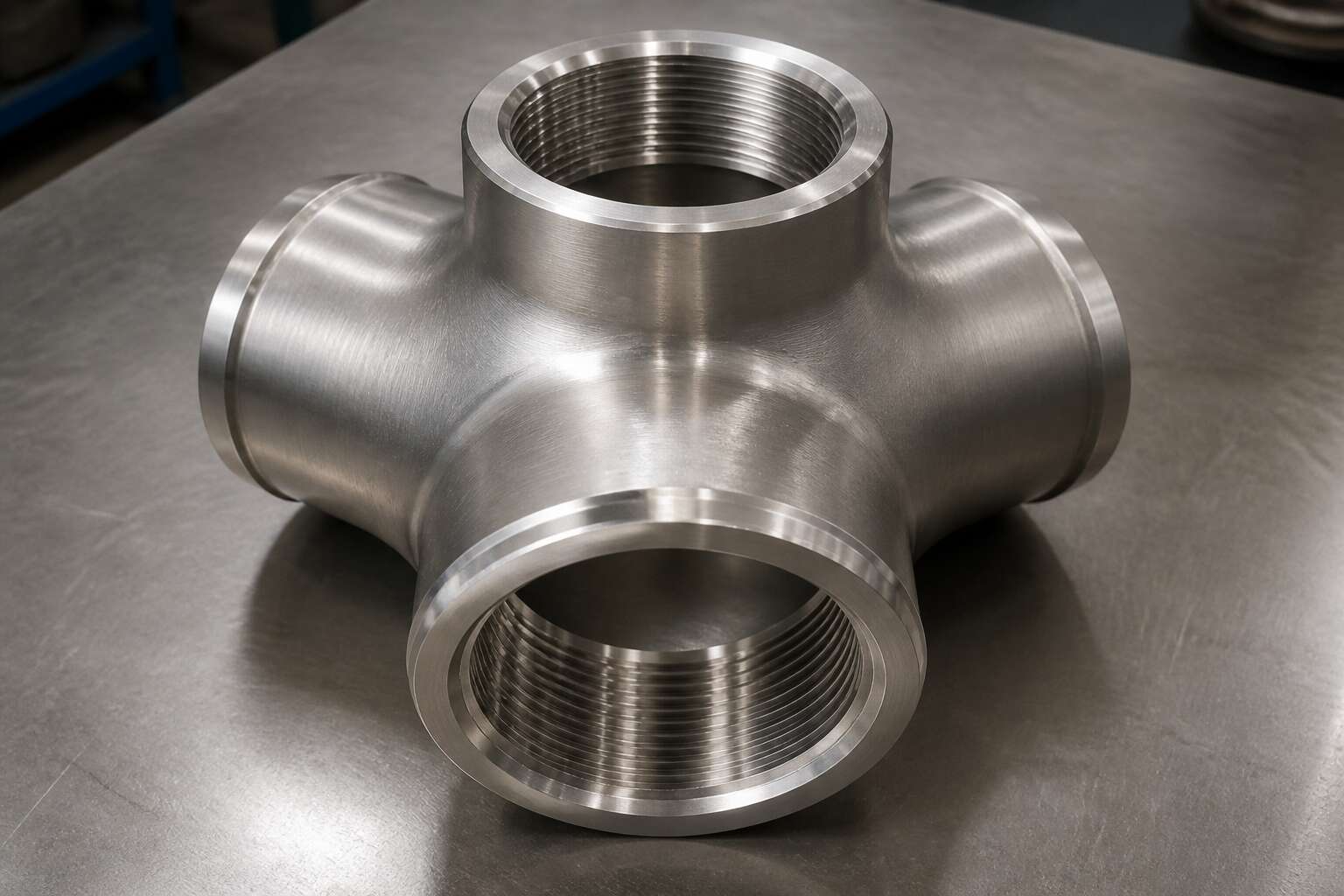
An equal tee keeps the bore constant in all directions, preserving velocity but inviting erosion at the branch. A reducing tee drops the side outlet, which can balance parallel lines by creating a controlled pressure differential. Crosses, four openings in one node, are tempting for cramped South African mine layouts but they concentrate stress where the metal is already thin.
The practical distinctions show in the field:
– Cast tees resist abrasion but weigh heavily on supports
– Fabricated tees allow custom branch angles for tight spaces
– Crosses under high pressure often fail at the weld junction
Here is the nuance: a horizontal branch behaves nothing like a vertical drop under gravity-fed municipal service. The orientation of a 6 pipe fitting determines where wear will occur. That decision cannot be delegated to a pipe schedule.
Reducers and Bushings
Reducers and bushings alter the bore of a 6 pipe fitting without moving parts. They throttle flow rather than splitting it, turning a wide passage into a narrow throat. In South African mines, slurry lines run thick and unforgiving. A poorly selected reducer creates a venturi effect that accelerates wear at the throat. That erosion stays silent until the wall gives way!
Two types dominate:
– Concentric reducers center the flow for vertical drops.
– Eccentric reducers keep the bottom flat to prevent air pockets in horizontal runs.
Bushings thread into a larger fitting, reducing the opening with a single component. For a 6 pipe fitting, bushings offer a quick solution, but they introduce a pressure drop some engineers underestimate. The choice between them shapes every downstream component.
Couplings and Unions
Pipe fitters say a joint is only as strong as the fitting that secures it. Couplings and unions handle this task differently. A coupling creates a permanent junction between two pipe ends. A union offers a break point that opens with a wrench, not a torch. For a 6 pipe fitting in a busy plant, that difference saves hours of downtime!
Couplings come in several forms, and the application decides the right one:
- Threaded couplings suit low pressure and smaller bore installations.
- Grooved couplings use a gasket and clamps for faster assembly.
- Welded couplings give the strongest seal for high pressure lines.
Unions earn their place where valves or meters need regular service. In my years around South African mines, I have watched crews struggle with a welded line when a union would have saved the afternoon. The rule is simple: disconnect one side, leave the rest intact. A poor choice means cutting into pipe to fix a worn seal.
Caps and Plugs
Caps seal the end of a pipe. Plugs fit inside a fitting. This difference governs how you isolate pressure and protect threads.
Common types include:
- Threaded caps for low pressure systems and easy removal.
- Butt weld caps for high pressure lines that need a permanent bond.
- Socket weld caps for compact joints in tight spaces.
I have seen a crew lose an afternoon because they used a threaded cap where a weld cap belonged. What a costly oversight! A 6 pipe fitting needs the right terminal component. Choose by pressure rating and access, not habit.
Flanges and Adapters
Flanges and adapters turn a 6 pipe fitting into a bridge between systems. A flange uses bolts to join pipes, valves, or pumps. An adapter switches thread types or connection methods. The flange face and bolt pattern must match the mating component exactly. Consider the pressure envelope before choosing.
Common flange varieties for 6 inch lines include:
- Slip on flanges for quick alignment
- Weld neck flanges for high stress
- Blind flanges to close off a branch
Adapters handle transitions like male to female or metric to imperial. Some adapters use grooved ends for mechanical couplings. Others use plain ends for solvent welding. The choice depends on the media and maintenance schedule. In South African industrial plants, flanged connections often require careful bolt torque. Adapters save space where a full flange assembly would not fit.
Materials and Finishes for Large Pipe Fittings
PVC and CPVC Options for Corrosion Resistance
Material choice for a 6 pipe fitting often determines its operational lifespan more decisively than any other specification. In South Africa’s diverse industrial landscape, water chemistry varies dramatically between municipalities, which makes corrosion resistance a primary selection criterion. PVC offers a lightweight, cost-effective answer to aggressive water conditions, while CPVC extends the same resistance to systems running at elevated temperatures.
For corrosive environments, these thermoplastics provide an inherent advantage:
– They require no external protective coatings.
– They are immune to galvanic corrosion.
– They eliminate the need for periodic repainting.
While steel fittings demand ongoing maintenance schedules and sacrificial protection systems, a PVC or CPVC 6 pipe fitting simply continues its work, unaffected by rust or electrochemical degradation. I have seen steel systems fail prematurely due to pinhole leaks when a polymer alternative would have served the same duty for decades.
Carbon Steel for High-Pressure Environments
Carbon steel is the workhorse for high pressure systems where polymer pipes simply cannot hold their ground. When you need a 6 pipe fitting to handle significant internal forces, carbon steel offers the tensile strength and thermal tolerance that thermoplastics lack. It is the material of choice for steam lines, hydraulic systems, and heavy process plants across South Africa.
The grade of steel matters as much as the diameter. ASTM A234 WPB is the most common specification for forged fittings. You will find it performing reliably in temperatures up to 800 degrees Fahrenheit. For deeper reliability, consider the finishing processes:
– Galvanised fittings provide a zinc layer for moderate outdoor exposure.
– Black painted fittings suit indoor, dry environments.
– Fusion bonded epoxy is best for buried pipelines where soil chemistry is aggressive.
I always point contractors toward the right finish because it extends service life without adding significant cost. A bare carbon steel 6 pipe fitting can corrode swiftly in coastal areas like Durban, where salt air accelerates surface rust. Inland, the same fitting might last decades without complaint. Knowing your local conditions prevents premature failure and unexpected downtime. This is where experienced engineers earn their keep, matching the correct metal grade to the actual operating environment rather than relying on generic specifications.
Stainless Steel and Its Alloys
When the environment turns hostile, stainless steel is the rational choice for a 6 pipe fitting. Its chromium oxide layer self-heals, so marine and chemical plants along the Cape coast trust it. The common grades are 304 for general duty and 316 for chloride exposure. Neither needs paint or galvanising, but surface finish matters. A brushed finish hides weld seams, while a mirror polish sheds contaminants. I have seen specifiers overlook sulphur content, only to watch fittings pit in maize lines:
- Low carbon variants reduce sensitisation at weld joints.
- Molybdenum enriched alloys resist crevice corrosion under gaskets.
- Nitronic grades offer double the yield strength of standard 316.
That extra strength allows a thinner wall, cutting weight without sacrificing pressure rating. For extreme chemical exposure, duplex stainless steel combines austenitic and ferritic phases, giving a 6 pipe fitting toughness and corrosion resistance single-phase alloys cannot match. Choose by process chemistry!
Ductile Iron vs. Cast Iron
Before ductile iron appeared in 1948, grey cast iron was the standard for large bore fittings. A 6 pipe fitting made from that material was strong in compression but brittle under impact. Ductile iron solved that problem. Its graphite nodules absorb stress, allowing the metal to flex rather than fracture. That makes it the practical choice for municipal mains and slurry lines.
Ductile iron also accepts protective coatings differently. A fused epoxy lining guards the interior, while a zinc-rich exterior slows corrosion in aggressive South African soils. Cast iron, by contrast, suffers graphitic corrosion, where the metal turns spongy below a surface layer that looks perfectly painted.
For a 6 pipe fitting, the factors that separate the two materials include:
- Impact resistance during handling and operation
- Pressure class of the joint or flange
- Soil resistivity along the trench route
- Cyclic loading from pumps or pressure surges
Copper and Brass Alternatives
Copper theft strips South African infrastructure of millions of rands each year. For a 6 pipe fitting, specifying copper or brass carries a high material price and attracts theft from active sites. Gunmetal, an alloy of copper, tin, and zinc, offers similar corrosion resistance with lower scrap appeal. Aluminium bronze performs well in seawater and abrasive slurries.
Finishes matter equally. Electroless nickel plating on brass fittings adds hardness and reduces erosion. A baked phenolic coating protects against aggressive chemical exposure. These options maintain the functionality of copper alloys while extending service life.
Choosing an alternative requires evaluating the fluid chemistry, the soil conditions, and the installation’s proximity to crime-prone areas.
Coating and Lining Choices for Extended Life
Corrosion eats roughly R100 billion out of South Africa’s GDP every year, so a 6 pipe fitting that resists decay for decades is worth far more than its purchase price. The coating and lining determine how long that service life actually lasts. Fusion bonded epoxy handles abrasive soil and stray electrical currents. Cement mortar lining keeps drinking water clean and neutral. Polyurethane linings flex with thermal cycling without cracking.
Zinc-rich primers work well for sacrificial protection on fittings subject to scratches. In my experience, the most common mistake is ignoring the soil chemistry.
For this fitting, a common selection might look like this:
- FBE coating for buried environments.
- Cement lining for water systems.
- Polyurethane for slurry or chemical duty.
The right pairing of coating and lining prevents early failure and reduces replacement costs.
Installation and Maintenance of Large-Diameter Fittings
Solvent Welding for Plastic Fittings
A single failed solvent weld can compromise an entire 6 pipe fitting network, especially when dealing with large diameters. In my experience, installers often underestimate the importance of surface preparation. The joint must be cleaned, dried, and primed within minutes of application. Solvent welding plastic fittings is not a process for haste; it demands patience and precision.
When assembling a 6 pipe fitting, apply the solvent evenly to both the socket and the spigot. Twist the pieces a quarter turn to distribute the cement, then hold them firmly for at least thirty seconds. That initial bond sets the foundation for the entire line. For maintenance, always inspect joints for stress cracks or discoloration, signs that the solvent has degraded over time.
Here is a practical reminder for long-term performance:
- Store solvent containers tightly sealed to prevent moisture contamination.
- Check the shelf life; old cement loses its chemical strength.
- Use primer on PVC even if the label claims one-step action.
These steps keep your system leak-free and durable. Neglect them, and a 6 pipe fitting failure becomes a costly excavation project.
Proper Support and Hanging Techniques
Proper support for a 6 pipe fitting network begins with understanding the weight of the assembly. Large diameter fittings carry significant load, especially when filled with fluid. Hangers must be placed near the fitting shoulders, not at the joints. A single unsupported 6 pipe fitting can shift, stressing the connection points.
The spacing between supports matters. For metallic lines, keep hangers within four to six feet of each other. For PVC lines, closer intervals prevent sagging. Use riser clamps for vertical runs and roll supports for horizontal expansion.
- Position hangers within twelve inches of each fitting.
- Use padded supports for coated pipe.
- Distribute weight across multiple points.
Angle iron or strut channels work well for heavy assemblies. Support bars should sit flush against the pipe surface without crushing the wall. Regular inspection of hanger alignment prevents long term stress fractures. Miscalculate the support distance and you will see the consequences quickly!
Leak Testing and Pressure Testing Procedures
Leak testing a 6 pipe fitting assembly is not a formality. It is the final barrier against catastrophic failure. Inspect every joint visually before pressure testing. Look for gaps in the weld seam or solvent residue.
Hydrostatic testing works best for large diameter lines. Fill the system slowly to displace air completely. Trapped air gives false pressure readings. Hold test pressure for at least thirty minutes. A slow bleed could mean a weeping gasket.
Pneumatic testing carries more risk. Compressed air stores enormous energy. A ruptured fitting sends metal fragments flying. I have never seen a spec approve it. Most South African specifications require hydrostatic testing.
Maintenance is straightforward:
- Keep test records for every 6 pipe fitting installation.
- Inspect flange faces for scratches.
- Re-torque bolted connections after thermal cycling.
Do not skip the pressure test to save time! Failure on a large diameter line costs more than the hours saved.
Preventive Maintenance and Inspection Tips
Every 6 pipe fitting carries a hidden history in its surface. A hairline crack or misaligned bolt can compromise a system. Preventive maintenance starts with looking at the fitting’s resting state.
Thermal cycling is the enemy of large-diameter fittings. Well-installed flanges shift after repeated heating and cooling. Inspect at different operational states, not just at shutdown. Checks should include:
- Torque verification after every significant temperature change.
- Visual inspection for pitting near weld seams.
- Confirmation that gaskets remain seated without extrusion.
Moisture pooling around a 6 pipe fitting is the first clue. Trace the source before wiping! Document every finding. South African temperature swings demand pattern records. Use lubricants rated for the material and pressure class. Wrong grease hardens and traps grit.
Schedule inspections by operating hours, not calendar dates. Bring a torque wrench and a calibrated gauge. I have seen a loose flange hide behind a flawed gauge reading.
Choosing the Right Fitting for Your Project
Matching Fittings to Pipe Schedule and Wall Thickness
Nobody walks past a 6 pipe fitting and thinks about wall thickness. That is a mistake. A Schedule 40 fitting and a Schedule 80 fitting share the same outside dimensions, yet their inner diameters differ significantly. Weld the wrong pairing and you will fight fit-up problems for days.
The schedule number dictates the wall thickness, which determines pressure capacity and weld compatibility. In South African plants, where thermal cycles are constant, the schedule rating is a primary safety factor. Your selection process comes down to a few facts:
- The schedule must match your existing pipe
- The inner diameter needs verification with a calliper
- The pressure rating stamped on the fitting settles the final choice
A cheap 6 pipe fitting with the wrong schedule costs more in downtime than a premium one saves in procurement.
Understanding Pressure Ratings
A 6 pipe fitting with a miscalculated pressure rating doesn’t announce its weakness. It fails under load, usually at the worst possible moment. In Mpumalanga process plants, ambient heat can push thermoplastic fittings past their rated limits before media enters the line.
The stamp on a fitting represents a static test at 23°C, not your real working conditions. Surge pressure, thermal cycling, and chemical attack degrade that number. I have watched shutdowns caused by exactly this oversight. Service life depends on derating from the published value.
What matters when comparing ratings:
- Working pressure versus burst pressure. They are not the same figure.
- Temperature correction factors from the manufacturer’s own data sheet.
- Cyclic fatigue ratings for lines that start and stop frequently.
Every 10°C above the test temperature drops the safe operating ceiling by a measurable margin. Ignore that reality and your 6 pipe fitting becomes the weakest link in the entire run.
Temperature Limitations and Thermal Expansion
Temperature swings in Mpumalanga can distort a 6 pipe fitting in ways that aren’t visible during inspection. Thermoplastic fittings expand roughly ten times more than steel per degree Celsius. That differential matters when your line runs hot during the day and cools overnight!
Selecting the right 6 pipe fitting means accounting for the actual ambient range at your site, beyond the media temperature alone. A fitting rated for 80°C continuous service may still creep under cyclic thermal loading. I have seen flanged joints weep after two seasons of thermal cycling.
- The material’s coefficient of linear expansion
- Dimensional change across the full temperature range
- The manufacturer’s maximum continuous service temperature
Carbon steel offers predictable behaviour, but its conductivity changes heat distribution. CPVC withstands higher temperatures than standard PVC, though both need careful gap planning where lines change direction.
Certification and Compliance Standards
Selecting a 6 pipe fitting for an industrial project requires attention to certification and compliance standards. A component that fits perfectly may still fail inspection if it lacks the correct documentation. In South Africa, SANS 1123 and ISO 9001 certifications are the benchmarks that engineers and regulators recognise.
Ask your supplier for material traceability records and pressure test certificates. These documents confirm the actual composition and wall thickness of every 6 pipe fitting you intend to install. Third party verification through testing agencies such as SABS adds another layer of assurance, particularly for pressure vessels and cross country pipelines.
Relevant compliance markers include:
- SABS approval for local distribution
- ISO 9001 quality management traceability
- EN 10204 mill test certificates
- Pressure Equipment Directive compliance for high risk media
Budgeting and Sourcing Strategies
Choosing a 6 pipe fitting without a sourcing strategy invites hidden costs. I have seen projects save on the unit price, then pay triple for expedited freight when the fitting had the wrong wall thickness. So start with a full spec. The supplier must prove that every 6 pipe fitting matches your schedule and pressure rating.
Budgeting for fittings needs a total cost view. Compare three quotes, but include shipping, customs, and quality assurance. A local stockist with SABS certified stock often beats an overseas bargain once you add lead time.
Use a checklist for your project:
- Confirm the material certificate matches the order.
- Check that the end connection aligns with existing pipes.
- Calculate the cost of storing spare fittings.
- Set aside funds for third party inspection.
The price of a 6 pipe fitting is a fraction of the system’s lifetime cost. Spend accordingly.

0 Comments