Understanding PVC Pipe Fittings
Discovering the Role of Fittings in Plumbing Systems
In a small Free State homestead, water travels from a JoJo tank through a series of PVC pipe fittings before reaching the kitchen tap. Most residents never notice those little plastic connectors, yet everything depends on them. Fittings join pipes, but they also redirect flow around corners, reduce pressure at junctions, and connect different pipe diameters. Without them, a plumbing system cannot function.
Understanding what is pvc pipe fittings starts with seeing their role in the larger network. Each fitting creates a secure joint that withstands water pressure and temperature changes. For a rural household relying on a borehole or rain tank, a poorly chosen fitting can cause leaks that waste precious water. The right fitting keeps the whole system dependable.
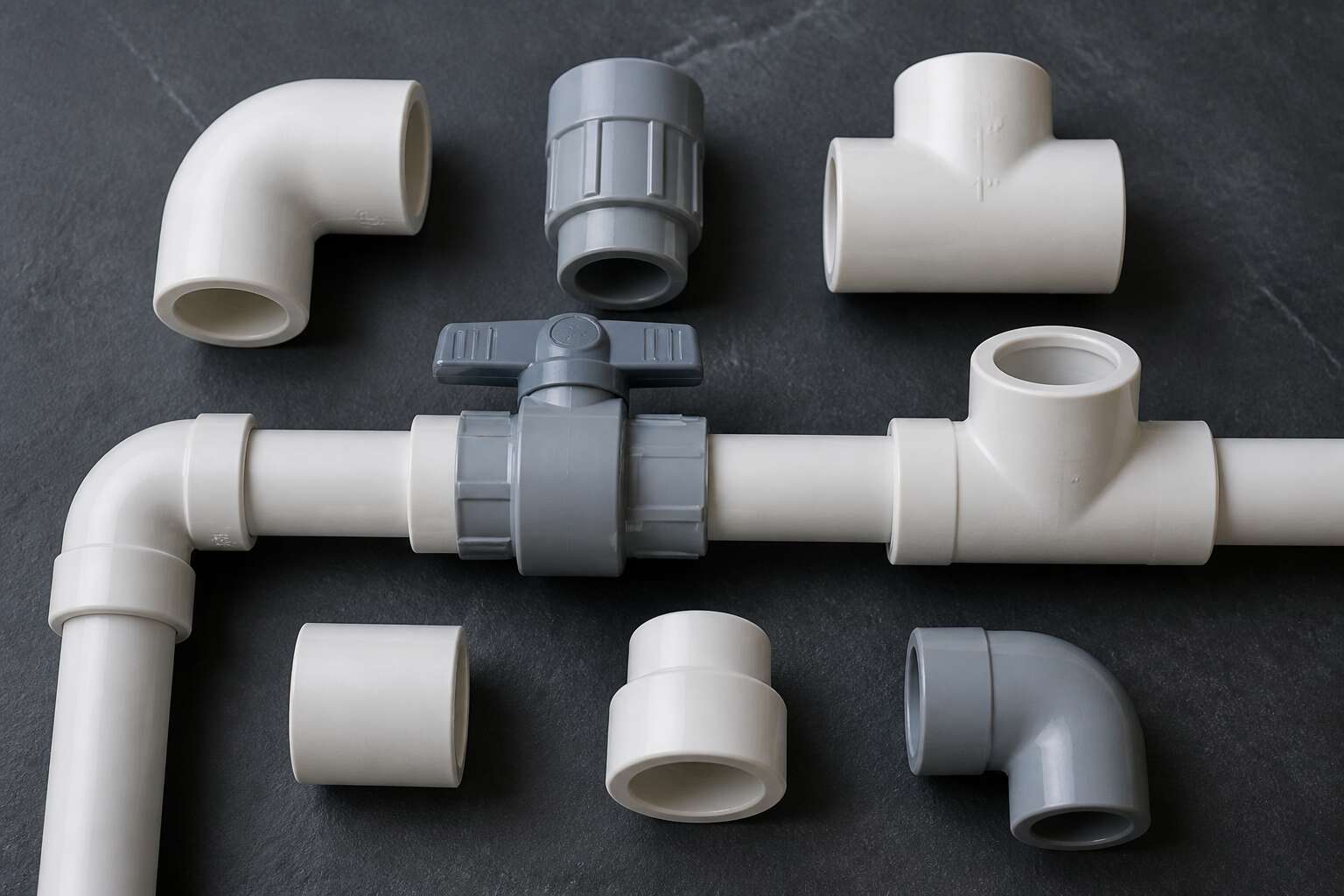
Common fittings found in DIY kits include:
- Elbows that turn pipes at sharp angles
- Reducers that step down pipe sizes
- Tees that split water to two outlets
- Couplings that extend straight pipe runs
Materials and Manufacturing: How PVC Fittings Are Made
To understand what is pvc pipe fittings, look at the raw material first. Fittings begin as polyvinyl chloride resin, blended with calcium zinc stabilizers and titanium dioxide for UV resistance. This compound is heated and injected into steel moulds under high pressure.
- Resin forms the base polymer
- Stabilizers prevent heat degradation
- UV blockers extend outdoor lifespan
The result is a precise, durable fitting that withstands South Africa’s harsh sun and high water pressure. Local manufacturers follow SABS standards, so what is pvc pipe fittings in a Johannesburg hardware store matches the quality used in Durban’s municipal networks.
Comparing PVC Fittings with Metal and Other Plastic Alternatives
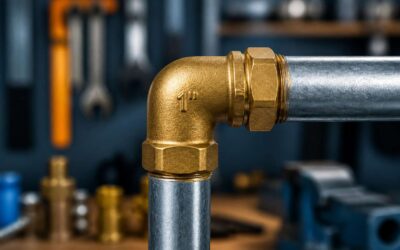
Steel fittings pit. Copper fittings flake. Under South Africa’s harsh light, metal corrodes with certainty. What is pvc pipe fittings? It is the material that simply does not corrode, resisting the galvanic reactions that erode metallic joints. Other plastics fall short: ABS cannot bear high pressure, and PEX softens under prolonged heat.
- PVC withstands chemical cleaners; metal does not.
- PVC weighs less, reducing strain on pipe supports.
- PVC holds its shape where other polymers creep.
From Johannesburg’s tar roads to Durban’s humid coastline, contractors choose PVC for permanence. Metal demands sacrificial anodes and constant inspection. In daily practice, PVC fittings persist without ceremony.
Essential PVC Terminology for Beginners
Before you can confidently ask what is pvc pipe fittings, you need to know the terminology. PVC uses specific words, and beginners often trip over schedule and nominal bore. The schedule refers to wall thickness, not your daily planner. Nominal bore is the approximate inside diameter, close but never exact.
You will also encounter socket, the female end that accepts pipe, and spigot, the male end. Solvent cement is not glue; it fuses the joint. A beginner’s vocabulary includes:
- Schedule: wall thickness and pressure rating
- Nominal bore: standard internal diameter
- Socket: receiving end of a fitting
- Spigot: insertion end of a pipe
Pressure rating tells you how much force the fitting survives before it surrenders. So when someone asks what is pvc pipe fittings, you can answer without stammering. With this vocabulary, nonsense becomes specification.
The Many Varieties of PVC Fittings
Elbows: Changing Flow Direction with Precision
Every plumber I know has a story about a pipe that refused to turn. The elbow solves that drama with exactness. For beginners trying to grasp what is pvc pipe fittings, the elbow offers the clearest example of purpose built design. It does one job, and it does it purely.
Variety abounds! The familiar 90 degree elbow handles right angle transitions. The 45 degree version reduces flow resistance. The 22.5 degree elbow suits awkward angles that never show up on blueprints. Radius matters. Short radius elbows fit tight alcoves, while long radius versions keep water moving with less turbulence.
- Standard elbows for everyday turns
- Street elbows for direct joining
- Reducer elbows for size changes
Choose the correct elbow to prevent pressure drops and vibrations. When someone asks what is pvc pipe fittings, point to the elbow rack at your local supplier. That rack holds more answers than rookie installers expect.
Tees and Crosses: Creating Branches in the Network
A tee fitting joins three pipe ends, creating a branch in any direction. The cross fitting adds a fourth outlet, which sounds efficient until you see one up close. Crosses distribute stress unevenly, so seasoned plumbers often stack two tees instead of using a single cross. Both fittings serve one purpose: splitting or combining flow.
For anyone researching what is pvc pipe fittings, tees and crosses answer the structural questions. The straight pipe moves water, but the branch points define the system. Choose a tee where a line must split. Choose a cross only when the layout offers no alternatives.
Couplings, Unions, and Adapters: Connecting and Transitioning
A pipe without fittings is just a rod. The coupling, the union, and the adapter turn that rod into a working system. Couplings join two same-diameter pipe ends permanently. Unions add a threaded middle section, enabling disconnection without cutting. Adapters transition between sizes, materials, or thread standards, including metric to imperial, and frequently convert socket ends to spigot ends, a persistent headache on South African sites.
For anyone researching what is pvc pipe fittings, these components answer the transition questions. Each serves a distinct role:
- Couplings connect pipes of equal diameter.
- Unions allow later disassembly.
- Adapters bridge mismatched threads or sizes.
Couplings suit permanent joints. Unions fit systems needing future access. Adapters handle clashing pipe standards.
Reducers and Bushings: Managing Diameter Changes
Reducers and bushings are the diplomats of the plumbing world, smoothing over disagreements between pipe sizes. A reducer is your go to for a clean, visible transition between two different diameters. They typically look like a funnel, and they work well when you need to step down the main line.
Bushings, on the other hand, are the more compact solution. They fit inside a fitting to reduce the opening. They save space but can restrict water flow more than a reducer. When you are considering what is pvc pipe fittings for a specific job, the choice often comes down to available space and flow requirements. For a quick reference:
- Reducers are best for high flow systems where pressure loss is a concern.
- Bushings are perfect for tight spots where a reducer will not fit.
Keep in mind that in many South African systems, you will find both metric and imperial sizes in the same wall. A bushing often proves to be the only neat way to marry a 40mm pipe to a 1 1/4 inch thread without a bulky adapter. Both fittings are essential, but understanding their physical difference is the first step to mastering what is pvc pipe fittings in practice.
Caps, Plugs, and Cleanouts: Sealing and Access Points
An old farmer once told me that a pipeline is only as good as its smallest opening. That stuck with me, especially when considering how a system gets sealed off for maintenance. The closing components of any network are the unsung heroes, ensuring that water goes where it must and nowhere else.
Caps and plugs are the primary closures. While they seem similar, their application differs. A cap is designed to fit over the outside of a pipe end, creating a clean, flat finish. A plug, however, threads directly into a fitting’s internal threads. This distinction is crucial when you consider what is pvc pipe fittings for a specific repair. Reaching a tight space behind a wall often dictates which you can use.
Then there is the cleanout, the vitally important access point that saves hours of backbreaking labor. Without a cleanout, a blockage would require cutting into a buried line to clear a clog. These fittings are essentially removable plugs set into the main line, usually with a threaded cap. They are the strategic access points for augers or drain snakes. In long irrigation runs across South African smallholdings, a well placed cleanout makes seasonal maintenance a simple task rather than a digathon.
When planning a system, consider where the pressure points and potential blockages will occur. A simple list keeps the layout focused:
– Place cleanouts at every major change in direction.
– Use a cap for the permanent end of a line, like a blanked off extension.
– Choose a threaded plug when you need a removable seal in a fitting.
For a tight budget, these plastic fittings are incredibly affordable. The security they provide, however, is priceless. The knowledge of what is pvc pipe fittings goes beyond just joining pipes, it is about knowing how to close them off safely and reopen them with ease when winterizing a borehole pump or repairing a cracked line. Proper sealing prevents contamination and keeps the system pressurized, which is the core of a reliable setup.
Niche Fittings: Flanges, Traps, and Valves
The hidden architecture of a fluid system reveals itself when you consider the role of a valve. It is not merely a mechanical gate. It is the difference between chaos and order, the quiet authority that decides when water moves and when it rests. When someone asks what is pvc pipe fittings, they often overlook these regulators, yet a flanged valve connection can save an irrigation project from seasonal flooding.
Flanges offer a bolted interface between plastic piping and heavy equipment. Instead of solvent welding a pump into the line, a flange allows you to unbolt and service the machinery without cutting a single pipe. Traps hold a permanent water barrier that prevents sewer gases from rising into a home. Every basin and floor drain relies on this simple curve.
- Flanges suit connections to pumps, filters, and large storage tanks.
- Traps protect indoor air quality at every drain point.
- Valves govern flow rate, pressure, and shutoff procedures.
Valves come as ball, gate, or check variations. Each type answers a different question about timing and direction.
Sizing, Schedules, and Pressure Ratings
Decoding Nominal Pipe Sizes
Nominal Pipe Size can be misleading. It refers to the approximate inside diameter, not the exact measurement. For PVC fittings, this standard determines compatibility across brands. In South Africa, metric and imperial sizes coexist, adding a layer of caution.
Schedules indicate wall thickness. Schedule 40 is common, while Schedule 80 offers thicker walls and higher pressure ratings. A Schedule 80 socket will not fit a Schedule 40 pipe. Check the markings!
Here is why this matters:
– Pressure ratings drop as temperature rises.
– Higher schedules handle more internal pressure.
– Always match the fitting schedule to the pipe schedule.
Understanding what is pvc pipe fittings starts with these numbers. They define safety and performance.
Schedule 40 vs. Schedule 80 Fittings
When evaluating what is pvc pipe fittings, the schedule marking controls how much pressure the system can safely bear. Schedule 40 and Schedule 80 are common in South Africa, and they are not interchangeable. A Schedule 80 socket has a smaller inner diameter. A Schedule 40 pipe end will not seat correctly.
Wall thickness drives the difference. Schedule 80 walls are thicker, raising the pressure rating above Schedule 40. Heat still reduces both ratings. A line carrying warm water needs a higher schedule than one carrying cold water.
Selection depends on a few conditions:
- The maximum operating pressure of the system
- The fluid temperature, including ambient heat in direct sunlight
- The surge pressure created when pumps start and stop
Understanding what is pvc pipe fittings means respecting these limits. Schedule choice affects lifespan, safety, and cost across Johannesburg warehouses and Cape Town irrigation projects.
Pressure Ratings and Temperature Limitations
Pressure ratings are measured at a cool 20°C. As temperature climbs, those numbers fall. For anyone asking what is pvc pipe fittings, this dependency on heat is an essential detail. A fitting rated for 1,000 kPa at room temperature may handle far less when the afternoon sun strikes a Durban rooftop. Sizing adds another layer. Nominal bore refers to the approximate outside diameter, not the exact inside opening. Two fittings with the same label can have slightly different bores depending on the schedule.
This is where rating and reality need checking together:
- Verify the fluid temperature before trusting the stamped pressure rating
- Confirm the true bore matches your pipe, not just the nominal size
- Account for continuous heat exposure, not only short spikes
Temperature, schedule, and bore size all combine to define the safe operating envelope. Mastering what is pvc pipe fittings means respecting all three.
Practical Applications Across Industries
Residential Plumbing and Drainage Systems
In residential settings, PVC pipe fittings handle essential connections. They connect drain lines under bathrooms, channel rainwater from roofs, and link sink traps to the main sewer. To understand what is pvc pipe fittings, look at a typical home’s waste network. The fittings manage changes in direction, diameter, and flow rate without leaking.
One common arrangement for a house includes:
- A 90 degree elbow to drop the basin waste vertically.
- A reducing tee to join a shower drain with a smaller pipe.
- A cleanout plug at the base of the stack for maintenance.
These components keep drainage systems functional. They resist corrosion from soaps and chemicals. They also suit sandy soils common in many South African provinces, because they flex slightly under pressure. Builders prefer them for their simple installation and low cost.
Agricultural Irrigation and Water Management
A single broken fitting can waste hundreds of litres before a farmer notices! That is why understanding what is pvc pipe fittings matters in agricultural irrigation. These components connect pipes across vast fields, carrying water from storage tanks to thirsty crops.
- Reducing tees to split main lines into smaller distribution rows.
- Elbows to navigate the slope of a field without kinking.
- Unions to disconnect sections quickly for seasonal maintenance.
The fittings handle abrasive particles common in borehole water. They also resist chemical fertilizers that corrode metal alternatives. In sandy soils, they flex enough to avoid cracking when heavy vehicles cross. That resilience keeps water flowing during peak demand periods.
Electrical Conduit Systems and Cable Protection
Electrical Conduit Systems and Cable Protection
A single damaged cable can shut down an entire factory. That is why what is pvc pipe fittings matters in electrical work. These fittings form rigid conduit systems that shield wiring from impact, moisture, and corrosive substances.
Conduit elbows turn runs around obstacles. Couplings join pipe sections into continuous pathways. Terminal adapters connect conduit to junction boxes and panels.
- Saddle clamps hold conduit firmly against walls.
- Conduit bodies allow access for pulling cables.
- Sealing rings prevent water ingress at entry points.
PVC fittings do not rust like metal ones. They resist chemical splashes common in industrial settings. Their smooth interior bores reduce friction when electricians pull long cable runs. In South African installations, from coastal homes to mining operations, these components ensure power and data reach their destinations safely.
Industrial Chemical Transport and Manufacturing
Chemical plants in South Africa handle substances that corrode carbon steel within months. This is why what is pvc pipe fittings matters for industrial operators. PVC fittings transport hydrochloric acid, caustic soda, and other aggressive media without rusting or pitting.
Manufacturing facilities use these components for both process lines and waste streams. The fittings resist biological growth and mineral scaling better than metal. Their smooth bores also maintain consistent flow rates, which keeps production schedules predictable.
Typical installations include:
1. Transfer lines for plating solutions
2. Effluent neutralisation systems
3. Chemical feed stations in water treatment plants
4. Vent lines for storage tanks
Plant engineers value PVC fittings for straightforward installation. A single fitter can assemble a complete line without heavy equipment, reducing downtime during maintenance shutdowns.
Hydroponics, Furniture, and Creative DIY Projects
Ask a hydroponic farmer in Cape Town about what is pvc pipe fittings, and you will hear about the backbone of their entire nutrient delivery system. The fittings join lengths of pipe into channels where roots dangle directly into flowing water. Unlike metal, PVC will not leach rust into your nutrient solution.
- Vertical tower gardens rely on reducing fittings to drip from one level to the next.
- Furniture makers use elbow fittings and T junctions to frame lightweight shelving units.
- Creative DIY projects turn couplings into modular storage racks for garages or workshops.
What surprised me most is how easily a beginner can assemble a custom greenhouse bench from off the shelf parts. No welding, no threading, just solvent cement and a few unions. That simplicity makes PVC fittings the quiet hero of backyard innovation across South Africa.
Selection, Installation, and Maintenance Best Practices
Choosing the Right Fitting Type and Material Grade
Choosing a fitting without considering the service environment is a gamble. In South Africa, where water quality and sunlight vary widely, the correct material grade matters as much as the geometry. Understanding what is pvc pipe fittings starts with selection. For potable water, look for NSF listed materials; for chemical lines, verify compatibility with the fluid.
During installation, deburr every cut and wipe away dust before applying primer and solvent cement. The cement softens the surface to create a molecular bond. A rushed joint is a future leak. Maintenance is equally straightforward. Inspect connections quarterly for discolouration or fine cracks, especially around threaded adapters. Tighten unions gradually, never force them.
- Confirm pipe and fitting share the same schedule.
- Check torque on threaded joints annually.
- Replace any fitting that shows stress marks.
What is pvc pipe fittings, in practice, determines these routines. A fitting suited to its pressure rating and environment will outperform a cheap mismatch every time.
Solvent Welding and Priming: Step-by-Step Process
Ask me what is pvc pipe fittings and I will point to the joints. Solvent welding is where a system proves itself. The process rewards patience and punishes shortcuts.
Selection comes first. Match the fitting to the pipe’s schedule and pressure rating. South African sunlight and water chemistry vary widely, so the material grade must suit the location.
- Cut the pipe square and deburr the edge.
- Wipe primer over both surfaces to soften the PVC.
- Apply solvent cement evenly to pipe and fitting.
- Push together with a quarter turn and hold for thirty seconds!
Inspection follows installation. Check connections quarterly for crazing or discolouration around threaded adapters. Tighten unions gradually, never with force. A rushed joint will leak eventually. Understanding what is pvc pipe fittings means respecting the bond you create.
Slip vs. Threaded Connections: When to Use Each
Slip and threaded connections serve different purposes. Slip fittings rely on solvent cement for a permanent joint. Threaded fittings allow you to remove a component later. Selection starts with the system’s needs. For buried or inaccessible lines, choose slip. For valves, pumps, or filter housings, choose threaded. This is the practical answer to what is pvc pipe fittings in real installations.
Installation demands precision. Slip joints need a square cut, primer, and cement. Push the pipe home and hold for thirty seconds. Threaded joints need PTFE tape wrapped clockwise. Tighten by hand, then give one gentle quarter turn with a wrench. Over-tightening cracks the fitting.
Maintenance keeps both types honest. Inspect slip joints for crazing or discolouration. Check threaded connections for weeping or rust at the threads. Re-tape when necessary. Never use force on a threaded adapter. Respect the connection, and the system lasts.
Troubleshooting Leaks and Common PVC Pitfalls
Understanding what is pvc pipe fittings goes beyond the plastic itself. Selection starts with your local environment. In South Africa, intense sunlight and fluctuating temperatures demand fittings with suitable UV stabilisers. Check the pressure rating against your system’s baseline. A mismatch causes early failure.
Installation rewards patience. Clean every surface before joining. Align the fitting properly before the solvent sets. A twisted joint becomes a permanent weakness. For maintenance best practices, schedule a visual inspection every rainy season. Look for tiny cracks and brittle sections. Common pitfalls I see in the field:
- Undersizing fittings for the flow rate.
- Using pipe dope on slip connections.
- Ignoring thermal expansion in long straight runs.
Troubleshooting leaks starts at the fitting itself. A weeping thread usually means a damaged seal. A hairline fracture on the body often stems from over-tightening or poor alignment. Address the cause, not just the symptom.
Winterizing and Long-Term Care for PVC Systems
Understanding what is pvc pipe fittings starts with selection. In South Africa, intense sunlight demands fittings with UV stabilisers. Pressure ratings must exceed the system baseline, otherwise early failure follows. Installation rewards patience. Clean every surface, align the fitting before solvent sets, and avoid twisting the joint.
Winterizing here means managing thermal expansion, not freezing pipes. Long-term care involves a visual inspection every rainy season. Check for discolouration and loss of rigidity. Protect exposed fittings from prolonged direct sun where possible.

0 Comments