Understanding Pipe Fitting Types
Threaded vs. Slip Joint Fittings
Threaded fittings screw on with helical ridges, creating a seal that withstands vibration and high water pressure. Slip joint fittings rely on smooth surfacesand compression rings, simple to remove for maintenance. This distinction matters more than most homeowners realize.
For secure connections, choose threaded for copper or galvanized steel systems. For flexible sink drains, slip joints prove easier. When you browse pipe fittings bunnings, you will find both categories sorted side by side. Appreciate these differences.
- Threaded: requires wrench for tightening, durable for corporal pressure.
- Slip joint: hand-tightened, suitable for gravity flows.
Slip joints allow rapid disassembly when clogs appear, while threaded fittings expect careful thread tape application. In South African households, correct selection can avert costly repairs. Understanding the thread versus slip joint distinction empowers you to choose wisely.
Compression Fittings Explained
A compression fitting is the quiet workhorse of many South African plumbing joints. Instead of threads or slip rings, it relies on a three piece assembly: the nut, the ferrule, and the body. As you tighten the nut, ferrule squeezes onto the pipe, forming a watertight seal that handles moderate pressure. This design makes it ideal for copper and nylon pipes, especially when connecting taps to a mains supply.
Compression fittings shine where soldering is impractical. In a confined under sink space, one spanner is all you need. This practicality explains why homeowners who browse pipe fittings bunningsoften reach for compression fittings first. They are also reusable, though I always check the ferrule for dents before reassembling. Common applications include:
- Connecting copper pipes to isolation valves
- Attaching flexible hoses to existing ceiling brackets
- Replacing old tap connectors on basin mixers
When choosing compression fittings, match the size to your pipe’s outer diameter. In South Africa, domestic copper pipes usually measure 15mm, though metric sizing is standard. A mismatched ferrule invites leaks. Tighten gently, then give the nut a quarter turn more, and test. This patience saves you from a wet cabinet floor.
Push-to-Connect Options
A sharp click is all the warning you get when a push-to-connect fitting seats. These units replace the chore of tightening with a deliberate push. They utilise a stainless steel grab ring and an EPDM O-ring to secure the pipe. In South Africa, they are invaluable for fixing burst pipes inside wall cavities where a spanner cannot reach. Unlike compression joints, they tolerate slight misalignment and vibration without weeping. I have seen plumbers retrofit polyethylene lines to copper headers. The core components are:
- Collet release ring
- Stainless grip ring
- Rubber O-ring
The insertion demands a clean square cut and a chamfered edge. A homeowner browsing pipe fittings bunnings will find this category a direct replacement for threaded adapters. Low-grade plastics degrade under UV exposure, and buried lines require a verified pressure rating. Selecting pipe fittings bunnings products requires checking the manufacturer’s drop test rating.
Flanged and Weld-On Connections
Flanged and weld-on connections are the serious types. They don’t click, screw, or push. They demand commitment. Flanged joints bring two pipe ends together with a gasket and a ring of bolts. They suit high pressure systems where a leak means a very bad Monday. Weld-on connections fuse metal permanently. Once welded, that pipe is going nowhere. This is not a DIY afternoon project unless you enjoy explaining scorch marks to your spouse.
Here is a quick field guide for the uninitiated:
– Flanged connections allow easy disassembly for maintenance.
– Weld-on connections are permanent and offer the strongest joint.
– Both require precise alignment and thorough prep work.
When you search pipe fittings bunnings for these categories, you will find industrial grade gear. South African plumbers often use flanged fittings for municipal water lines. Weld-on fittings suit steel pipelines in factories. Choose them only if you own the tools and the patience. Browsing pipe fittings bunnings online helps you compare sizes before you commit to a heavy delivery.
Brass, PVC, and Galvanised Varieties
Choosing the right material often feels more consequential than the connection type. Walk down the plumbing aisle at a store like pipe fittings bunnings and the sheer volume of metal and plastic can be overwhelming. Yet the decision usually comes down to what is running through your pipes. Water pressure, temperature, and soil acidity all play a role. Ignoring these parameters is how a simple repair becomes a recurring headache.
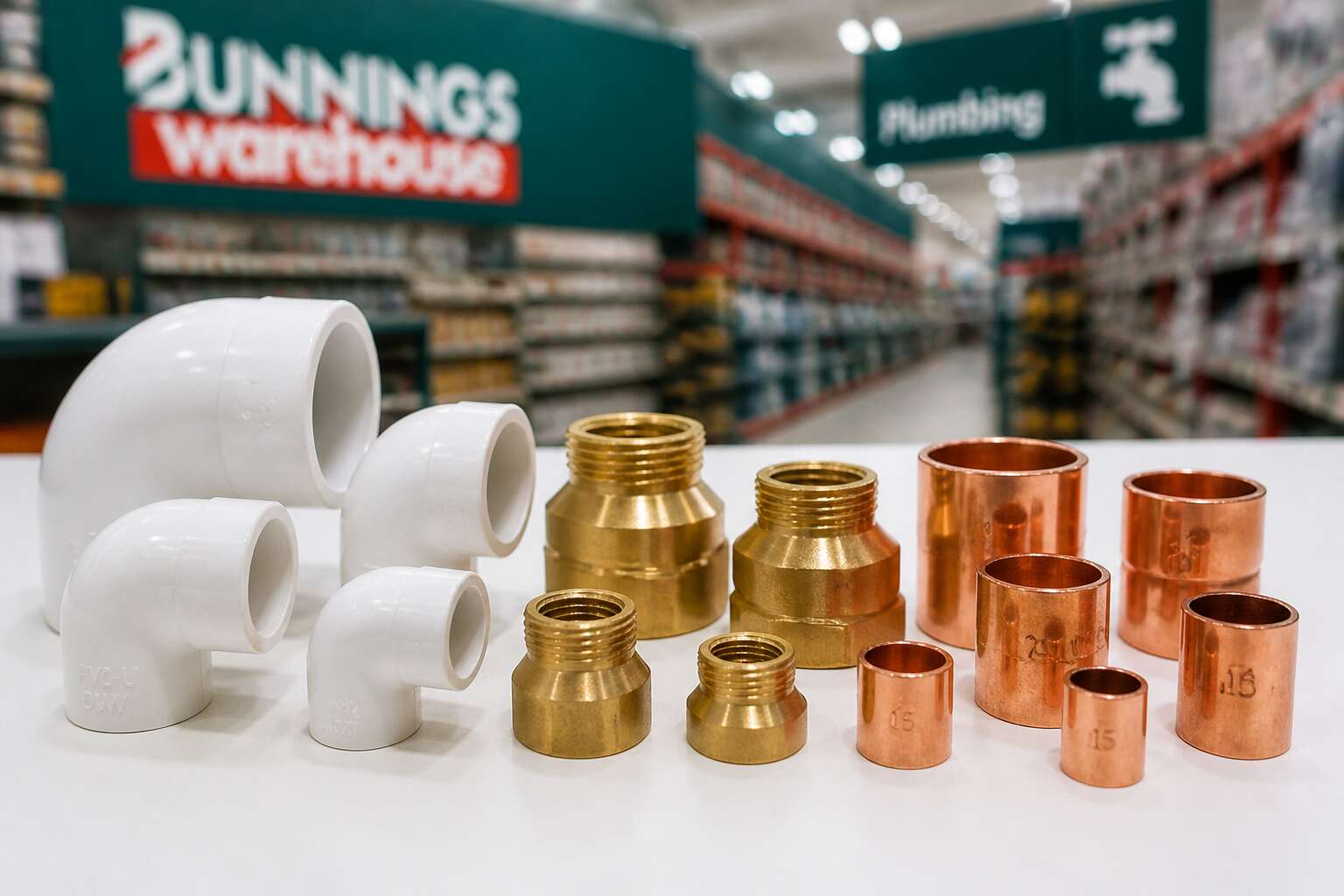
Brass fittings are the workhorses of the trade. They handle heat and high pressure with ease, making them ideal for hot water systems and gas lines. Their durability comes at a cost, as they are heavier on the wallet. However, their resistance to corrosion in harsh environments often justifies the expense.
PVC fittings offer a different philosophy. They are lightweight, inexpensive, and resistant to chemicals, but they are not built for hot water. Use them for cold water supply and drainage. They rely on solvent cement for a bond, so you need to work quickly and accurately.
Galvanised steel presents a middle path, primarily for outdoor or structural applications. The zinc coating protects against rust, but the threads can be brittle. Tighten them too much and you risk cracking the fitting. A common mistake is pairing galvanised with copper, which accelerates corrosion.
Consider your maintenance plan before purchasing:
– Brass can be polished and reused, a long-term investment.
– PVC is disposable; cutting it out is always easier than unscrewing it.
– Galvanised steel often requires a pipe wrench and a firm grip.
For the average homeowner in Johannesburg, a mix of brass for the hot water manifold and PVC for the garden irrigation is a sensible split. When you search pipe fittings bunnings for these specific materials, you will find the options clearly labelled. Take note of the pressure ratings printed on the side. That stamp is your guide to whether the fitting will survive its first summer.
Materials and Compatibility
PVC and Polypropylene Applications
Seventy percent of Cape Town’s irrigation installers choose PVC for mainlines. Polypropylene, though, dominates inside factories where chemicals flow. Both plastics resist rust, but their compatibility stops there. You cannot glue them together! Solvent welding fails because each polymer has a different surface energy.
For a secure joint, use threaded adapters or compression rings. When you pick pipe fittings Bunnings, the material code stamped on the socket reveals the plastic type. PP fittings often come in grey, while PVC fittings are white or blue.
- Polypropylene: hot water lines, chemical drainage, sump pumps.
- PVC: cold water supply, sewer mains, agricultural drip systems.
Matching the plastic to the fluid temperature prevents premature cracks. A quick look at the rating chart saves a weekend of repairs.
Copper and Brass Durability
Copper fittings in old Cape Town homes have outlived three generations of owners. Brass, its harder cousin, carries responsibility for high-pressure systems, yet each metal hides a weakness. In coastal air, salt attacks brass by leaching zinc, leaving porous metal that crumbles under load. Copper forms a green patina instead, a protective layer that slows further loss.
At pipe fittings Bunnings, the weight of a fitting in your hand tells something true. Copper feels substantial and soft. Brass feels rigid and dense. The choice between them reveals more about the installer’s assumptions than the metal’s properties.
- Copper: malleable, resists corrosion, solders cleanly
- Brass: strong, machinable, vulnerable to dezincification
Material integrity is a product of environment, not intention. The same water that polishes copper slowly erodes brass, while the same pressure that settles brass fatigues copper over time.
Galvanised Steel for Outdoor Use
Galvanised steel’s outdoor reputation comes from a sacrificial zinc layer. That coating corrodes first, protecting the steel beneath. In coastal South Africa, salt air and high humidity accelerate the process, so fitting selection matters more than inland. At pipe fittings bunnings, a common question is whether galvanised can join existing copper or brass. It can, but only with proper isolation. I have seen fittings fail within a year when connected directly to copper, because the dissimilar metals create an electrochemical cell that rapidly consumes zinc. Use dielectric unions or plastic spacers to separate metal.
Also, pairing old galvanised pipes with new fittings can disturb internal scale, encouraging blockages. For exposed lines, hot-dipped galvanised fittings outperform electro-galvanised ones due to thicker coating. Before assembly, inspect for scratches or bare spots. Touch up damage with zinc-rich paint, because even small gaps invite rust. A little attention to compatibility keeps outdoor systems solid for years.
Matching Fittings to Pipe Sizes
The quiet hum of a pipeline is a lie. Under pressure, every connection reveals its truth. Matching materials alone won’t save you; pipe sizes demand equal respect. At pipe fittings bunnings, I have seen brass pressed against steel, or a 20mm pipe forced onto a 1/2 inch thread. The metal expands at different rates, and the threads strip silently. Before you tighten anything, confirm the nominal bore, not the outside diameter. Check the wall thickness, because schedule matters. A simple size mistake creates a slow weep that never sleeps. Consider these checks: measure the outside diameter with calipers, compare with a size chart for the specific material, and always test fit without sealant first. The wrong size is a ghost you can’t see until it leaks through the ceiling. pipe fittings bunnings racks mix metric and imperial, so verify before you leave the store. That single extra minute saves a world of pain.
How to Measure and Choose the Right Fitting
Understanding Nominal Pipe Size
Nominal Pipe Size is a label, not a measurement. A 20mm pipe often has an outside diameter of 26mm. This gap confuses even experienced hands. Measuring correctly eliminates the guesswork.
Use a digital caliper. For threaded fittings, measure the outer diameter across the thread crests. For slip or push fittings, measure the inner bore. Record the readings in millimetres.
- Measure twice, once on the pipe and once on the fitting.
- Check the wall thickness for schedule or class.
- Confirm the thread standard, BSP or NPT.
When you head to pipe fittings bunnings, carry your recorded numbers. Compare them against the product labels. A wrong size costs time and money. Measuring once saves both.
Measuring Inside and Outside Diameters
Measuring inside and outside diameters separates a secure joint from a slow leak. An outside diameter calliper reading gives you the pipe’s true external width, while an inside diameter reading reveals the bore. For a slip fitting, you need the internal measurement. For a threaded connection, the outside diameter across the crests matters more.
When you visit pipe fittings bunnings, the product label often lists both dimensions, but labels can mislead. Grab a calliper, measure the pipe, measure the fitting, and compare. The numbers should sit within a tolerance of roughly one millimetre.
The quick check I run:
- Measure the outside diameter across the pipe end, not the middle.
- Measure the inside diameter of the fitting’s bore.
- Subtract one from the other to confirm the wall thickness matches the schedule.
Matching those readings against the specifications at pipe fittings bunnings saves wasted trips and failed connections. Trust the calliper over the label.
Identifying Thread Standards
Threads determine whether a joint holds or leaks. South African plumbing systems commonly use British Standard Pipe (BSP) threads, but National Pipe Thread (NPT) appears on imported equipment. BSP threads are parallel and seal with a washer or O-ring. NPT threads are tapered and seal by metal-to-metal wedging. Confusing one for the other produces a connection that crosses threads and then fails under pressure.
- BSP: 55 degree thread angle, parallel crests, measured in inches.
- NPT: 60 degree angle, tapered crests, also measured in inches.
Run a thread pitch gauge across the teeth to confirm the spacing. A fitting from pipe fittings bunnings may look identical to a spare you have at home, but the pitch differences are invisible to the eye. I measure the outside diameter across the crests, then count the threads per inch. That reading settles the argument before you waste money.
Angle and Direction Considerations
Over ninety percent of pressure failures in domestic plumbing stem from fittings forced into a plane they were never meant to occupy. This is the quiet tragedy of the trade. You have measured the thread, confirmed the pitch, and selected a brass or PVC piece from a reputable pipe fittings bunnings range. Yet the joint still weeps. The culprit is often the angle.
A fitting is a directional statement. A 45 degree elbow redirects flow with a gentler hand than its 90 degree cousin, which creates a sharper point of resistance. You must first ask whether the pipe path allows for a gradual turn or demands a sudden, severe redirection. Use a protractor or a digital angle finder to map the exact degree of deviation required before you commit to a purchase.
– 90 degree elbows for tight corners where space is a premium.
– 45 degree elbows for a slower curve that reduces water hammer.
– 45 degree lateral tees for connecting branch lines at a slope.
Direction matters just as much as the angle itself. A drain line must slope downward at a consistent grade, so a fitting that forces the pipe upward will create a trap for debris. When working in confined walls, test the swing of the fitting before you solder or glue. The perfect thread is useless if the face of the fitting points the wrong way. Measure the carcass of the fitting, not just the opening, because the body length can throw your alignment off by a centimeter. A stock from pipe fittings bunnings gives you the freedom to hold several angles side by side, but the final choice belongs to the geometry of your space.
Reducing and Adapting Between Sizes
A reducer is a deliberate constriction. Plumbing systems tolerate it only when measured. Measure the female socket of the existing line for the larger side, and the outside diameter of the incoming pipe for the smaller side. The difference is your reducer size.
Use callipers, not a tape measure. Cast iron and PVC fittings carry moulding irregularities. A one millimetre error creates a leak that appears after the wall is sealed. Compare readings with the stock at pipe fittings bunnings, but trust your own numbers.
For metric to imperial, the procedure changes. A 15mm pipe and a 1/2 inch thread look identical. You need a transition adapter. The pipe fittings bunnings range in South Africa carries these, but verify the thread pitch on both ends.
Proceed in this order:
1. Measure the existing socket inner diameter.
2. Measure the incoming pipe outer diameter.
3. Confirm the adapter length suits your clearance.
4. Check the thread pitch if both ends are threaded.
Installation Tips and Common Mistakes
Preparing Pipes for Fitting
Rushing pipe preparation turns every fitting into a compromise. I have watched experienced hands skip deburring and then blame the joint when it leaks. For pipe fittings bunnings, the difference between a lasting connection and a leaking one often lives in the cut edge.
Remove burrs with a reamer or fine file. A rough edge tears the O-ring on compression fittings and scratches the seating surface on slip joints. Dry the pipe completely! Grease from a fingerprint makes push-to-connect fittings seat unevenly. Lightly sand the exterior for grip.
- Cutting with a dull blade that leaves jagged metal
- Measuring the outside diameter instead of the inside
- Forgetting to chamfer the end for threaded connections
Align the pipe before tightening. Angular stress creates weak points. The right preparation at pipe fittings bunnings ensures the joint holds under pressure.
Applying Thread Sealant and Tape
Thread sealant is a ritual of trust, yet most failures begin with an excess of hope. A thick coat of paste on the male threads squeezes out under pressure, hardens into brittle shards, and then the joint weeps in silence. For pipe fittings bunnings, the same mistake repeats: too much tape wrapped clockwise, or worse, anti-clockwise, which unravels the moment torque is applied.
- Applying tape over dirty or oily threads
- Wrapping more than three layers for a standard taper
- Leaving the first thread bare to prevent tape from entering the system
Experienced hands know that sealant does not forgive haste. The tape must stretch and conform, not bunch. A slip of the wrench and the compound tears, leaving gaps. That is when the fitting turns against you, whispering its failure into the dark plumbing void.
Tightening Without Overstressing
Tightening requires feel, not force. A ratchet click does not forgive a hand that keeps turning. When you wrench a fitting past its natural resistance, the threads bite deeper and the metal or plastic begins to yield. In South Africa’s variable water pressures, an overstressed joint can fail without warning.
Watch for the quiet signals:
- A high-pitched squeal as the metal fatigues
- A hairline crack near the collar
- A fitting that sits slightly askew
These signs announce that you have pushed past the zone of good contact. The right torque, particularly for pipe fittings bunnings, is a firm hand then a quarter turn at most for standard threads. Beyond that, you are not sealing;; you are deforming. Let the fitting settle into its seating, then leave it alone.
Avoiding Leaks at Connection Points
Every dripping joint tells a story: haste, not hardware. Forcing pipe fittings bunnings into position without squaring them first makes the gasket or thread seat unevenly. That uneven contact becomes a weep path under pressure. Alignment is the first seal.
Even a correctly prepared joint fails when the pipe cannot move. Thermal cycling and minor settling are normal. Rigid installations transfer this stress directly to the connection. Support the pipe near each fitting, never leaving the joint under tension. Use the correct gasket material for fluids temperature. A mismatched elastomer can soften or crack.
Test with progressive pressure, not a single burst. A slow increase reveals hand-tight points early. Watch for moisture forming at the collar before any stream appears. When you install upgraded pipe fittings bunnings, small adjustments matter. A few millimetres of misalignment can set a permanent leak. Residual stress is what ruins connections over a long run.
When to Call a Professional
Most DIY failures come from confidence, not ignorance. A common mistake is installing fittings in cramped spaces where you cannot see the joint. You trust your fingers instead of your eyes. That produces inconsistent results, even for pros!
Pipe fittings bunnings offers a range, but no product corrects a flawed installation. When you choose pipe fittings bunnings, verify the fitting class matches system pressure. If the pipe run has more than two direction changes in a short span, call a professional. Cumulative forces at each joint overwhelm novices. The same applies when retrofitting into an older system with unknown pressure history.
Signs to call a professional:
- Persistent water hammer that travels through the walls
- Fittings that weep only at full system pressure
- Corrosion on a fitting that has never leaked
These symptoms point to system-wide issues, not a single connection. A professional can assess the whole layout.
Navigating the Hardware Store Aisle
Locating the Plumbing Section
Nearly 60% of home repair trips involve more time hunting for components than applying them. If you’ve ever needed pipe fittings bunnings for a leaky bathroom, you know the struggle of a confusing store layout.
I recall standing in the middle of a hardware store, surrounded by paint cans and garden tools, wondering if the plumbing section had disappeared. The signage pointed one way, but my intuition said another. My search for pipe fittings bunnings turned into a patient test of willpower.
The store’s logic often follows a pattern:
- Water supplyand drainage goods are stationed farthest from the entrance, huggingthe perimeter walls.
- The clatter of metal wrenches betrays the plumbing corner, an acoustic signal to the initiated.
- Ceiling grids sometimes have pipes running above, pointing to the specialist area.
Once you locate the aisle, prepare for a selectionthat can overwhelm. Yet knowing its general position saves energy for the real battle ahead, such as deciphering thread counts without losing your temper!
Reading Product Labels and Barcodes
The aisle is found, but work has started. Labels demand attention. A quick glance at the barcode is not enough. You need the fine print, the specification deciding whether a fitting survives water hammer or weeps under pressure.
Barcodes are excellent for the cashier, but useless for the plumber verifying a 15mm compression joint against a 20mm one when picking up pipe fittings bunnings. The physical label carries the truth. Look for:
- Material designation, like UPVC or CW617N.
- Thread standard, such as BSP or NPT.
- Pressure rating, measured in bar or kPa.
- Batch number for traceability.
Even then, labels are imperfect. Some packs are mislabelled at the factory. The barcode might match the shelf, but the internal diameter tells the truth. I measure twice before leaving the aisle. For a pack of pipe fittings bunnings, barcode is a number. The label gives the details, and the fitting shows the truth.
Comparing Brands and Price Points
Brand names line the shelves. Some promise decades of service. Others simply promise a lower price. When I compare pipe fittings bunnings stock, I look beyond the sticker. The price difference between two identical-looking elbows often hides a difference in wall thickness or alloy purity.
A quick comparison checklist helps:
– Weigh the fitting. Heavier usually means denser material.
– Check the finish. Rough casting can indicate poor quality control.
– Compare thread tolerances. A loose thread fails early.
Cheaper fittings sometimes work for low pressure irrigation. They are a gamble for hot water lines. The price per unit tells you less than the cost per year of service. I have seen expensive fittings crack and cheap ones endure. Brand reputation matters, but physical inspection wins.
Asking Staff for Assistance
Standing in the aisle with a broken pipe in hand, most people guess. The staff member nearby has seen the same confusion a hundred times. At pipe fittings bunnings, the person in the orange apron often knows which fitting survives local water pressure. The trick is asking the right question. “Where are the fittings” gets you a point. “This pipe carries hot water at 60 degrees” gets you a solution.
Describe the system, not the part. Mention the pipe material, the pressure, and whether the joint will be buried or exposed. Staff can then narrow the options.
- State the pipe diameter and material.
- Mention what the line carries.
- Show the old fitting if you have it.
That information changes the recommendation entirely.
Checking Stock Availability Online
Wandering the hardware store aisle with a blank stare is an old ritual. The online stock checker has removed much of the guesswork. A quick search for pipe fittings bunnings reveals which branch carries the exact coupler you need. The website often lists the aisle position too, so you can arrive with a plan instead of a prayer.
The digital stock count is not a gimmick. It updates frequently and reflects real-time sales. When the system shows three units left, expect three units. That saves you a pointless drive across town.
- Note the product code before you leave the house.
- Check the alternate branch if the first one shows low stock.
Still, the aisle itself invites distraction. New fittings, shiny tools, that odd valve you never knew existed. Stick to the product code and you will be out before the traffic builds. Pipe fittings bunnings stock levels are there for a reason. Use them.
Return and Refund Policies for Plumbing Items
The returns counter at Bunnings becomes a negotiation zone only if you arrive unprepared. I have seen a grown man wrestle with a five litre tin of glue and lose his composure over a receipt he left on the dashboard. The refund policy for plumbing items is straightforward, but it demands physical proof of purchase. Bring the card you used, the original packaging if it survived, and the item itself in a reasonable state. The staff are not mind readers.
– Keep the physical receipt (the digital copy on your phone works, but the paper one wins arguments).
– Have your payment method ready for verification.
– Bring the tri-fold packaging leaflet, especially if the fitting was in a blister pack.
Once opened, a pipe fitting bunnings product falls under a separate rule. Used or installed gear does not qualify for a full cash refund. The staff will offer an exchange or a store credit, and that is the end of the conversation. The policy is printed on the back of the docket, so read it before you queue. A quick check of the bunnings policy online saves you from standing at the desk with a plumber’s wrench and a hopeful expression.

0 Comments