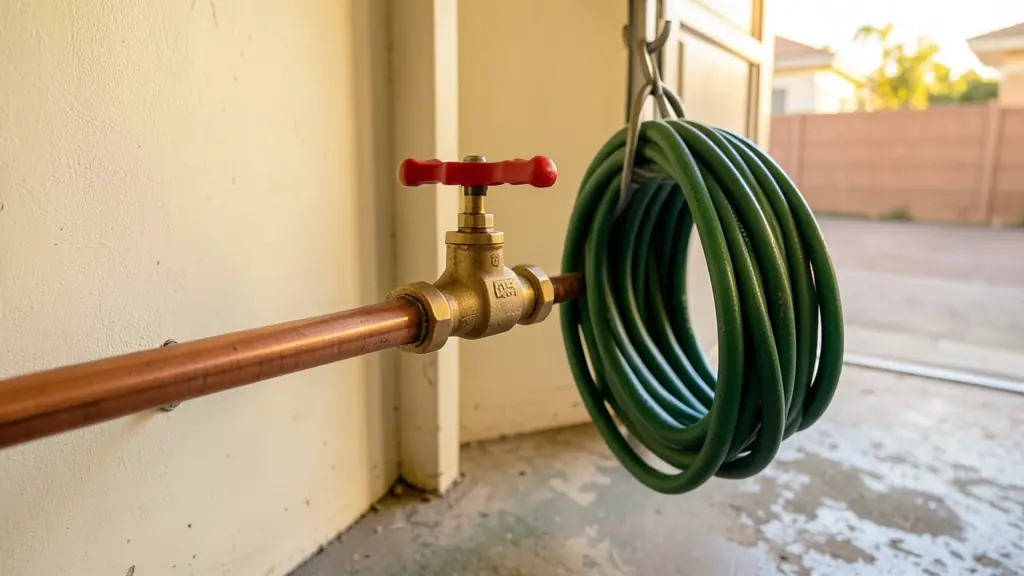
Ball valves are the quick shut offs of the water world: a quarter turn of the lever and a drilled ball inside the body swings across the flow. That speed is why people fit them at the meter, before a geyser, on a tank outlet and at a pool pump. It is also the catch, because slamming one shut on a long line can bang every pipe in the house. Here is how to pick the right one.
Brass, PVC, HDPE or stainless
- Brass suits house mains, garden taps and copper lines, in 1/2 to 2 inch BSP. Ask for DZR brass on drinking water and the SABS mark. See brass pipe fittings for the adaptors around them.
- PVC ball valves are solvent weld or threaded and sit happily in pool plant rooms and on cold irrigation mains. They do not take hot water. The pool pipe fittings page covers union ends at the pump.
- HDPE compression ball valves join straight onto black farm pipe without an adaptor.
- Stainless 304 or 316 bodies go on factory lines with chemicals, steam or hygiene rules.
Full bore, reduced bore and the handle
A full bore valve has a hole in the ball as wide as the pipe, so it costs you almost no pressure. A reduced bore valve is cheaper and fine for a basin or a hose bib, but on a long borehole line it chokes the flow. A lever handle shows at a glance whether the valve is open; a short butterfly handle fits tight spots behind a toilet or in a meter box. Lockable handles stop a tenant or a passer by closing the supply. Three way valves send water one of two ways, say from a tank or from the municipal line.
Sizing: thread, pipe and pressure
Match the valve to the pipe's outside diameter or thread, not to what the old valve looked like. A 3/4 inch thread and a 20 mm plastic pipe are not the same thing; the pipe size chart lines them up. Check the pressure rating on the body against your supply, and if the valve feeds a geyser, check the temperature too.
Why valves seize, and how to open them
A ball valve that is never turned grows scale around the ball and the seals, until the day of a burst when the lever snaps off in your hand. Turn each valve closed and open twice a year. Open and close slowly on long lines to avoid water hammer. For the bigger picture of valve types, see the valves guide, and for tank outlets, water tank pipe fittings.
What to put in your request
- Give the pipe size or thread at each end
- Say full bore or reduced bore
- Say what flows: cold, hot, chemicals
- Send a photo of the old valve with a tape
- Ask for lockable handles if needed
Ball Valves: who asks for them and why
- Homeowners: a shut off at the meter, a valve before the geyser and garden tap isolators
- Complexes, landlords and body corporates: lockable valves on each unit's supply so one leak does not empty the whole block
- Plumbers and pipe fitting contractors: boxes of 15 and 22 mm brass valves kept in the bakkie for every job
- Builders and developers: isolation valves on each bathroom's first fix, priced in the bill of quantities
- Farms and smallholdings: HDPE compression valves on trough lines and at each branch off the borehole main
- Factories, food plants and workshops: stainless ball valves on wash down, chemical dosing and compressed air drops
- Mines and heavy industry: flanged steel ball valves on dewatering lines that must close fast and fully
- Municipalities and civil contractors: ball valves on small service connections and air valves along a reticulation line
Frequently asked questions
Which ball valves for water tanks work best?
How are ball valves priced?
My valve drips at the spindle. Must I replace it?
Who quotes me for the valves?
Work it out first
- Pipe size calculatorFlow and a velocity limit in: the smallest pipe that keeps the water under it, and the sizes either side out
- Friction loss calculatorPipe, size, length, fittings and flow in: the pressure lost along the run, in bar and metres of head out
- Pipe volume calculatorPipe, size and length in: litres in the line, the weight a metre empty and full, and the total weight out