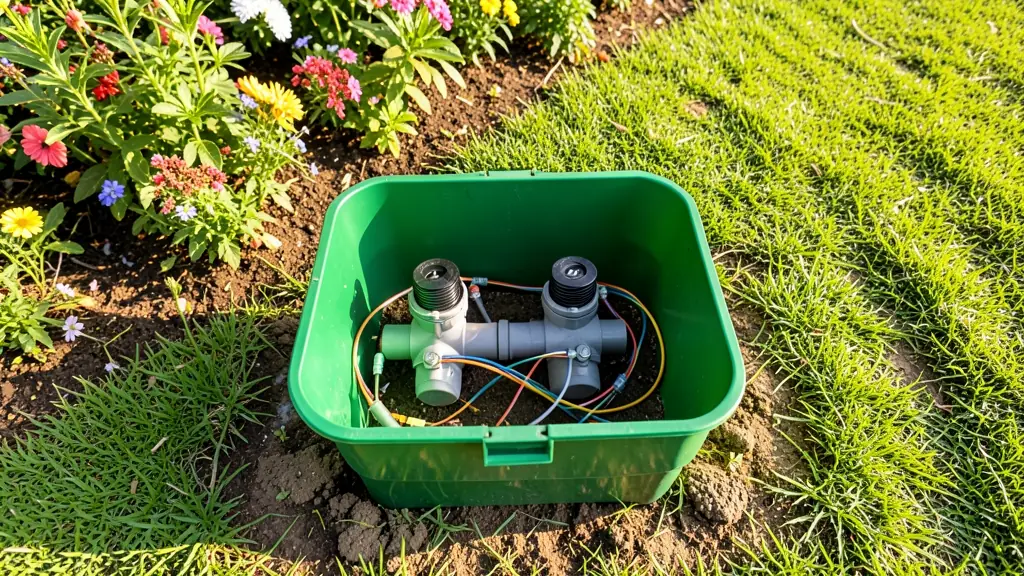
Solenoid valves open and close when an electric signal reaches a coil on top. That lets a controller water the front lawn at five in the morning, a float switch top up a tank, or a machine let in a measured shot of water. The coil voltage, the way the valve rests with no power and the pressure it needs to work are the three things to settle before you buy one.
Irrigation solenoids on 24 V AC
Garden and farm irrigation valves almost all run on 24 V AC from a controller, one valve per zone. They sit in a valve box below ground, joined to the irrigation pipe fittings on either side. Each has a manual bleed screw or lever so you can test a zone without the controller. Fit a filter ahead of them: sand and rust jam the small diaphragm ports and the zone either runs all night or never opens.
12 V, 220 V, normally closed or normally open
- 12 V DC valves suit solar setups, caravans, water dispensers and battery systems.
- 220 V AC valves suit machines and tank fill lines wired off the mains; an electrician should connect them.
- Normally closed means shut with no power, the safe choice for most water. A power cut or load shedding leaves the water off.
- Normally open stays open until powered, useful where flow must carry on if the power fails.
Minimum pressure and direct acting types
Most solenoid valves for water are pilot operated diaphragm valves. They use the line pressure to open, so they need a minimum, often around half a bar to a bar. Fed from a low plastic tank by gravity, they may not open at all. A direct acting or zero pressure valve opens with no help from the water but flows less. Check the pressure at the valve, and work out the flow your zone needs with the pipe size calculator.
Wiring and the valve box
Use outdoor irrigation cable and gel filled waterproof connectors on every joint in the box; a twisted joint wrapped in tape corrodes in one season. Leave a loop of wire so the coil can be lifted out. Fit a ball valve ahead of each manifold so you can service the valves without shutting the whole garden.
What to put in your request
- Give the coil voltage you have
- Say normally closed or normally open
- Give the water pressure at the valve
- Say how many zones or machines
- Mention a gravity tank feed
Solenoid Valves: who asks for them and why
- Homeowners: a four zone garden system with valves in a box near the front lawn
- Complexes, landlords and body corporates: common garden irrigation on a timer, with a valve box for each stretch of lawn
- Plumbers and pipe fitting contractors: a 220 V valve on a tank fill line or a dishwasher supply that keeps failing
- Builders and developers: valve boxes and sleeved wiring laid before paving goes down on a new estate
- Farms and smallholdings: solenoids on each orchard block, switched from a controller in the pump house
- Factories, food plants and workshops: 12 and 24 V valves on machines, cooling lines and automatic washdowns
- Mines and heavy industry: solenoid control on dust suppression sprays and water treatment dosing
- Municipalities and civil contractors: irrigation valves on park and road verge zones run from a central controller
Frequently asked questions
My irrigation zone will not switch off. What is wrong?
Can a solenoid valve fill my water tank automatically?
Which water solenoid valves suit hot water?
Will the quote include the controller?
Work it out first
- Pipe size calculatorFlow and a velocity limit in: the smallest pipe that keeps the water under it, and the sizes either side out
- Friction loss calculatorPipe, size, length, fittings and flow in: the pressure lost along the run, in bar and metres of head out
- Pipe volume calculatorPipe, size and length in: litres in the line, the weight a metre empty and full, and the total weight out