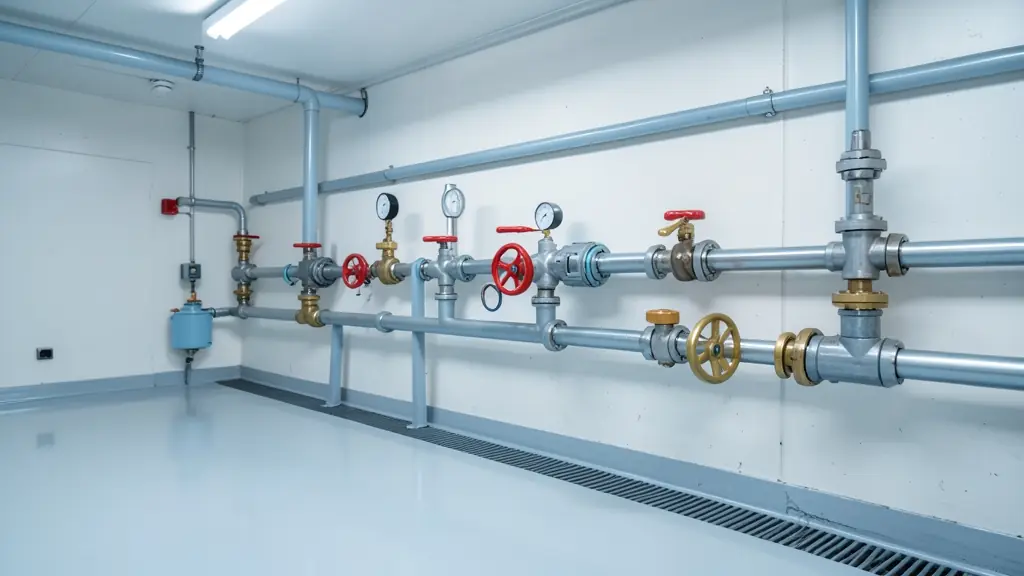
Valves are how a pipe system is controlled: they shut a line off, set how much flows, stop it running backwards, hold pressure down or open and close on a signal. Choosing one starts with its job, then the size, the pressure, what flows through it and how often it is turned. This page sorts the types of valves and points to the pages on each family.
Types of valves by job
| Job | Valve |
|---|---|
| Open or shut a line | ball valves, gate and butterfly valves |
| Throttle the flow | globe and needle valves |
| Stop backflow | check or non return valves |
| Control pressure | pressure reducing valves, relief and safety valves |
| Work on a signal or a level | solenoid valves, float valves, actuated valves |
Big isolating valves are covered on gate and butterfly valves, and a geyser's set of valves on geyser valves.
Water valves and industrial valves: choosing by the line
Match four things. Size: the valve's ends must fit the pipe, by mm for plastic or NB and inches for steel. Pressure: its rating must sit above the highest pressure in the line, including surges. Medium: cold water, hot water, air, slurry, steam or chemicals each wear seats differently. Use: a valve turned twice a year can be simple, one cycled every hour needs a tougher seat or an actuator. A ball valve used to throttle wears its seat out; a gate valve left half open chatters and erodes.
End connections
Valves come threaded (BSP), compression, solvent weld for PVC, with HDPE spigots, or flanged. Flanged valves must match the drilling of the line, see flanges. Unions either side of a threaded valve let it come out without cutting. Brass and PVC valves on a farm line often fail first at the threads, so a pair of spare unions in the store saves a trip to town.
A valve schedule for a bigger job
On a complex, a farm or a plant, list every valve with a tag, its type, size, end, rating, material and where it sits. Stockists quote line by line from a schedule and swap only what they cannot supply. Check sizes and pressure first with the pipe size calculator.
What to put in your request
- Say the job: shut off, throttle, one way
- Give the pipe size and material
- Give the highest working pressure
- Name the medium and its temperature
- Send a valve schedule for big jobs
Valves: who asks for them and why
- Homeowners: a main stopcock at the meter, angle valves under basins and the geyser valve set
- Complexes, landlords and body corporates: isolating valves on each block so one burst does not shut every unit
- Plumbers and pipe fitting contractors: a box of ball valves and check valves kept in the van for call outs
- Builders and developers: a valve list per floor at first fix, with isolators for each bathroom
- Farms and smallholdings: non return valves on borehole lines and float valves in every trough
- Factories, food plants and workshops: actuated valves on process lines and lockable isolators for maintenance
- Mines and heavy industry: large knife gate and butterfly valves on slurry and dewatering columns
- Municipalities and civil contractors: air valves, scour valves and gate valves in chambers along a water main