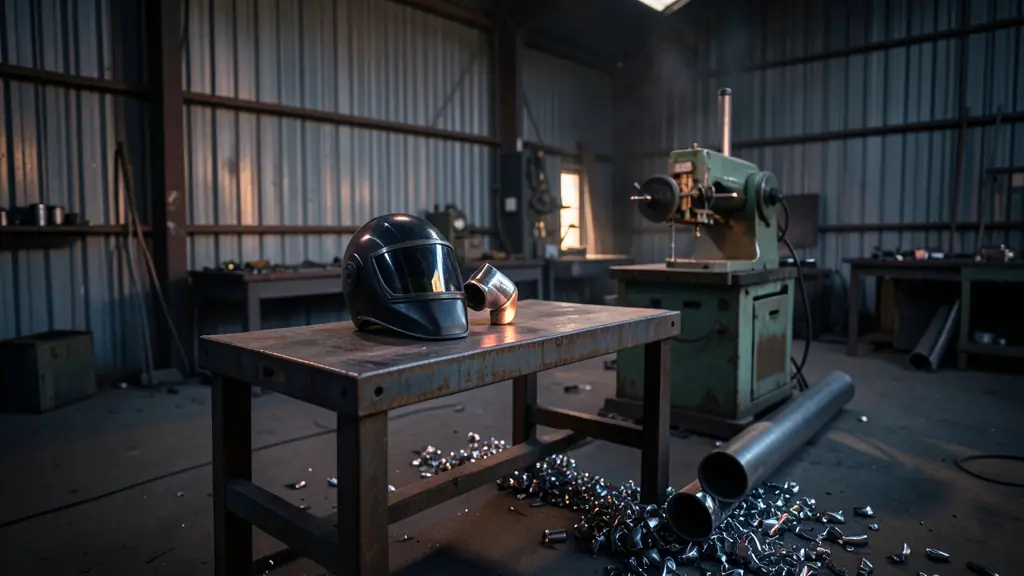
Whether you need a pipe threading machine for a weekend of galvanised repairs or a welder for a shutdown, the joint decides who you call. Steel gets welded or threaded, stainless is TIG welded, and polyethylene is fused with heat and pressure rather than a torch. This page sets out each joining service, what to ask the person doing it, how the joints are tested, and how the work is usually priced.
Steel and stainless pipe welding
Pipe to pipe welding on carbon steel means bevelled ends, a root run, then fill and cap passes. Steam, pressure and anything the site engineer lists calls for a coded welder qualified for that position and material, with weld records you can file. Stainless is usually TIG welded with a gas purge inside so the root does not oxidise. Most industrial sites will not let anyone strike an arc without a hot work permit.
HDPE welding: butt fusion and electrofusion
A butt fusion machine shaves both pipe ends square, heats them against a plate, then pushes them together at a set pressure and holds them while they cool. Electrofusion couplers have a wire coil moulded inside, powered by a control box. Either way the ends must be scraped clean and dry, and a good contractor keeps a log of each joint. Small sizes are often joined with compression fittings instead; see HDPE fittings.
Threading on site, at the counter or with a hired machine
Many steel pipe merchants cut and thread lengths while you wait. A hired electric threading machine comes with a stand, cutting oil and die heads, often for 1/2 to 2 inch; check the dies cut BSP taper threads to match your fittings. A hand ratchet die covers a few joints. Threads cut too long let the fitting run past the taper and leak; too short and it never seals. Paint the bare thread on galvanised pipe. Work out cut lengths between fittings with the pipe offset calculator.
Testing and pricing the joints
Welding and fusion are usually priced per joint, rising with size and wall thickness, or as a day rate for a welder, an assistant and the machine. Threading is per thread or per length; hire is per day with a deposit. A hydrostatic test to the pressure and time the engineer sets proves the work. A qualified pipe fitter can arrange it.
What to put in your request
- Give the pipe material, size and wall thickness
- Say how many joints or threads
- Say whether it is on site or at a workshop
- Mention permits, hot work rules or a shutdown
- Ask whether the pressure test is included
Pipe Welding and Threading: who asks for them and why
- Homeowners: a few galvanised threads cut at the merchant for an old outside line
- Complexes, landlords and body corporates: welding a steel fire line or a pump room manifold during a planned shutoff
- Plumbers and pipe fitting contractors: a fusion contractor or hired threading machine for a job beyond the van stock
- Builders and developers: electrofusion on the site's water connection and welded steel for the fire main
- Farms and smallholdings: butt fusion along a long HDPE main from the borehole to the reservoir
- Factories, food plants and workshops: TIG welded stainless for a food line and steel welds on a steam header
- Mines and heavy industry: coded welders on high pressure dewatering lines and flanged spools
- Municipalities and civil contractors: fusion crews on a polyethylene water main with a joint log for the engineer