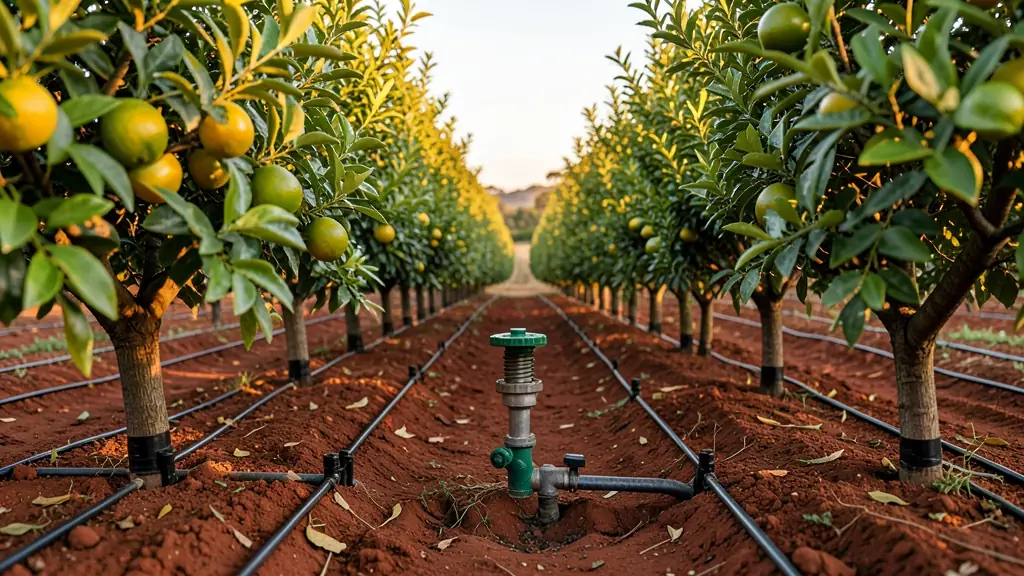
Good irrigation pipe fittings are cheap one at a time, but a single block needs hundreds. A tunnel near Brits, avocados outside Tzaneen and a townhouse garden in Durbanville all use the same parts: filter, pressure regulator, mainline, lateral, start connectors and end stops. Put them in the right order and the last dripper on a row gives as much water as the first.
The parts, in the order the water meets them
- Filter: disc or screen, after the pump or tap. Borehole sand and dam algae block drippers fast.
- Pressure regulator: drip line often wants about 1 to 2 bar; pumps and town supply usually give more.
- Valve: a ball valve per block, or a solenoid valve on a controller.
- Mainline: HDPE or PVC out to the field; see HDPE pipe fittings.
- Start connectors: push into a grommet in a punched hole and grip the lateral.
- Lateral and end stop: LDPE drip line in 16 or 20 mm, closed with a figure 8 end.
Agricultural irrigation pipe fittings versus garden fittings
Garden kits rely on barbed fittings that hold at low pressure. Farm lines are longer, the pressure higher and a tractor snags any loose end, so growers use compression fittings on mainlines, saddles to tap off a main and layflat hose for temporary blocks. Barbs left out for two summers go brittle, so buy UV stabilised black. Keep joiners, end stops and a punch on the bakkie; a cut line in a hot week cannot wait for a delivery.
Zones, flushing and why the last row is dry
Each pipe size carries only so much water before pressure fades, so one valve feeding too many rows starves the far ends. Split the block into zones that run in turn, and check a long submain in the friction loss calculator. Flush every line after fitting and again each spring: the first water carries shavings and soil into the drippers.
Sprinkler risers, rodents and the sun
A sprinkler needs a threaded adaptor and a stiff riser so it stands upright and does not soak one spot. Rats and porcupines chew drip line for water in a drought and moles lift shallow pipe, so bury laterals lightly or leave the animals a water point. In full Karoo sun, black UV stabilised fittings outlast white or clear ones.
What to put in your request
- Give the lateral size and wall type
- Say how many rows and how long each is
- Say what feeds it: tap, pump or tank
- Mention borehole or dam water
- Ask for pack prices on connectors
Irrigation Pipe Fittings: who asks for them and why
- Homeowners: drip line for beds and pots off the garden tap, with a regulator and a timer
- Complexes, landlords and body corporates: common garden zones on solenoids, sprinkler risers along the verge and repairs after mowing
- Plumbers and pipe fitting contractors: tap adaptors, regulators and filters for clients who want a garden system added
- Builders and developers: sleeves under paving and a capped stub for the landscaper before the driveway goes down
- Farms and smallholdings: drip and micro blocks in orchards, tunnels and vegetables, with filters at the pump
- Factories, food plants and workshops: landscaping round the plant and dust suppression lines on gravel yards
- Mines and heavy industry: dust suppression sprays on haul roads and rehabilitation planting on old dumps
- Municipalities and civil contractors: parks, road verges and sports fields on a municipal or contractor maintenance contract