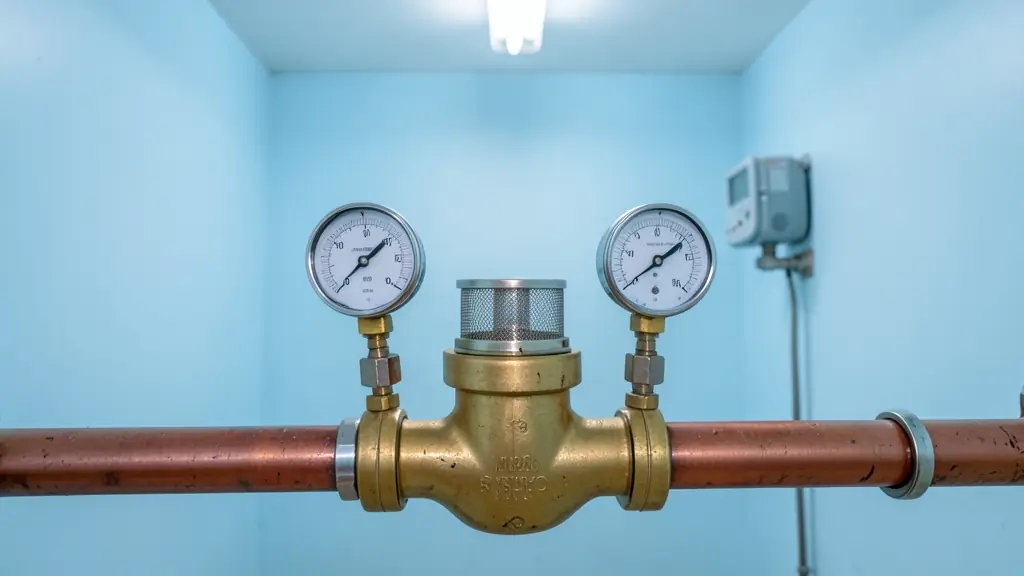
Pressure reducing valves, or PRVs, take the water pressure arriving from the street and bring it down to a steady figure the house can live with. In low lying suburbs and at the bottom of a complex, municipal pressure can sit well above what taps, cisterns and geysers were made for. A PRV set right means fewer burst flexi hoses, quieter pipes and longer lived valves.
What high pressure does to a house
Town pressure is often 2 to 6 bar, and higher downhill. Above that, cistern inlet valves hiss and fail, flexi connectors balloon, mixers drip and the geyser's own pressure control valve works harder than it should. Water hammer, the bang when a tap or a washing machine valve shuts fast, rises with pressure and cracks fittings over time. A plumber with a gauge on an outside tap can tell you in a minute what you are getting.
How a PRV should be fitted
- An isolating valve before and after, so the PRV can come out.
- A strainer in front, because a grain of grit on the seat lets full pressure through.
- A gauge on each side, so you can see the inlet and the outlet at a glance.
- Room to reach the adjusting screw and turn it.
Most house PRVs are set somewhere around 3 to 4 bar; your plumber will pick the figure for your fixtures. Size the valve to the flow, not just the pipe: the pipe size calculator helps when several units share a line.
One PRV at the meter or one per block
A body corporate with a PRV that keeps failing often has one valve doing the work of a whole complex, with long runs and a big height difference. A valve on each block, or each floor in a tall building, can keep the pressure even and takes the load off. Ask for a pressure reading at the top and bottom units before deciding. The plumbers and pipe fitters page covers who does this work.
Relief valves and safety valves in plain words
A PRV lowers pressure while water flows. A pressure relief valve opens and dumps water when pressure climbs too high, for example on a pump or a closed system. A safety valve does the same job on steam, gas and pressure vessels, set and tested to the engineer's rules. They are not interchangeable.
What to put in your request
- Give the pressure you measured, if any
- Say house, complex or main line
- Give the pipe size at the meter
- Mention bangs, bursts or a failing PRV
- Ask for gauges and a strainer
Pressure Reducing Valves: who asks for them and why
- Homeowners: a PRV after the main tap in a low lying suburb where flexis keep bursting
- Complexes, landlords and body corporates: a valve on each block so the bottom units stop getting hammered with pressure
- Plumbers and pipe fitting contractors: a gauge test at the outside tap, then a PRV with a strainer and isolators
- Builders and developers: PRVs specified on each unit's supply in a new development downhill of a reservoir
- Farms and smallholdings: a valve where a gravity line from a high dam feeds the house and the dairy
- Factories, food plants and workshops: pressure reducing and relief valves on process water and washdown lines
- Mines and heavy industry: PRV stations on underground service water dropping hundreds of metres down a shaft
- Municipalities and civil contractors: PRV chambers between pressure zones of a town's reticulation network