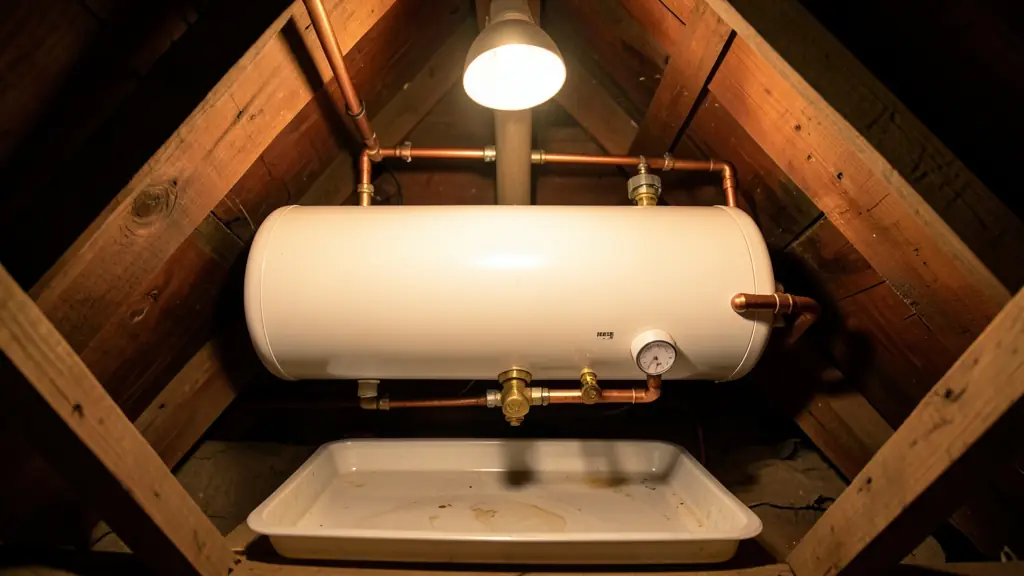
Geyser valves are the small brass parts that keep a tank of hot water from bursting, collapsing or flooding the ceiling. Every electric or solar geyser needs a pressure control valve, a temperature and pressure valve, vacuum breakers and a drip tray, set the way the installer fits them. When one drips, the drip is a message, not a fault to be blocked.
The types of geyser valves
- Pressure control valve: on the cold inlet, it holds the geyser at its working pressure, usually about 400 or 600 kPa, and has an expansion outlet that lets water escape as the tank heats.
- T and P valve: on the tank, it lifts once the tank overheats or overpressures, the last line of defence if the thermostat sticks.
- Vacuum breakers: on the hot and cold lines, they let air in when the tank drains so it does not collapse.
- Drain cock and drip tray: the cock empties the tank for service; the tray catches leaks and carries them outside.
Why the overflow drips, and why you never cap it
A little water from the overflow while the geyser heats is the expansion outlet doing its job. A steady run, day and night, points at a worn pressure control valve, a T and P valve opening because the thermostat is failing, or mains pressure above what the valve can hold. Capping or blocking any of these valves can turn a geyser into a pressure vessel with nowhere to go. Call a plumber and leave the outlets open. High street pressure is covered on the pressure reducing valves page.
Matching the valve to the geyser
The pressure control valve must match the rating on the geyser plate: a 400 kPa geyser takes a 400 kPa valve, not a 600. Solar geysers run hotter and some systems need valves rated for that heat; ask the supplier for the solar type. Most house geysers use 15 or 22 mm copper connections, covered under copper pipe fittings. A photo of the plate and the existing valves helps the merchant get it right.
The registered plumber, the CoC and insurance
Let a PIRB registered plumber do the geyser itself; they sign off the job with a certificate of compliance (CoC). Insurers often ask for one after a burst geyser is replaced, and a missing CoC can slow a claim. Find one through the plumbers and pipe fitters page, and get a rough figure for the parts with the pipe fitting cost calculator.
What to put in your request
- Send a photo of the geyser plate
- Say electric or solar geyser
- Describe where the drip comes from
- Say if you need a CoC for insurance
- Give the geyser's location: roof or cupboard
Geyser Valves: who asks for them and why
- Homeowners: a pressure control valve that runs nonstop after a new geyser goes in
- Complexes, landlords and body corporates: a set of matching geyser valves for every unit, swapped during a planned service
- Plumbers and pipe fitting contractors: kits of control valves and vacuum breakers stocked for geyser replacements
- Builders and developers: correct valves, trays and overflows on every geyser so the CoC passes first time
- Farms and smallholdings: solar geyser valves on a farmhouse and staff cottages far from a merchant
- Factories, food plants and workshops: valves on the hot water cylinders in staff change rooms and the canteen
- Mines and heavy industry: hostel and change house geysers kept compliant with spares on the shelf
- Municipalities and civil contractors: geyser valve kits for a housing project's solar water heaters
Frequently asked questions
What do geyser valves prices depend on?
Can I replace a geyser valve pressure control valve myself?
How often should geyser valves be checked?
Who quotes for geyser fittings?
Work it out first
- Pipe size calculatorFlow and a velocity limit in: the smallest pipe that keeps the water under it, and the sizes either side out
- Friction loss calculatorPipe, size, length, fittings and flow in: the pressure lost along the run, in bar and metres of head out
- Pipe volume calculatorPipe, size and length in: litres in the line, the weight a metre empty and full, and the total weight out