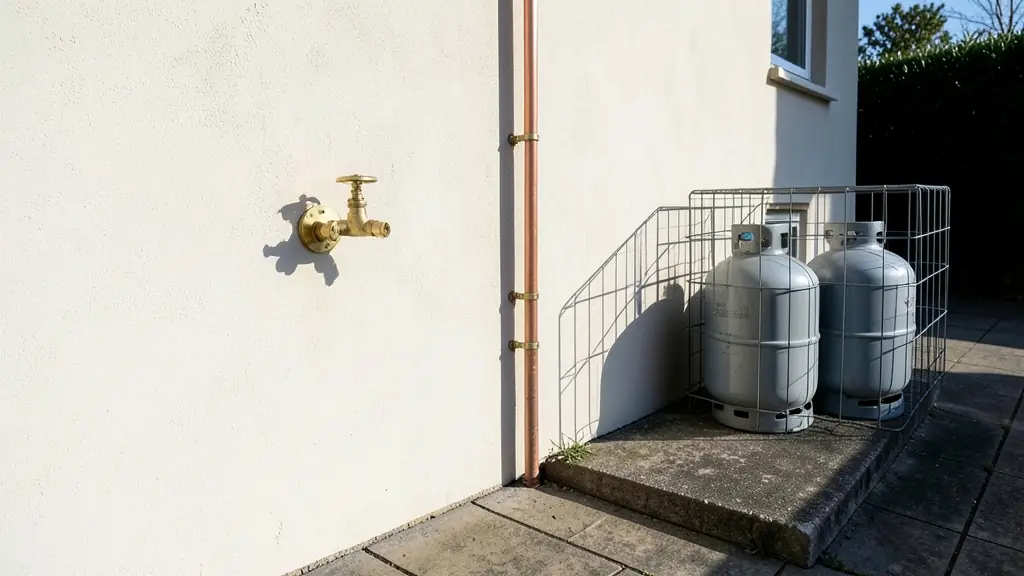
Gas pipe fittings for LPG link the cylinder to the hob, the gas geyser, the patio heater or the braai. A home system is usually a regulator at the cylinders, a run of copper or approved gas hose, a bulkhead through the wall and a gas valve at every appliance. These are not water fittings, and gas work in South Africa must be done and signed off by a registered gas installer.
What goes into a small LPG installation
- Regulator: drops cylinder pressure to what the appliances need; a changeover type swaps to the full cylinder by itself.
- Pipe: copper tube for fixed runs, with approved gas hose only for short, visible links to an appliance.
- Fittings: brass compression or flare fittings rated for gas, and a bulkhead fitting where the line passes through a wall.
- Gas valves: an isolating valve at each appliance and one at the cylinders, so a single unit can be shut off.
Why water fittings do not belong on gas
A tap connector, a garden hose clamp or a plumbing ball valve may thread onto a gas line, and that is the danger. Water fittings are not tested for gas, their seals can swell or crack with LPG, and thread tape for water is not always the grade gas needs. Buy fittings sold for LPG and ask the stockist to confirm they are gas rated. Copper tube and brass are shared with plumbing, so read about the metals on copper pipe fittings and brass pipe fittings, but keep the gas parts separate in the van.
Gas geyser fittings and stoves
A gas geyser needs gas in and water in and out: the gas side follows the gas rules, while the water side is plumbing and takes its own valves, see geyser valves. Most units need a flue or an outside wall and clear air around them. Stoves need a gas valve within easy reach and a hose that does not pass behind the oven where it heats up. Plan where each appliance goes before you count fittings, and use the fittings list calculator for the run.
Leak checks and the certificate of conformity
After any change, the installer pressure tests the line and checks every joint with soapy water: bubbles mean a leak. Never use a flame. When the work passes, the registered gas installer issues a certificate of conformity, which insurers and buyers of a house may ask to see. A DIY gas line with no certificate can make an insurance claim hard after a fire.
What to put in your request
- List every gas appliance
- Say where the cylinders will stand
- Measure the run from cylinder to appliance
- Say if a gas geyser is part of it
- Ask for the certificate in the quote
Gas Pipe Fittings: who asks for them and why
- Homeowners: a gas hob and a gas geyser fed from two cylinders in a cage outside the kitchen
- Complexes, landlords and body corporates: gas lines to each unit's hob, with body corporate rules on where cylinders stand
- Plumbers and pipe fitting contractors: the water side of a gas geyser, with the gas side left to a registered installer
- Builders and developers: gas points sleeved through walls at first fix for hobs and outdoor braais
- Farms and smallholdings: a gas geyser in the farm cottage and a heater in the brooder house
- Factories, food plants and workshops: LPG to a canteen kitchen or a heat treatment burner, under the site's rules
- Mines and heavy industry: gas for a hostel kitchen or a workshop, tested and certified before use
- Municipalities and civil contractors: temporary gas at a site camp kitchen, removed and capped at the end
Frequently asked questions
Can I fit my own gas stove?
How do I find a gas pipe fitter?
How often should a gas hose be replaced?
What does a gas installation quote list?
Work it out first
- Pipe size calculatorFlow and a velocity limit in: the smallest pipe that keeps the water under it, and the sizes either side out
- Friction loss calculatorPipe, size, length, fittings and flow in: the pressure lost along the run, in bar and metres of head out
- Pipe volume calculatorPipe, size and length in: litres in the line, the weight a metre empty and full, and the total weight out