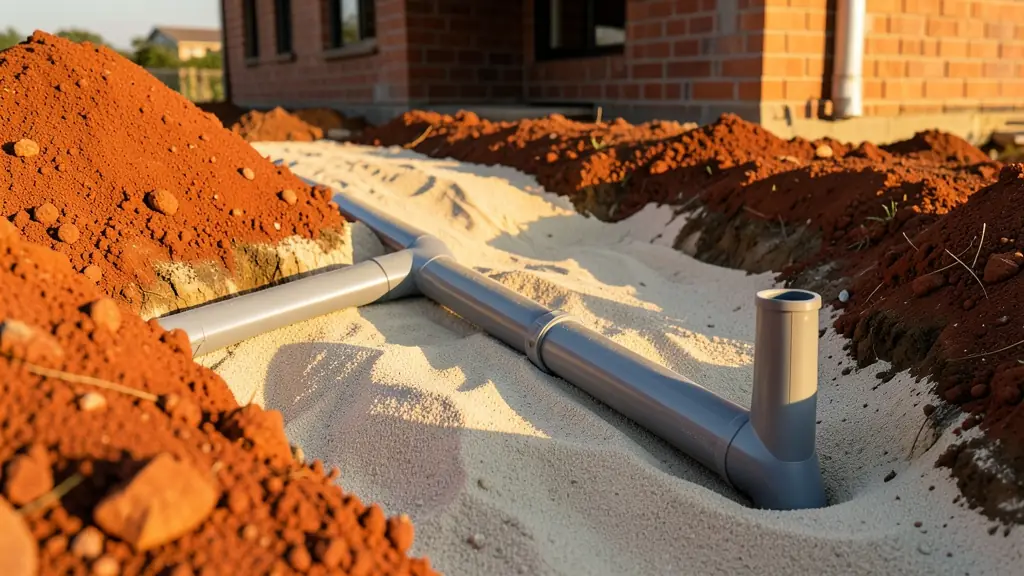
Most 110mm PVC pipe fittings end up underground, unseen until a drain blocks, so the choice matters more than the price. Toilets, soil stacks and yard lines run in 110 mm; basins, baths and showers in 40 or 50 mm waste; a block of flats may step up to 160 mm. Here is what goes in the trench and what the plumber will ask for.
The 110mm PVC pipe fittings names you will hear
- Long radius bend: a swept elbow that keeps solids moving. Tight elbows belong on wastes, not under a slab.
- Y junction: brings a branch in at 45 degrees with the flow; a square tee on a soil line blocks.
- Rodding eye or inspection eye: a screw cap where a rod or a drain camera gets in, at each change of direction.
- Gully: the yard trap with a grid that takes kitchen and bath waste.
- Vent valve: lets air into a stack so traps are not sucked dry.
More names are in types of pipe fittings.
Fall, bedding and the trench
A 110 mm drain usually wants a fall of about 1 in 40 to 1 in 60, roughly 17 to 25 mm of drop per metre. Too flat and paper settles; too steep and water outruns the solids. Bed the pipe on sand, never on a brick or a rock, and backfill the first layer by hand: a pipe resting on a stone cracks when a loaded bakkie crosses the yard. Fill the line and look for weeps before the trench closes.
Drain pipe fittings for wastes, and the sewer connection
Basins and showers usually drain in 40 mm, kitchen sinks and washing machines in 50 mm, joined to the 110 mm line through a reducer, a boss or a gully. Buy the right reducer rather than taping a 40 mm waste into a 50 mm socket. A new tie in to the municipal sewer needs the municipality's approval first, and a registered plumber signs off the work. Above the floor, see toilet and sink fittings.
Subsoil drainage pipe, and the usual mistakes
Subsoil drainage pipe is slotted pipe, often in a fabric sock, laid in stone behind a retaining wall or under a soggy lawn. It carries ground water, never sewage. Mistakes that come back to the counter: PVC pressure fittings bought for a gravity drain, solvent weld fittings for a rubber ring system, and no rodding eye at the foot of a stack. Count your bends and junctions with the fittings list calculator first.
What to put in your request
- List each bend, junction and rodding eye
- Say if pipe runs under a driveway
- Give the metres of 110 mm and 50 mm
- Say solvent weld or rubber ring joints
- Mention a new sewer connection
Drainage Pipe Fittings: who asks for them and why
- Homeowners: a new toilet or shower drain, a blocked yard line or a gully that overflows
- Complexes, landlords and body corporates: shared soil stacks, rodding points tiled over by owners and yard sewers between units
- Plumbers and pipe fitting contractors: bends, junctions and rodding eyes by the box for bathroom and kitchen jobs
- Builders and developers: drainage off a bill of quantities, house by house, delivered before the slab is cast
- Farms and smallholdings: a septic tank line from the farmhouse, worker houses and the dairy wash bay
- Factories, food plants and workshops: floor drains, wash down gullies and a separate line for trade effluent
- Mines and heavy industry: change house and hostel drainage, and subsoil pipe behind walls and dumps
- Municipalities and civil contractors: sewer reticulation in 110 and 160 mm with manholes and house connections
Frequently asked questions
What fittings connect a new toilet to the drain?
Is sewer pipe the same as drainage pipe?
Does a house drain need a vent?
Who will quote for drainage fittings?
Work it out first
- Pipe size calculatorFlow and a velocity limit in: the smallest pipe that keeps the water under it, and the sizes either side out
- Friction loss calculatorPipe, size, length, fittings and flow in: the pressure lost along the run, in bar and metres of head out
- Pipe volume calculatorPipe, size and length in: litres in the line, the weight a metre empty and full, and the total weight out